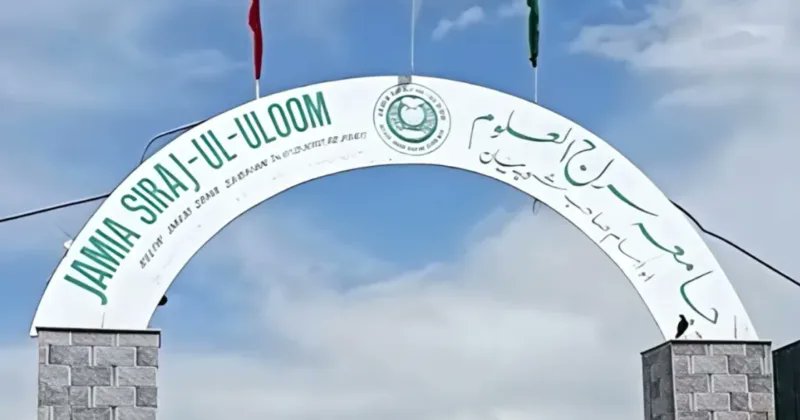
In a significant move, the Jammu & Kashmir administration has declared the education group Jamia Siraj-ul-Uloom as an “unlawful entity” under the Unlawful Activities (Prevention) Act (UAPA), intensifying the region’s ongoing crackdown on institutions suspected of extremist links.
The action, taken in Shopian district, has triggered sharp political reactions and raised questions about the balance between national security and access to education.
Why Siraj-ul-Uloom Was Banned
According to official orders, the decision was based on intelligence inputs and a detailed police dossier highlighting alleged links between the institution and the banned outfit Jamaat-e-Islami.
Authorities claim that:
- The institution had “covert linkages” with Jamaat-e-Islami
- Individuals associated with the banned group held influence in administration and academics
- The campus allegedly fostered an environment conducive to radicalisation
- Financial irregularities and suspected fund diversion were detected
The order was issued by the Kashmir Divisional Commissioner under provisions of the UAPA, allowing authorities to seal premises and take further legal action.
Security Concerns and Radicalisation Allegations
Officials have linked the decision to broader security concerns in the region. Reports suggest that several former students of the institution were allegedly involved in militant activities, raising alarms about possible indoctrination patterns.
The administration stated that such preventive action is necessary to curb radicalisation and protect national security interests.
Immediate Impact: Sealing of Campus and Student Uncertainty
Following the ban, the institution’s premises were sealed, disrupting academic activities for hundreds of enrolled students.
Key impacts include:
- Sudden halt in classes and academic programs
- Uncertainty for students regarding relocation or continuation of studies
- Concerns among parents about educational disruption
Authorities may shift affected students to other schools, but clarity on long-term arrangements is still evolving.
Political Reactions and Controversy
The move has sparked strong political responses across Jammu & Kashmir:
- Several leaders termed the action “deeply concerning” and questioned its broader implications
- Critics argue that such steps could disproportionately affect underprivileged students
- Some leaders described the ban as a “flagrant injustice”, especially for those dependent on the institution for education
On the other hand, officials maintain that the decision was based on credible evidence and necessary for maintaining law and order.
Larger Context: Crackdown on Linked Institutions
The ban on Siraj-ul-Uloom is part of a wider crackdown on organisations suspected of links with banned groups in Jammu & Kashmir.
In recent years, authorities have taken action against multiple institutions and networks believed to be associated with Jamaat-e-Islami, which was banned in 2019.
Experts say the move reflects a continued strategy to dismantle structures perceived as supporting extremist ideologies.
Education vs Security: A Growing Policy Debate
The development has reignited a crucial debate in India’s education and policy circles:
- Should institutions be shut down based on security concerns?
- How can student interests be protected during such actions?
- Is there a need for stricter monitoring instead of outright bans?
While authorities emphasise national security, critics highlight the risk of disrupting education for vulnerable communities.