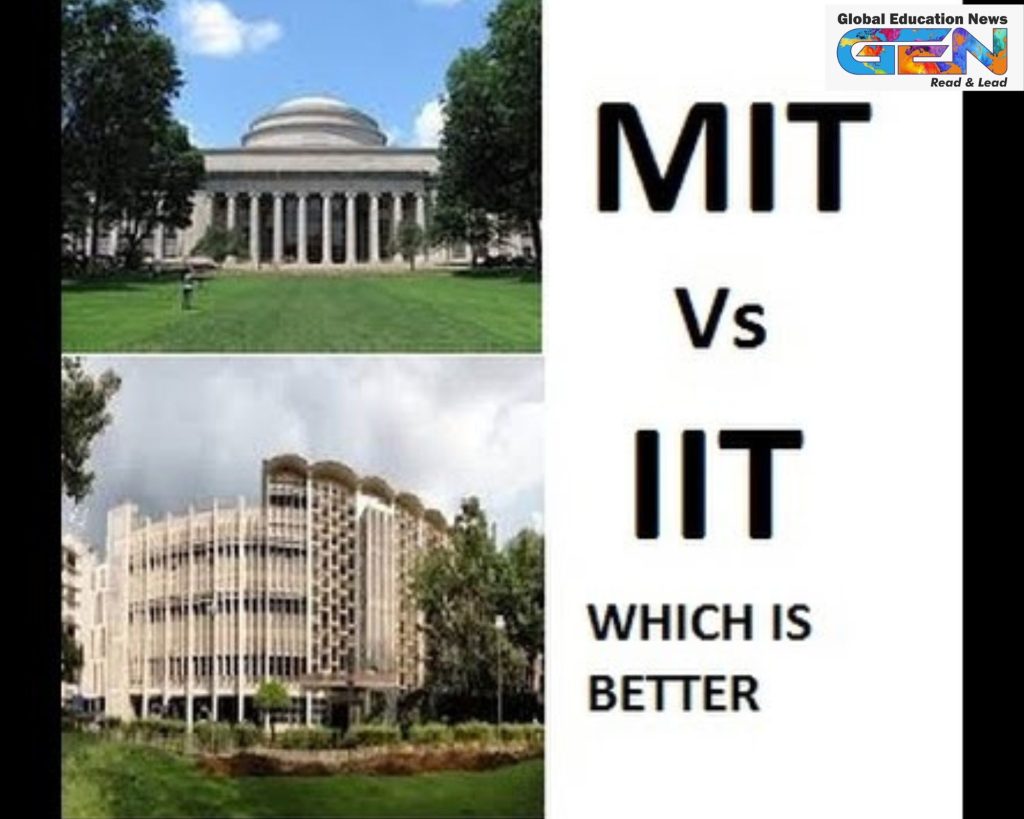
It’s the dream of millions of Indian students to crack the JEE Advanced and secure a seat at an IIT—India’s crown jewels of engineering education. But here’s the twist: some of the brightest minds, like Devesh Bhaiya (AIR 8, 2025) and Ujjwal Kesari, are waving goodbye to IITs and heading to the Massachusetts Institute of Technology (MIT). This isn’t a one-off—since 2006, toppers like Raghu Mahajan and Chirag Falor have made the same choice, sparking a heated debate: is this a brain drain crisis or a sign of global ambition?
- JEE Advanced 2025 AIR 8, Devesh Bhaiya, opts for MIT over IITs.
- Trend dates back to 2006 with toppers like Raghu Mahajan choosing MIT.
- Toppers cite world-class research, global networks, and scholarships as key draws.
Why MIT Over IIT? The Allure of Global Education
Key Points:
- MIT offers early research opportunities, unavailable in IITs’ early years.
- Flexible curricula allow double majors, like computer science and physics.
- MIT’s 95 Nobel laureate alumni and faculty signal unmatched prestige.
Why would someone ditch a coveted IIT seat for MIT? For starters, MIT’s world-class infrastructure and research opportunities are a magnet. Chirag Falor, JEE Advanced 2020 topper, revealed he could start research in his first year at MIT, something IITs typically reserve for later years. Add to that MIT’s flexible academic structure, letting students like Mohammad Sahil Akhtar (AIR 99, 2023) pursue double majors in computer science and physics, aligning perfectly with their passions. Then there’s the prestige—MIT boasts 95 Nobel Prize-winning alumni and faculty, a global network, and generous scholarships that make studying abroad feasible. For students like Ujjwal Kesari, who could’ve waltzed into IIT Bombay’s Computer Science program, MIT’s promise of global exposure and a merit-based system is hard to resist.
Should India Be Worried About This Trend?
Key Points:
- Growing number of toppers choosing MIT signals a gap in IIT offerings.
- India risks losing talent critical for innovation and economic growth.
- But global exposure could benefit India if students return with expertise.
Is this trend a red flag for India? On one hand, losing top talent like Raghu Mahajan, who left IIT Delhi for MIT in 2008, feels like a punch to the gut. India invests heavily in coaching ecosystems like Kota, yet students are choosing foreign institutions, raising concerns about brain drain. Posts on X highlight fears that India’s best minds are being “pushed out” due to limited research opportunities and rigid curricula at IITs. With over 1.8 lakh candidates appearing for JEE Advanced 2025, only 54,378 qualified for 18,160 IIT seats, making the competition fierce—yet some winners are walking away.
On the flip side, this could be a sign of global ambition. Students like Devesh Bhaiya aren’t just leaving—they’re chasing cutting-edge opportunities that could eventually benefit India if they return with skills and networks. The question is whether IITs can evolve to keep these prodigies home.
What’s Missing at IITs? A Reality Check
Key Points:
- IITs lag in early research opportunities compared to MIT.
- Rigid curricula limit interdisciplinary exploration.
- Faculty and infrastructure constraints hinder global competitiveness.
IITs are world-renowned, but they’re not perfect. Raghu Mahajan, JEE 2006 topper, noted that students entering IITs at 17 or 18 often lack clarity about their true passions, and rigid programs don’t help. MIT’s flexible system lets students explore fields like physics and maths alongside engineering, while IITs often lock students into one track. Research is another sore spot—MIT students dive into labs from day one, while IITs focus more on coursework early on. Add to that faculty shortages and outdated facilities in some IITs, and it’s clear why toppers like Chirag Falor find MIT’s ecosystem more appealing. Even IIT Bombay, the top choice for 72 of the top 100 JEE rankers in 2024, struggles to match MIT’s global research clout.
Can IITs Fight Back? The Road Ahead
Key Points:
- IITs are introducing open houses to showcase academics and careers.
- NEP 2020 pushes for multidisciplinary learning and global tie-ups.
- Investments in research and faculty could close the gap with MIT.
IITs aren’t sitting idle. IIT Delhi’s Open House 2025 aims to woo JEE qualifiers by highlighting academics, research, and placement opportunities, showing they’re serious about keeping talent. The National Education Policy (NEP) 2020 is also shaking things up, encouraging flexible curricula and international collaborations to make IITs more competitive. But to rival MIT, IITs need more—think cutting-edge labs, early research access, and a faculty boost. Posts on X suggest IITs could learn from MIT’s merit-based system and global outlook to retain toppers. With 54,378 qualifiers vying for IIT seats in 2025, the stakes are high to make Indian institutions irresistible.
The Bigger Picture: India’s Global Talent Race
Key Points:
- India’s GER in higher education is rising, but global competition is fierce.
- Losing toppers could slow India’s tech innovation goals.
- Returning talent could bridge global knowledge gaps.
This trend isn’t just about IITs vs. MIT—it’s about India’s place in the global talent race. With a Gross Enrolment Ratio (GER) climbing but still trailing global leaders, India can’t afford to lose its brightest minds. Yet, students like Mohammad Sahil Akhtar, who chose MIT for a double major, show that global exposure can produce well-rounded leaders. If these students return, they could bring back expertise to fuel India’s tech boom. The challenge is creating an ecosystem where toppers like Akshat Kumar Chaurasia (AIR 6, 2025) see IITs as the launchpad for their dreams, not a stepping stone to MIT.
Your Move: Join the Debate!
Is the MIT trend a brain drain crisis or a bold step toward global excellence? If you’re a JEE aspirant, would you pick IIT’s legacy or MIT’s global stage? IITs are stepping up, but they need to move fast to keep India’s talent home. Drop your thoughts in the comments and let’s spark a convo about the future of Indian engineering!