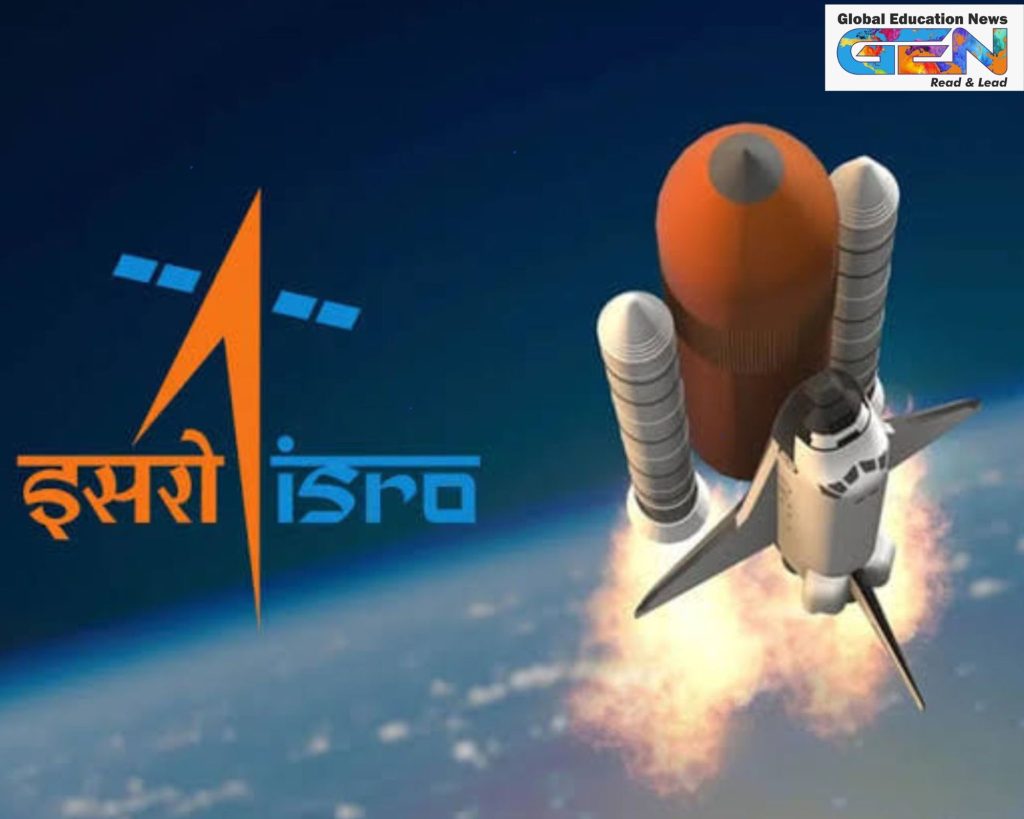
On April 22, 2025, the Indian Space Research Organisation (ISRO) released the Indian Space Situational Assessment Report (ISSAR) 2024, a critical step in safeguarding India’s space assets. Managed by the ISRO System for Safe and Sustainable Operations Management (IS4OM), this report outlines India’s strategies to address space debris and other hazards. This annual document guides stakeholders in understanding the state of the space environment and ensuring sustainable operations.
Space Situational Awareness: India’s Strategy
- Monitoring and Risk Management: Assessing close approach risks and predicting uncontrolled atmospheric re-entries.
- NETRA Project: Tracking space objects with radar and optical telescopes.
- Sustainable Operations: Proactive measures to protect space assets from collisions.
ISRO’s Space Situational Awareness (SSA) activities form the backbone of safeguarding India’s space assets. Through the NETRA (Network for Space Objects Tracking and Analysis) project, ISRO uses radar and optical telescopes to track space objects. This system assesses close approach risks and predicts uncontrolled atmospheric re-entries, ensuring the safety of India’s satellites.
Global Launch Statistics: The 2024 Landscape
- Launch Activities: 261 launch attempts in 2024, with 254 successful missions adding 2578 operational satellites.
- Fewer Launches: Lower number of objects placed in orbit compared to 2023.
- Peak Growth: Unprecedented increase in space activities.
2024 was a landmark year for global space activities, with 261 launch attempts resulting in 2578 operational satellites placed in orbit. However, fewer launches led to a lower total number of objects in orbit compared to 2023. This surge highlights the growing congestion and need for effective debris management.
Space Debris: A Growing Challenge
- Orbit Break-Ups: Three on-orbit break-up events in 2024, including a Long March rocket stage.
- Debris Increase: Total space debris objects reached 3665 by year-end.
- Management Need: Rising debris poses a threat to space assets.
Space debris remains a global concern, with three on-orbit break-up events in 2024 exacerbating the issue. The Long March rocket stage failure contributed to the rise, resulting in 3665 debris objects recorded by year-end. ISRO is taking proactive steps to tackle this challenge.
India’s Space Assets: A Moment of Pride
- Satellite Count: 136 spacecraft launched, including 22 operational in LEO and 31 in GEO.
- Notable Missions: Chandrayaan-2 Orbiter and Aditya-L1 operating successfully.
- Growth Symbol: India’s rising space capabilities.
As of December 2024, India has launched 136 spacecraft, including 22 operational satellites in Low Earth Orbit (LEO) and 31 in Geosynchronous Orbit (GEO). Missions like Chandrayaan-2 Orbiter and Aditya-L1 showcase India’s advancements in space technology, reinforcing its global standing.
Collision Avoidance: ISRO’s Vigilance
- Collision Avoidance Manoeuvres (CAM): Over 53,000 collision alerts issued in 2024.
- Efficient Strategies: 10 CAMs executed, with improved methods reducing manoeuvres.
- Safety Priority: Protecting satellites from risks.
ISRO has implemented effective Collision Avoidance Manoeuvres (CAM) to safeguard its satellites. In 2024, it issued over 53,000 collision alerts and executed 10 CAMs. Enhanced methodologies have reduced the need for extensive manoeuvres, boosting space asset safety.
International Cooperation: A Global Mission
- IADC Participation: Collaboration with the Inter-Agency Debris Coordination Committee.
- Debris Mitigation: Contributing to international guidelines.
- Shared Goal: Promoting sustainable space operations globally.
ISRO actively engages in international cooperation, particularly with the Inter-Agency Debris Coordination Committee (IADC). By contributing to space debris mitigation guidelines, India plays a key role in global efforts to ensure sustainable space operations.
Debris-Free Space Mission: Targeting 2030
- Ambitious Plan: Achieving a Debris-Free Space Mission by 2030.
- Post-Mission Disposal: Reducing the lifespan of spent satellites in orbit.
- Sustainable Future: Ensuring a clean space environment.
In 2024, India announced its Debris-Free Space Mission by 2030. This initiative ensures compliance with post-mission disposal guidelines and reduces the lifespan of defunct satellites in orbit, promoting a cleaner and safer space environment.
Future Directions: India’s Leadership in Space
- Growing Congestion: Increasing space activities and crowding in LEO.
- NETRA Expansion: Advanced radar and telescopes for enhanced tracking.
- Global Leadership: India’s pioneering role in sustainable space operations.
The ISSAR 2024 highlights the rising trend in space activities and congestion, particularly in Low Earth Orbit (LEO). With the expansion of the NETRA project, ISRO is strengthening its SSA capabilities through advanced radar and optical telescopes. This positions India as a global leader in sustainable and secure space operations.