Published on October 10, 2025
Contents
Delhi, India
Milestone Achievement and Announcement
- Union Minister for New and Renewable Energy Pralhad Joshi declared on October 8, 2025, that India’s installed solar capacity has reached approximately 125 GW, catapulting the nation to the world’s third-largest solar producer.
- This marks a stunning addition of 18 GW in the first nine months of 2025 alone, reflecting rapid deployment of solar photovoltaic projects nationwide.
- Overall non-fossil fuel capacity stands at 242.78 GW as of mid-2025, with renewables now powering over 50% of India’s electricity grid.
- The progress underscores India’s commitment to decentralized solar solutions, transforming national ambitions into local impacts for millions.
Global Ranking and Comparative Insights
- India trails only China (over 500 GW) and the USA (around 150 GW) in solar installed capacity, a leap from its 25th position a decade ago.
- As of September 30, 2025, the precise figure hit 127.33 GW AC, solidifying India’s role in the global clean energy race.
- In total renewable energy capacity, India now ranks third globally, behind China and the USA, with solar contributing the lion’s share.
- This positions India as a leader in the Global South, outpacing Europe in solar growth rates and attracting international investments.
Key Government Initiatives Driving Growth
- PM Surya Ghar: Muft Bijli Yojana: A flagship rooftop solar program offering subsidies up to Rs 78,000 per household, aiming to install 1 crore systems by 2027—accelerating clean energy access and reducing carbon footprints for urban and rural homes.
- PM KUSUM Scheme: Targets solarizing 10 lakh agricultural pumps, promoting self-reliance in energy for farmers and cutting diesel dependency.
- Green Energy Corridor: Investments in grid upgrades and transmission lines to integrate variable solar power, with recent 2025 policy tweaks easing connections for large-scale parks.
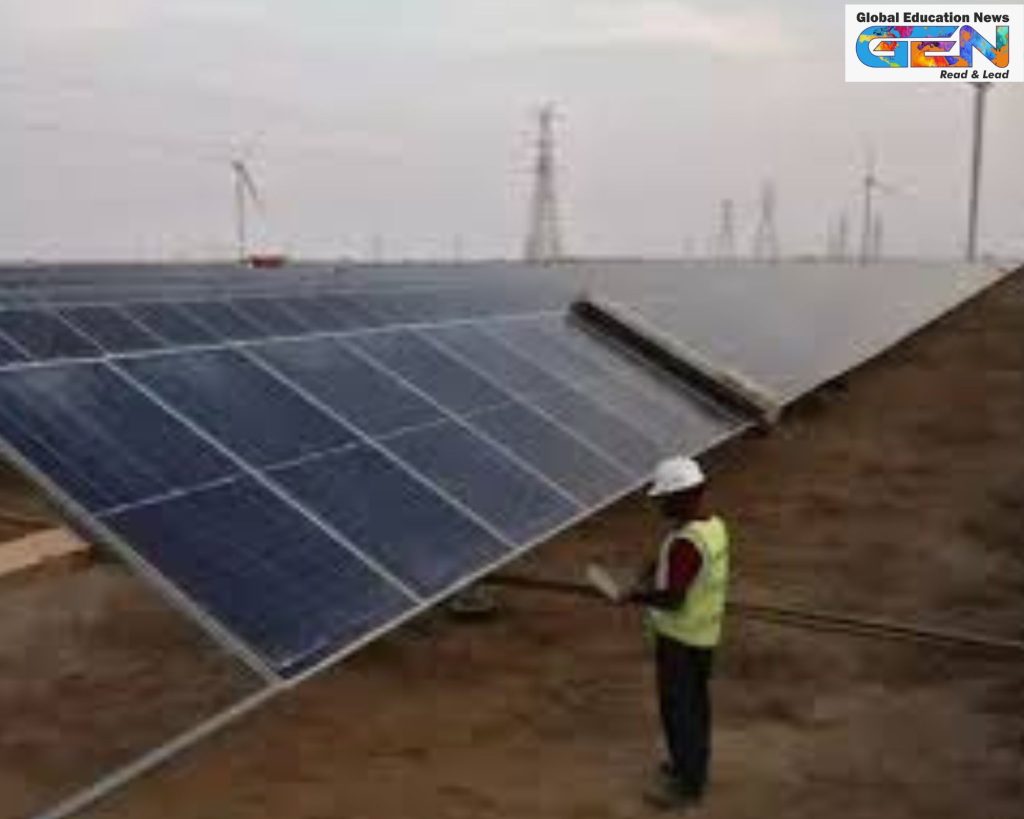
- Megaprojects like Bhadla Solar Park (2.2 GW) exemplify scaled deployments, alongside incentives for solar parks in top regions like Rajasthan and Gujarat.
Ambitious Future Targets and Roadmap
- Short-term goal: Achieve 280 GW solar capacity by 2030 as part of the 500 GW non-fossil fuel target, with Minister Joshi affirming India is “on track” despite global challenges.
- Long-term vision: Scale to 1,800 GW total renewable capacity by 2047, aligning with net-zero emissions by 2070 and carbon neutrality pledges.
- Focus areas: Boosting domestic manufacturing via PLI schemes, expanding offshore wind-solar hybrids, and international collaborations for tech transfer.
- Expected impact: Create 1 million green jobs annually and reduce import reliance on fossil fuels.
Challenges in Solar Expansion
- Grid Integration Hurdles: Variable solar output strains existing infrastructure, requiring Rs 2.4 lakh crore in upgrades by 2030 to handle intermittency.
- Land Acquisition Issues: Securing vast tracts for utility-scale projects faces regulatory and community delays, especially in densely populated states.
- Financial and Supply Chain Barriers: High upfront costs and module import dependencies persist, though 2025 budget allocations aim to mitigate via subsidies and local production incentives.
- Mitigation strategies: Policy reforms for faster approvals and R&D in energy storage like batteries to enhance reliability.
India’s solar ascent not only combats climate change but fuels economic growth—watch this space as the nation powers towards a brighter, greener tomorrow!