Published on October 27 , 2025
Delhi, India
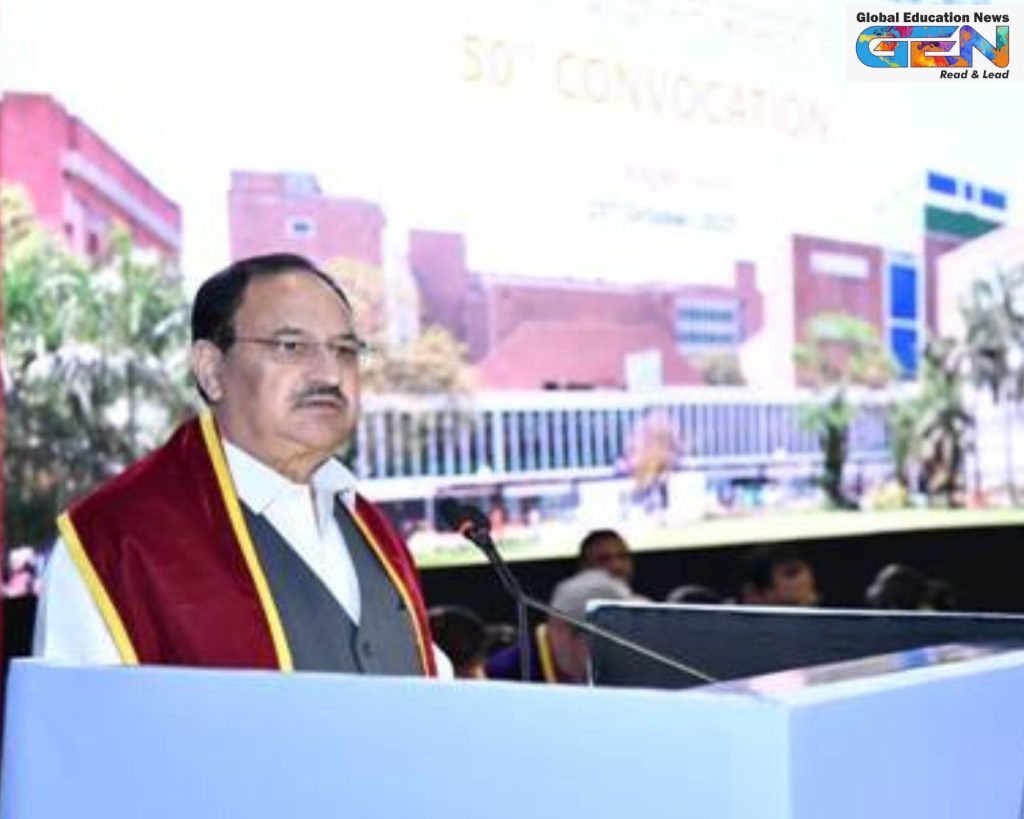
In a landmark address at the 50th Annual Convocation of the All India Institute of Medical Sciences (AIIMS) New Delhi on October 25, 2025, Union Health Minister JP Nadda spotlighted India’s monumental strides in medical education. Over the past 11 years, the nation has more than doubled its medical colleges from 387 to 819, catapulting MBBS seats from 51,000 to 1.29 lakh and postgraduate (PG) seats from 31,000 to 78,000. This surge, fueled by policy reforms and infrastructure investments, has not only bolstered the doctor-population ratio beyond WHO norms but also contributed to remarkable health outcomes, including a 32% drop in maternal mortality ratio (MMR) and a 17.7% decline in TB incidence—outpacing global averages. With plans for an additional 75,000 UG and PG seats in the next five years, India’s medical education boom under initiatives like Ayushman Bharat positions the country as a global healthcare leader.
Key Points
- Historical Growth: Medical colleges rose 112% from 387 in 2014 to 819 in 2025; earlier milestones include 704 in 2023 and 780 in 2024, reflecting accelerated approvals.
- Seat Expansion: MBBS seats increased 153% to 1.29 lakh (from 51,348); PG seats up 152% to 78,000 (from 31,000); recent additions include 10,023 new seats approved in September 2025.
- NEET Impact: NEET-UG 2025 features 1,37,600 total MBBS seats, with 9,075 newly approved, enabling more aspirants to access quality training.
Driving Health Outcomes: Linking Education Surge to Better Lives
The expansion in medical education has directly enhanced healthcare delivery, yielding impressive reductions in key mortality indicators. Minister Nadda emphasized how a larger pool of skilled doctors has accelerated progress under national health missions, surpassing global benchmarks and strengthening resilience against communicable diseases.
Key Points
- Maternal Mortality Ratio (MMR): Plummeted 32% from 130 to 88 per 1,000 live births (2014-2025), aligning with SDG targets through improved antenatal care and institutional deliveries.
- Infant Mortality Rate (IMR): Declined 31% from 39 to 27 per 1,000 live births, supported by expanded neonatal units in new colleges.
- Under-Five Mortality Rate (U5MR): 42% reduction, exceeding the global average of 14%, via vaccination drives and nutrition programs.
- Neonatal Mortality Rate (NMR): 39% drop, reflecting advanced pediatric training in upgraded institutions.
- TB Incidence: Fell 17.7% from 2015-2023 (vs. global 8.3%), with over 10 crore screened annually under the National TB Elimination Programme.
Ayushman Bharat and Institutional Backbone: Pillars of Progress
Ayushman Bharat, the world’s largest health assurance scheme, synergizes with the medical college boom by providing universal coverage and infrastructure upgrades. Nadda highlighted how 25 new AIIMS and over 1,500 district hospitals have been established, fostering a compassionate, research-driven workforce.
Key Points
- Ayushman Bharat Coverage: Over 55 crore beneficiaries enrolled, with 50 crore Ayushman cards issued, enabling cashless treatment up to ₹5 lakh per family annually.
- New Institutions: 25 AIIMS operational since 2014, adding 3,750 UG seats; total government medical colleges up 82% to 450+.
- Private Sector Role: 60% of new colleges in private domain, boosting overall capacity; NMC regulations ensure quality standards.
- Research Focus: Emphasis on innovation, with AIIMS leading in clinical trials and ethical practices; Nadda urged graduates to prioritize empathy and evidence-based care.
Future Roadmap: 75,000 New Seats and Global Aspirations
Looking ahead, the government aims to add 75,000 UG and PG seats by 2030, targeting a doctor-population ratio of 1:834—surpassing WHO’s 1:1,000. This includes upgrading 157 medical colleges and integrating digital health tools for equitable access.
Key Points
- Seat Addition Plan: 75,000 new seats over five years, with 10,023 approved in 2025 alone; focus on underserved regions like Northeast and aspirational districts.
- NEET Evolution: Record 24 lakh+ applicants for NEET-UG 2025; decentralized counseling to reduce migration.
- Equity Measures: 15% seats reserved for All India Quota; scholarships for SC/ST/OBC students; women comprise 50%+ of new enrollees.
- Global Impact: India’s model inspires South Asia; exports of trained doctors rose 20%, enhancing soft power.
Challenges and Opportunities: Sustaining the Momentum
While growth is robust, challenges like faculty shortages (1:2 teacher-student ratio gap) and uneven distribution persist. Opportunities lie in AI-driven diagnostics and telemedicine, with Nadda calling for ethical innovation to maintain the “human touch” in healthcare.
Key Points
- Key Hurdles: Rural-urban divide (70% colleges in top 5 states); infrastructure upgrades needed for 200+ new facilities.
- Innovation Push: Integration of AI/ML in curricula; 500+ research grants awarded in 2025.
- Workforce Development: Training 1 lakh+ nurses annually; focus on mental health for medicos.
- Sustainability: Budget allocation up 15% to ₹90,000 crore for health in 2025-26.