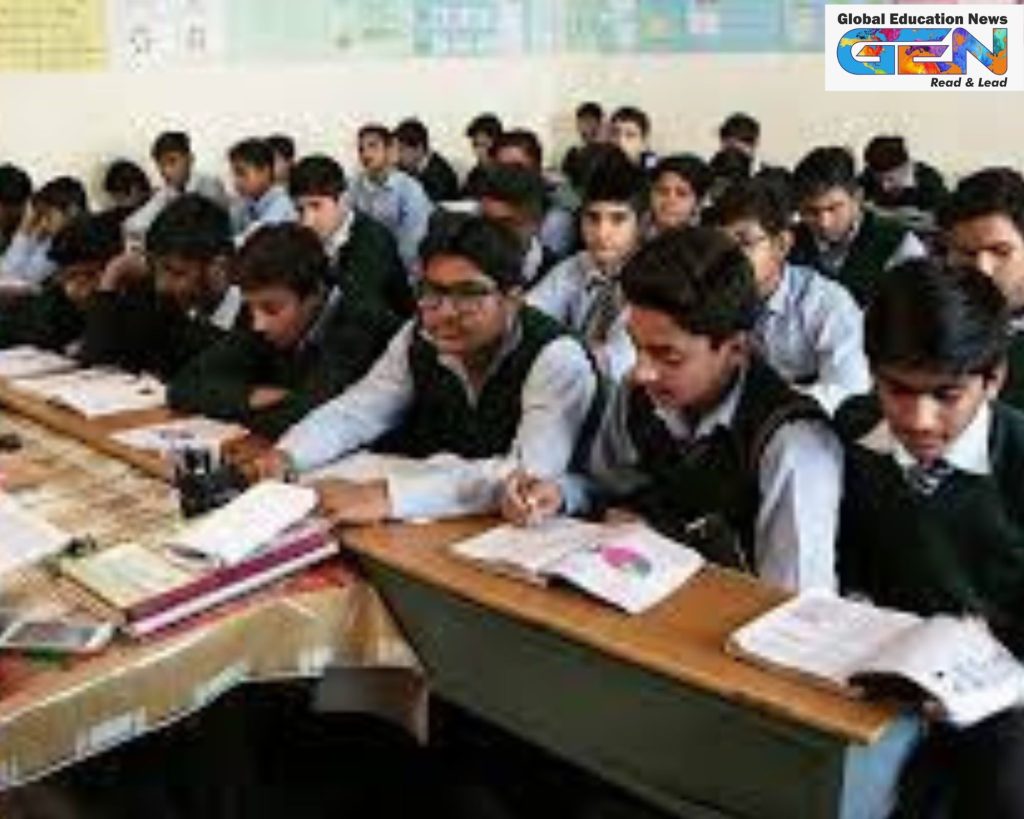
- PARAKH Rashtriya Sarvekshan 2024 reveals shocking gaps in student learning.
- Over 21 lakh students across 781 districts assessed in core subjects.
- Mathematics, language, and science show major competency deficits.
Imagine a classroom where only half the students can arrange numbers up to 99 or understand a simple story. That’s the reality painted by the PARAKH Rashtriya Sarvekshan 2024, a nationwide survey exposing the cracks in India’s education system. Conducted by the National Council of Educational Research and Training (NCERT), this eye-opening assessment of over 21 lakh students in Grades 3, 6, and 9 reveals a crisis that demands urgent action. From struggling with basic math to stumbling over reading comprehension, India’s students are falling behind. But there’s hope—let’s dive into the findings and explore how we can turn the tide!
What is PARAKH Rashtriya Sarvekshan?
Key Points:
- Aligned with National Education Policy (NEP) 2020.
- Assesses competency-based learning in language, math, science, and more.
- Covers foundational, preparatory, and middle school stages.
The PARAKH Rashtriya Sarvekshan, formerly the National Achievement Survey (NAS), isn’t just another test—it’s a bold mission to measure the pulse of India’s education system. Conducted on December 4, 2024, this NCERT-led survey evaluates how well students apply knowledge, not just memorize it. Spanning 781 districts, it tests skills like critical thinking and problem-solving, aligning with NEP 2020’s vision for a future-ready education system. Think of it as a report card for the nation’s classrooms, highlighting what’s working—and what’s not.
Shocking Findings: Where Students Are Struggling
Key Points:
- Only 55% of Class 3 students can arrange numbers up to 99.
- 43% of Class 6 students struggle to grasp a passage’s main idea.
- Over 60% of Class 9 students fail science competency benchmarks.
The numbers are staggering. The PARAKH survey uncovered that students are grappling with core subjects:
- Math Meltdown: Only 53% of Class 6 students know multiplication tables up to 10, and 63% of Class 9 students fumble with fractions and percentages.
- Literacy Struggles: Reading comprehension is a hurdle, with 43% of Class 6 students unable to understand texts, a gap that widens by Class 9.
- Science and Social Science Woes: Class 9 students struggle with basic concepts like magnetism or historical timelines.
- Rural vs. Urban Divide: Rural Class 3 students outperform urban peers, but urban students take the lead in higher grades.
- Gender Gaps: Girls edge out boys in Class 3 language (65% vs. 63%), but disparities persist in conceptual subjects.
These gaps aren’t just numbers—they’re a warning that foundational skills are crumbling, setting students up for bigger challenges as they advance.
Bright Spots: Signs of Progress
Key Points:
- Class 3 shows improvement, with 57% proficient in language and 65% in math.
- NIPUN Bharat Mission boosts foundational literacy and numeracy.
- States like Punjab, Kerala, and Chandigarh shine as top performers.
It’s not all doom and gloom! The survey highlights progress, especially in Class 3, where 57% of students excel in language and 65% in math. Thanks to the NIPUN Bharat Mission, foundational learning is gaining ground. States like Punjab, Kerala, Himachal Pradesh, Chandigarh, and Dadra & Nagar Haveli and Daman & Diu are leading the charge, proving that targeted interventions can make a difference. These success stories are a beacon of hope for what’s possible with the right focus.
Why Are Students Falling Behind?
Key Points:
- Lack of early support as subjects get tougher.
- Teachers need better training for NEP-aligned methods.
- Socioeconomic factors and curriculum misalignment play a role.
The reasons behind these gaps are complex but clear:
- Fading Support: Early grades benefit from parental help, but complex subjects leave students stranded without guidance.
- Teacher Challenges: Educators need training to shift from rote teaching to fostering critical thinking.
- Inequality in Access: Students from educated households or urban areas with digital tools perform better.
- Outdated Curriculum: Too much focus on memorization leaves students unprepared for real-world problem-solving.
Fixing the Future: Solutions to Bridge the Gap
Key Points:
- Expand NIPUN Bharat for stronger foundational skills.
- Train teachers in innovative, NEP-aligned methods.
- Use technology and community support to close disparities.
The PARAKH survey isn’t just a problem-spotter—it’s a call to action. Here’s how India can rebuild its education system:
- Boost Foundational Learning: Scale up NIPUN Bharat to ensure every child masters reading and math by Class 3.
- Empower Teachers: Train educators in creative, competency-based teaching aligned with NEP 2020.
- Leverage Technology: Use digital tools for personalized learning and to bridge rural-urban gaps.
- Engage Communities: Involve parents and locals to support learning beyond classrooms.
- Revamp Curriculum: Shift to practical, skill-based learning that prepares students for life.
- Early Interventions: Use assessments to catch and support struggling students early.
The Ministry of Education is already planning workshops to turn these insights into district-specific action plans. The goal? A system where every child thrives.
A Rallying Cry for Change
Key Points:
- Learning gaps threaten India’s future workforce.
- Progress in foundational learning shows reform is possible.
- Collective action from parents, educators, and policymakers is critical.
India stands at a crossroads. The PARAKH Rashtriya Sarvekshan 2024 reveals a learning crisis that could shape the nation’s future—or derail it. But with progress in foundational skills and standout states leading the way, there’s a clear path forward. By embracing education reform, investing in foundational learning, and aligning with NEP 2020, India can transform its classrooms into launchpads for success. Parents, teachers, and policymakers—let’s unite to give every child the education they deserve. The future starts now!