Published on October 30 , 2025
Delhi, India
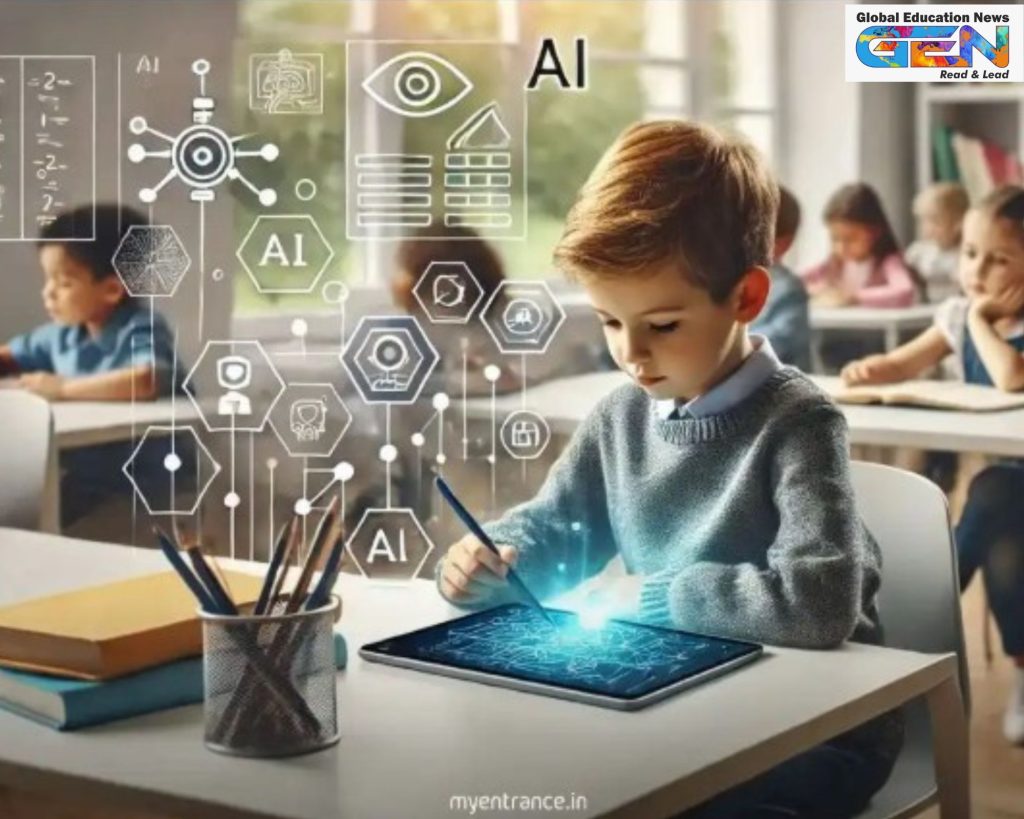
The Ministry of Education, through its Department of School Education & Literacy (DoSE&L), has announced a transformative curriculum reform to integrate Artificial Intelligence (AI) and Computational Thinking (CT) into school education from Class 3 onward. Revealed during a stakeholder consultation on October 29, 2025, this initiative aligns seamlessly with the National Education Policy (NEP) 2020 and the National Curriculum Framework for School Education (NCF-SE) 2023. By embedding these foundational skills early, the reform aims to equip India’s young learners with the tools to navigate a technology-driven world, emphasizing ethical AI use, critical thinking, and innovation. This nationwide push marks a pivotal shift toward making AI literacy a universal basic skill, fostering a generation ready for the digital economy.
Announcement Highlights
- Date and Platform: Unveiled on October 29, 2025, via a high-level consultation involving education leaders, with immediate directives for collaborative development.
- Scope: Applicable to all schools across India, targeting Classes 3 to 12 to build progressive competency in AI and CT.
- Leadership: Spearheaded by DoSE&L Secretary Sanjay Kumar, who described AI education as “a basic universal skill” essential for modern curricula.
- Policy Alignment: Directly supports NEP 2020’s vision for technology-enabled learning and NCF-SE 2023’s emphasis on multidisciplinary approaches.
Key Reforms and AI Integration
- Curriculum Design: Introduction of dedicated modules on AI fundamentals, including machine learning basics, data ethics, and algorithmic thinking, tailored for age-appropriate engagement.
- Computational Thinking Focus: Activities to develop problem-solving through decomposition, pattern recognition, abstraction, and algorithmic design—integrated into subjects like Math, Science, and Social Studies.
- Ethical Emphasis: Lessons on responsible AI use, bias mitigation, and ‘AI for Public Good’ to promote societal benefits over commercial applications.
- Resource Development: Creation of grade-specific handbooks, digital videos, interactive tools, and assessment frameworks to support seamless classroom adoption.
Objectives and Educational Goals
- Skill Building: Enhance critical thinking, creativity, and logical reasoning to prepare students for future careers in tech and beyond.
- Inclusivity Drive: Ensure equitable access to AI education, bridging urban-rural divides through standardized, scalable resources.
- Global Competitiveness: Position Indian students on par with international benchmarks by drawing from cross-national analyses while customizing to local contexts.
- Holistic Development: Foster a balanced worldview where technology serves humanity, reducing digital divides and encouraging innovative problem-solving from primary levels.
Implementation Timeline
- Resource Readiness: Comprehensive materials, including teacher handbooks and digital content, to be finalized and distributed by December 2025.
- Teacher Training Rollout: Grade-specific, time-bound programs via NISHTHA (National Initiative for School Heads’ and Teachers’ Holistic Advancement) starting early 2026, supplemented by video-based modules.
- Academic Integration: Full curriculum rollout from the 2026-27 session, with phased monitoring to refine based on feedback.
- Pilot and Review: Initial consultations to inform pilots; ongoing reviews by coordination committees to adapt to evolving tech landscapes.
Stakeholder Involvement and Support
- Expert Committee: CBSE-led panel chaired by Professor Karthik Raman from IIT Madras, tasked with curriculum framing and quality checks.
- Coordination Framework: Multi-agency body under NCF-SE, including NCERT, CBSE, Kendriya Vidyalaya Sangathan (KVS), Navodaya Vidyalaya Samiti (NVS), and state/UT education departments.
- Collaborative Approach: Joint Secretary Prachi Pandey highlighted adherence to timelines, with inputs from international perspectives for robust design.
- Training Backbone: NISHTHA and partner institutions to upskill over a million teachers, ensuring confident delivery of AI concepts.
Impact, Quotes, and Broader Implications
- Expected Outcomes: Anticipated surge in student engagement with STEM, higher innovation rates, and reduced gender/tech phobias through early exposure.
- Key Quotes:
- Sanjay Kumar: “It is good to have cross-national and international analysis for perspective, but it needs to be specific to our needs.”
- Sanjay Kumar: “Education in AI should be viewed as a basic universal skill… Policymakers have a responsibility to define the minimum threshold.”
- Long-Term Vision: This reform could redefine school education in India, aligning with global AI literacy trends and supporting sustainable development goals by creating a tech-empowered workforce.
- Challenges Addressed: Focus on infrastructure-light resources to reach remote areas, with emphasis on continuous policy evolution.