September 18, 2025
Delhi, India
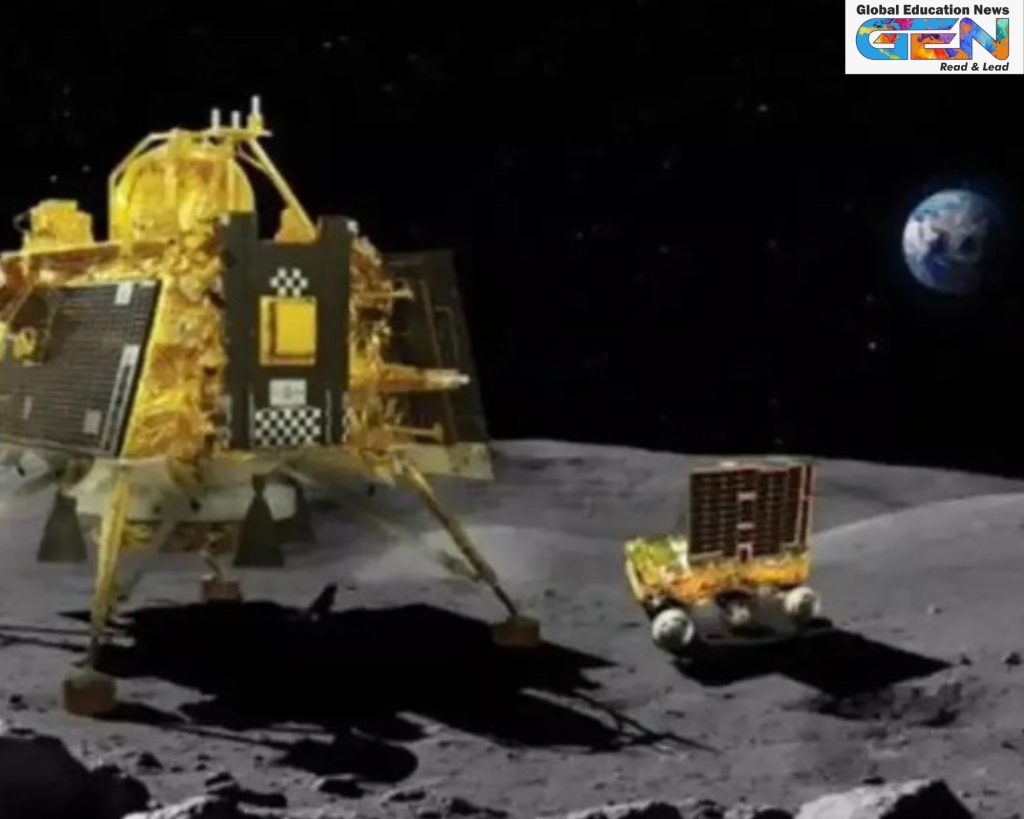
On September 15, 2025, the Embassy of India in Washington DC hosted a landmark event, “India-USA Space Collaboration: The Frontiers of a Futuristic Partnership,” signaling a cosmic shift in bilateral ties. With India’s Chandrayaan-3 lunar triumph and Gaganyaan’s crewed mission on the horizon, the event celebrated joint ventures like the NASA-ISRO Synthetic Aperture Radar (NISAR) satellite and Indian astronaut Shubhanshu Shukla’s Axiom-4 trip to the International Space Station (ISS). Ambassador Vinay Kwatra hailed it as a “dynamic platform” for science, tech, and commerce, positioning India as a cost-effective space leader alongside the US’s technological prowess.
- Key Points:
- Event date: September 15, 2025; hosted at India House, Washington DC, with 200+ attendees from NASA, ISRO, and industry.
- Strategic edge: Counters China’s lunar base plans and Belt-Road space diplomacy; aligns with Quad’s space tech goals.
- Quote: “This partnership pushes the boundaries of human spaceflight,” – Ambassador Vinay Kwatra.
NISAR: A Satellite Powerhouse for Earth and Beyond
The NASA-ISRO NISAR mission, set for launch in March 2026 from Sriharikota, stole the spotlight. This $1.5 billion radar imaging satellite—India’s cost share at 20%—will map Earth’s surface every 12 days, tracking climate change, disasters, and agriculture with unprecedented 5-10 meter resolution. Dr. Karen St. Germain, NASA’s Earth Science Director, called it a “model of collaboration,” blending ISRO’s cost-efficient engineering with NASA’s cutting-edge radar tech. Beyond Earth, NISAR’s data could guide future lunar and Martian missions, cementing Indo-US synergy.
- Key Points:
- NISAR specs: Dual-frequency radar; monitors earthquakes, glaciers, and crops; 240 km swath.
- Timeline: Integration complete at JPL; launch via GSLV Mk-II; data sharing open to global researchers.
- Impact: Supports India’s 2030 net-zero goals; aids US’s disaster response frameworks.
Shubhanshu Shukla’s ISS Odyssey: India’s Astronaut Ascends
Indian Air Force Group Captain Shubhanshu Shukla’s Axiom-4 mission, launched August 2025, marked India’s second astronaut stint at the ISS after Rakesh Sharma’s 1984 flight. Shukla, 40, conducted microgravity experiments on plant growth and fluid dynamics, earning global praise. In a virtual “Moments in Orbit” panel with NASA’s Sunita Williams, Nick Hague, and Butch Wilmore, he called it “a testament to India’s growing role.” His 14-day mission, costing ISRO $10 million, underscores commercial space ventures, with Axiom Space eyeing Indian private-sector tie-ups.
- Key Points:
- Shukla’s role: 6 experiments; trained at NASA’s Johnson Space Center with Gaganyaan crew.
- Axiom-4: First commercial Indian astronaut mission; crew included US, Polish, and Hungarian astronauts.
- Future: Prasanth Nair slated for Axiom-5 in 2026; Gaganyaan’s 2027 crewed orbit looms.
Moon and Mars Ambitions: A Joint Cosmic Quest
The event wasn’t just retrospective—it set sights on the stars. India’s Chandrayaan-4 (2028, lunar sample return) and US’s Artemis III (2026, human Moon landing) are syncing for tech exchanges, with ISRO eyeing NASA’s lunar Gateway for data relays. Mars is next: India’s Mangalyaan-2 (2030) and NASA’s Mars Sample Return could share rovers and orbiters, slashing costs. Analysts see this as a counter to China’s 2030 lunar base and Mars rover plans, with India’s $100M missions undercutting Beijing’s $500M budgets by 80%.
- Key Points:
- Lunar synergy: Chandrayaan-4 to use NASA’s deep-space tracking; Artemis may leverage ISRO’s low-cost launchers.
- Mars roadmap: Mangalyaan-2 plans 100 kg rover; US-India talks for joint payload by 2027.
- Strategic play: Strengthens Quad’s space pillar; India’s 4% global space market share to hit 8% by 2030.
Commercial and Strategic Ripples: Countering China, Boosting Industry
Beyond science, the partnership fuels commerce and geopolitics. India’s space economy, at $8 billion, aims for $44 billion by 2033, with startups like Skyroot and Agnikul tapping US venture capital. The US-India iCET framework (2023) fast-tracks tech transfers, like propulsion systems, boosting 50+ Indian space firms. Strategically, it’s a checkmate to China’s 400-satellite constellation and lunar ambitions, with India’s cost edge and US’s tech depth forming a formidable duo. X posts buzzed: “India-US space axis = China’s wake-up call,” per @SpaceWatchGlobal.
- Key Points:
- Commercial boom: 100+ Indian startups; US firms like SpaceX eye ISRO’s launch pads for $50M savings.
- iCET wins: Semiconductor and AI tie-ups for space; 20% cost cuts via shared R&D.
- Geopolitical edge: Counters China’s $10B annual space spend; aligns with US’s $24B NASA budget.
The Road to 2030: A Galactic Partnership Takes Shape
With NISAR’s launch nearing and Gaganyaan’s crewed debut in 2027, this alliance is no fleeting star. Expect joint astronaut training, shared lunar habitats, and even a US-India space summit by 2026. For students, it opens STEM doors—ISRO’s Young Scientist Programme now trains 10,000 annually, with NASA internships in talks. Will this duo outshine China’s orbit? Drop your thoughts below—let’s chart the cosmic future!