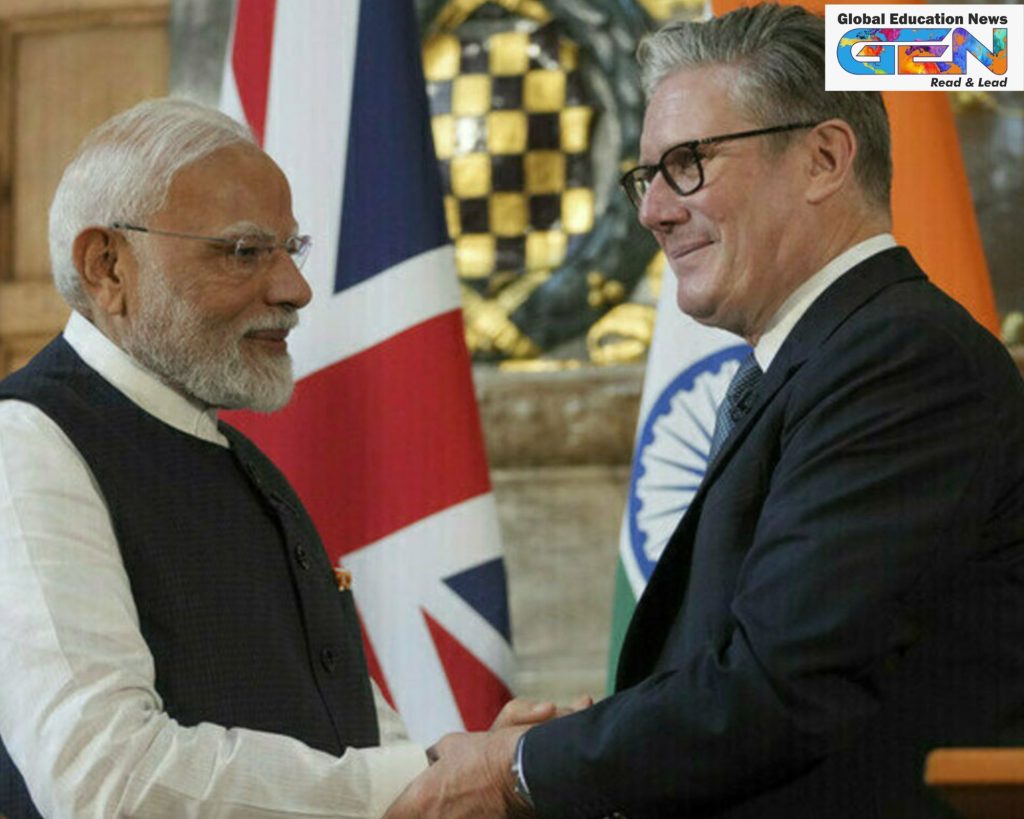
On July 24, 2025, India and the UK sealed a Free Trade Agreement (FTA), hailed as India’s most comprehensive trade pact and the UK’s biggest post-Brexit deal. Signed during PM Narendra Modi’s visit to London, this $34 billion agreement slashes tariffs, making luxury imports like Scotch whisky and British cars cheaper for Indians while opening UK markets to Indian textiles, jewellery, and pharma. With bilateral trade already at $21 billion in 2024, this FTA is set to transform economies and lives on both sides.
- India-UK Free Trade Agreement signed on July 24, 2025, during PM Modi’s UK visit.
- Eliminates tariffs on 99% of Indian exports to the UK, worth $15 billion annually.
- Expected to add £4.8 billion ($6.5 billion) to UK GDP and double Indian exports by 2030.
What’s Cheaper for Indian Consumers?
Key Points:
- Scotch whisky tariffs drop from 150% to 40% over 10 years, boosting brands like Diageo.
- British luxury cars duties fall from 100% to 10% under quotas, benefiting Jaguar Land Rover.
- Lower prices on chocolates, cosmetics, and medical devices from the UK.
Get ready to splurge smarter! The FTA makes high-end UK goods more affordable for Indians. Scotch whisky and gin, once hit with a 150% tariff, will see duties drop to 75% initially and 40% by 2035, bringing premium labels like Johnnie Walker within reach. British luxury cars like Jaguar Land Rover and Aston Martin will cost less, with duties slashed to 10% under a quota system. Chocolates, biscuits, salmon, cosmetics, and medical devices will also hit Indian shelves at lower prices, adding a touch of British flair to daily life.
Indian Exports Set to Soar
Key Points:
- Textiles and leather goods gain zero tariffs, removing UK duties up to 12%.
- Gems and jewellery, including gold and diamonds, to see $1.5 billion in export growth.
- Agro and pharma sectors like rice, spices, and drugs get easier UK market access.
Indian businesses are popping the champagne! The FTA eliminates tariffs on 99% of Indian exports, boosting sectors like textiles, leather, and jewellery. Garments and home textiles, previously facing 12% duties, now enter the UK duty-free, creating 50,000 jobs in India’s textile hubs like Tiruppur and Surat. Gems and jewellery exports, worth $1.5 billion, will shine brighter with zero tariffs. Rice, spices, tea, shrimp, and pharma products, led by firms like Sun Pharma, gain a competitive edge, aiming to double exports to $30 billion by 2030.
Electric Vehicles and Tech Take Off
Key Points:
- Electric and hybrid vehicles get preferential UK market access under quotas.
- Indian EV makers like Tata Motors and Mahindra Electric poised for growth.
- IT and tech services benefit from reduced non-tariff barriers.
India’s green revolution is revving up! The FTA offers preferential access for Indian electric and hybrid vehicles, giving companies like Tata Motors, Mahindra Electric, and Bharat Forge a foothold in the UK’s EV market, valued at £40 billion. Reduced non-tariff barriers also boost India’s IT services, software, and engineering exports, with firms like TCS and Infosys set to expand. This aligns with India’s $100 billion EV goal by 2030, driving innovation and sustainability.
Opportunities for Indian Professionals
Key Points:
- Streamlined visas and work permits for Indian chefs, yoga instructors, and skilled workers.
- Social security exemptions save Indian workers ₹4,000 crore ($480 million) yearly.
- Supports 3,000 Indian professionals in the UK annually.
The FTA isn’t just about goods—it’s about people too! The UK will simplify visa processes for Indian chefs, yoga instructors, musicians, and tech professionals, easing temporary mobility. A social security exemption for up to three years saves Indian workers ₹4,000 crore ($480 million) annually, making UK jobs more attractive. With 3,000 Indian professionals benefiting yearly, this boosts people-to-people ties, complementing the arrival of five UK universities like Southampton in Gurugram in 2025.
MSMEs and Innovation Win Big
Key Points:
- MSMEs, employing 120 million Indians, gain easier UK market access.
- £500 million UK investment supports Indian startups and innovation hubs.
- Trade facilitation hubs hubs in Mumbai and Birmingham to aid small exporters**.
India’s 120 million MSME workers, from weavers to food processors, are set to thrive. The FTA removes export barriers, enabling small businesses to sell handicrafts, spices, and processed foods in the UK. A £500 million UK investment fund will back Indian startups, fostering innovation in AI, fintech, and agritech. Trade hubs in Mumbai and Birmingham will provide training and market insights, empowering MSMEs to go global and create 200,000 jobs in India by 2030.2030.
Challenges and Public Buzz
Key Points:
- Indian farmers worry about UK dairy and meat imports under WTO rules.
- X posts show excitement for cheaper whisky but raise concerns over job losses in Indian liquor firms.
- Transparent implementation needed to balance domestic and import interests.
The FTA has sparked a lively debate on X. Indians are thrilled about cheaper Scotch and cars, with #IndiaUKFTA trending, but some fear UK dairy and meat imports imports could hurt local farmers, especially in states like Punjab. Domestic liquor firms like United Spirits face competition from UK brands, risking 10,000 jobs. Critics on X call for safeguards, while supporters highlight export growth and India-UK education ties, like Liverpool’s Bengaluru campus. Transparent implementation is key to ensuring a win-win deal.
A Bright Economic Future
Key Points:
- Aims to double bilateral trade to $50 billion by 2030.
- Strengthens India-UK Roadmap 2030 for economic and strategic ties.
- Positions India as a global trade hub with 29 FTAs signed since 2014.
The India-UK FTA, signed on July 24, 2025, is a catalyst for growth. By slashing tariffs and boosting exports, it promises cheaper goods, more jobs, and stronger ties. With bilateral trade projected to hit $50 billion by 2030, India emerges as a global trade hub, building on 29 FTAs since 2014. From Scotch whisky to Tata EVs, this deal delivers for consumers and businesses, paving the way for a prosperous Viksit Bharat by 2047!