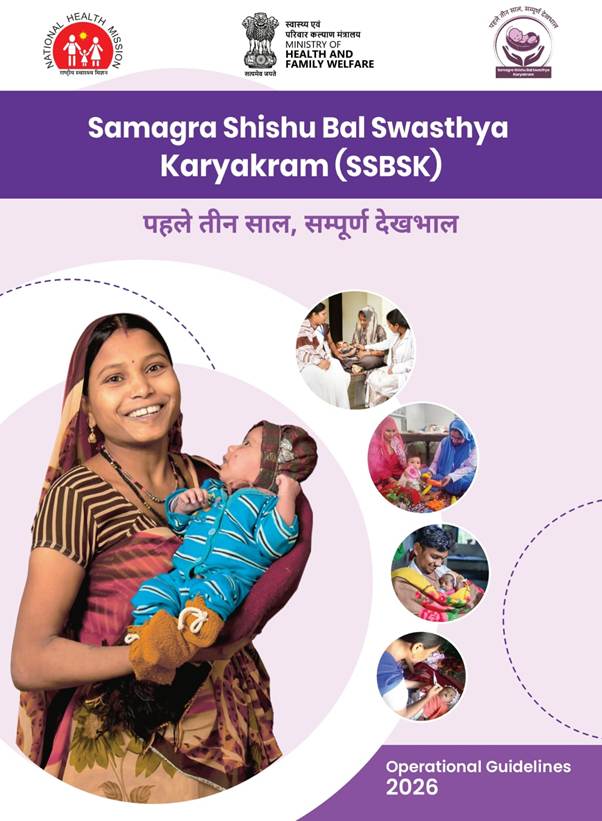
In a landmark initiative to strengthen child health and development, the Ministry of Health and Family Welfare has launched the Samagra Shishu Bal Swasthya Karyakram (SSBSK), a comprehensive national programme focused on ensuring continuous healthcare support for children from birth to 36 months.
Launched by Union Health Minister Jagat Prakash Nadda during the 16th Conference of the Central Council of Health and Family Welfare (CCHFW), the programme represents a major evolution in India’s child healthcare strategy. SSBSK is built around the vision of “Pehle Teen Saal Sampurn Dekhbhal” (Complete Care During the First Three Years), recognizing that the earliest years of life are critical for survival, nutrition, growth, immunity, and brain development.
Why the First Three Years Matter
Medical research consistently shows that nearly 80–85% of brain development occurs during the first three years of life. Proper nutrition, timely healthcare, immunization, developmental screening, and responsive caregiving during this period significantly influence a child’s long-term physical, cognitive, and emotional well-being.
Recognizing this, SSBSK shifts the focus from episodic healthcare to continuous home and community-based support, ensuring that children receive regular monitoring from birth until they reach three years of age.
What is Samagra Shishu Bal Swasthya Karyakram (SSBSK)?
SSBSK is a comprehensive child healthcare programme under the National Health Mission (NHM) that integrates existing child health services into a single, seamless framework.
The programme combines two flagship initiatives:
- Home-Based Newborn Care (HBNC)
- Home-Based Care for Young Child (HBYC)
By merging these programmes, the government aims to eliminate service gaps and ensure uninterrupted healthcare support during the most crucial stage of a child’s life.
Key Features of SSBSK
1. Integrated Healthcare from Birth to 36 Months
Unlike earlier programmes that addressed different age groups separately, SSBSK provides a continuum of care covering:
- Newborn health
- Infant nutrition
- Growth monitoring
- Early childhood development
- Immunization support
- Developmental milestone assessment
- Family counselling
The integrated approach is expected to improve coordination among frontline health workers and enhance service delivery.
2. Risk-Stratified Follow-Up System
One of the programme’s most significant innovations is the introduction of a risk-based monitoring model.
For the first time, children identified as “at-risk” will receive additional home visits and closer monitoring.
Enhanced follow-up includes:
- Up to 9 home visits during the first 42 days for at-risk newborns.
- Up to 8 additional visits for at-risk children until 36 months of age.
This targeted approach aims to ensure timely medical intervention for children with higher health risks.
3. Home-Based Healthcare Delivery
Frontline health workers, particularly Accredited Social Health Activists (ASHAs), will continue to play a central role in the programme.
During home visits, they will:
- Monitor child growth and nutrition.
- Promote breastfeeding and complementary feeding.
- Educate parents on hygiene and childcare.
- Identify developmental delays.
- Encourage complete immunization.
- Refer children requiring specialized medical care.
This community-based model brings healthcare services directly to families, especially in rural and underserved areas.
4. Focus on Early Childhood Development
Beyond disease prevention, SSBSK emphasizes holistic child development.
The programme encourages:
- Early stimulation activities.
- Responsive parenting.
- Nutrition counselling.
- Age-appropriate developmental monitoring.
- Early identification of developmental delays.
This reflects a broader understanding that healthcare during early childhood extends beyond medical treatment.
Building on RBSK 2.0
The launch of SSBSK complements the recently introduced Rashtriya Bal Swasthya Karyakram (RBSK) 2.0, which expanded child health screening to include emerging health concerns such as non-communicable diseases, childhood diabetes, and mental health.
Together, these initiatives aim to strengthen India’s child health ecosystem through:
- Early diagnosis.
- Preventive healthcare.
- Continuity of care.
- Digital monitoring.
- Timely referral services.
- Long-term health management.
Expected Benefits
The programme is expected to deliver multiple long-term benefits.
For Children
- Better survival during infancy.
- Improved nutrition.
- Early detection of illnesses.
- Timely medical intervention.
- Enhanced cognitive and physical development.
For Families
- Better awareness of child health.
- Access to healthcare at home.
- Reduced medical complications through early intervention.
- Stronger support from frontline health workers.
For the Healthcare System
- Improved child health indicators.
- Reduced infant and under-five mortality.
- Better monitoring of vulnerable children.
- Stronger coordination across healthcare services.
Alignment with National Health Goals
SSBSK supports India’s broader objectives of improving maternal and child health under the National Health Mission. It contributes to national efforts aimed at:
- Reducing infant mortality.
- Lowering under-five mortality.
- Combating childhood malnutrition.
- Improving immunization coverage.
- Strengthening early childhood development.
- Achieving Sustainable Development Goals (SDGs) related to health and child welfare.
Why This Initiative Matters
India has made significant progress in reducing child mortality over the past decade, but challenges such as malnutrition, developmental delays, low birth weight, and preventable illnesses continue to affect millions of children.
By introducing continuous care, risk-based monitoring, and community-level interventions, SSBSK aims to shift healthcare from a reactive model to a preventive and developmental approach.
Experts believe the programme could significantly improve early childhood outcomes by ensuring that every child receives timely care during the most critical years of life.