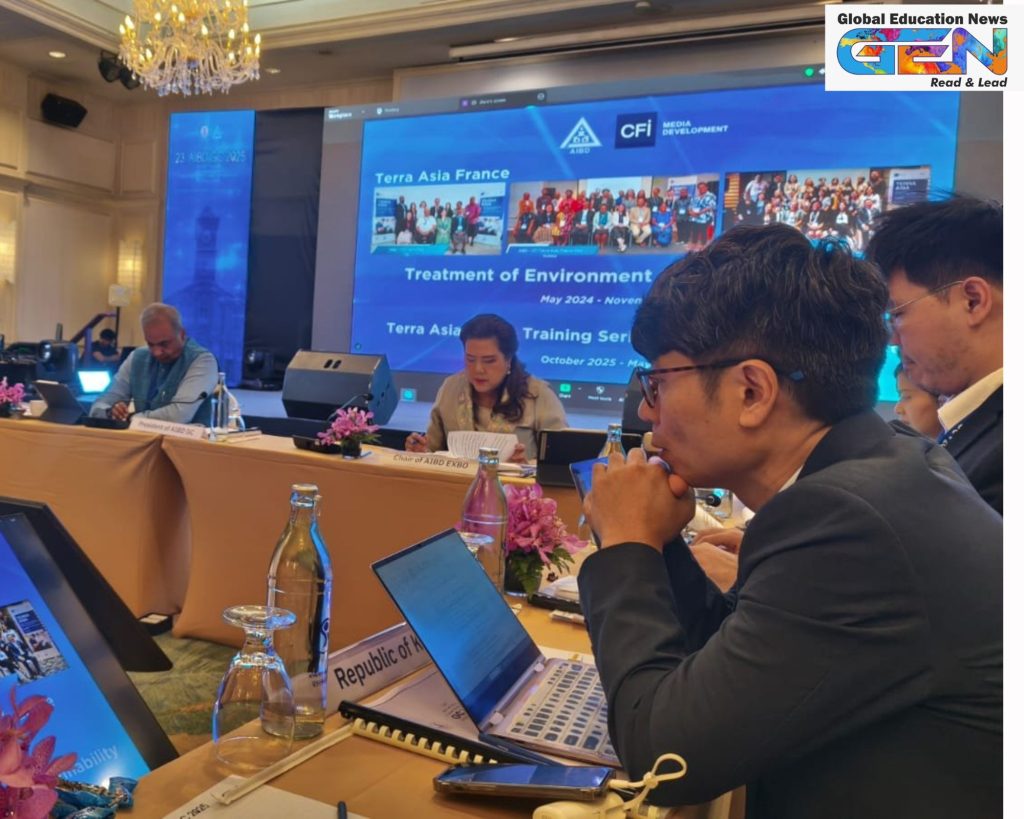
On August 20, 2025, India achieved a landmark victory by securing the Chairmanship of the Executive Board of the Asia-Pacific Institute for Broadcasting Development (AIBD) with the highest number of votes at the 23rd AIBD General Conference in Phuket, Thailand. This milestone, marking India’s return to the role after 2016, reinforces its dual leadership as the President of the AIBD General Conference (until August 2025), led by Gaurav Dwivedi, CEO of Prasar Bharati. India’s election underscores its growing influence in global media governance and its commitment to fostering a vibrant, cooperative media ecosystem across the Asia-Pacific. Here’s an in-depth look at this achievement, AIBD’s role, and India’s vision for regional broadcasting.
India’s Dual Leadership in AIBD
India’s election as Chairman of the AIBD Executive Board, alongside its ongoing presidency of the General Conference, positions it as a pivotal leader in shaping regional media policies. Represented by Prasar Bharati, India’s public service broadcaster, the country is poised to drive innovation, collaboration, and sustainable development in broadcasting.
Key Points:
- Election Details: India secured the Chairmanship on August 20, 2025, during the 23rd AIBD General Conference in Phuket, Thailand, with the highest votes among 45 member countries.
- Dual Roles: India holds both the Executive Board Chair (2025–2027) and General Conference Presidency (until August 2025), led by Gaurav Dwivedi, Prasar Bharati CEO.
- Historical Context: India previously chaired the Executive Board in 2016 and served as General Conference President from 2018–2023 for two terms, reflecting its consistent leadership.
- Statement: Dwivedi, speaking for the Ministry of Information & Broadcasting, expressed gratitude for the trust placed in India, emphasizing its commitment to collaborative media growth.
About AIBD: A UNESCO-Backed Media Powerhouse
Founded in 1977 under the auspices of UNESCO, the Asia-Pacific Institute for Broadcasting Development (AIBD) is a regional inter-governmental organization dedicated to advancing electronic media across United Nations Economic and Social Commission for Asia and the Pacific (UN-ESCAP) member nations.
Key Points:
- Membership: AIBD comprises 92 member organizations from 45 countries, including 26 government members (represented by 48 national broadcasters) and 44 affiliate members from Asia-Pacific, Europe, Africa, Arab States, and North America.
- Mandate: Promotes a cohesive media environment through policy development, resource sharing, and capacity building.
- Key Functions:
- Facilitates dialogue and cooperation in media policy.
- Acts as a training and consultancy hub for broadcasters.
- Encourages regional programming reflecting traditional values.
- India’s Role: As a founding member, India is represented by Prasar Bharati, a statutory autonomous body under the Prasar Bharati Act of 1997, encompassing Doordarshan and All India Radio.
The 23rd AIBD General Conference: A Platform for Collaboration
Held from August 19–21, 2025, in Phuket, Thailand, the 23rd General Conference, themed “Media for People, Peace & Prosperity,” brought together over 500 stakeholders, including broadcasters, regulators, and media professionals, to foster policy exchange and innovation.
Key Points:
- Leadership: Chaired by Gaurav Dwivedi, the conference focused on sustainable media development and regional cooperation.
- Outcomes: Strengthened partnerships, with India’s election as Chairman highlighting its role in shaping AIBD’s future agenda.
- Key Discussions: Emphasized digital transformation, ethical journalism, and countering misinformation, aligning with global media trends.
- Significance: The event reinforced AIBD’s role as a “window to the world” for Asia-Pacific broadcasters, as noted by Dwivedi.
Significance of India’s Leadership
India’s election as AIBD Chairman amplifies its soft power and influence in global digital diplomacy, positioning it to lead transformative initiatives in broadcasting.
Key Points:
- Policy Leadership: India will guide AIBD’s strategic plan, focusing on AI in broadcasting, digital content regulation, and media literacy across 45 countries.
- Regional Impact: Enhances collaboration among broadcasters, NGOs, and academia, fostering programs like the Asia Media Summit, which attracts 500+ global media leaders annually.
- Global Recognition: Reflects trust in India’s broadcasting model, with Prasar Bharati’s 200+ TV channels and 600+ radio stations setting benchmarks for public service media.
- Soft Power Boost: Strengthens India’s cultural influence, with initiatives like Doordarshan’s international channel reaching global audiences.
Challenges and Opportunities
While India’s leadership offers immense opportunities, challenges like navigating diverse media regulations and addressing digital misinformation require strategic focus.
Key Points:
- Opportunities:
- Lead AIBD’s 19th Asia Media Summit in 2026, shaping regional media standards.
- Promote indigenous content reflecting Asia-Pacific values, countering Western media dominance.
- Expand training programs, with Prasar Bharati’s National Academy of Broadcasting training 1,000+ professionals annually.
- Challenges:
- Harmonizing media policies across 45 countries with varying political systems.
- Addressing misinformation, with 60% of Asia-Pacific citizens exposed to fake news, per a 2024 UNESCO report.
- Scaling digital infrastructure for rural broadcasters, critical for India’s 600+ million rural viewers.