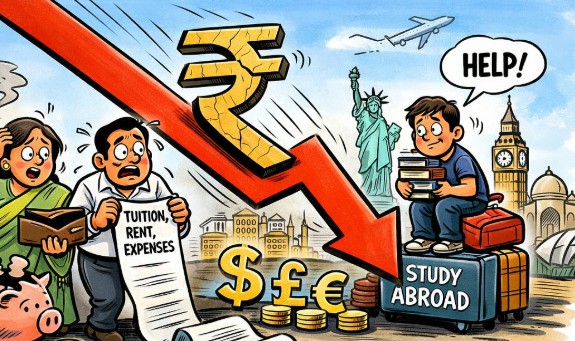
The dream of studying abroad, once a clear pathway to global opportunities, is undergoing a significant shift in 2026. A combination of geopolitical tensions and Indian rupee depreciation is making overseas education increasingly expensive and uncertain for Indian students.
From rising tuition costs to stricter visa policies, multiple global factors are reshaping how students and families approach international education.
Rupee Depreciation: The Biggest Financial Shock
One of the most immediate impacts comes from the weakening Indian currency. As the rupee depreciates against major currencies like the US dollar and British pound, the cost of studying abroad has surged sharply.
- Tuition fees become significantly higher in rupee terms
- Living expenses such as rent, food, and travel increase
- Education loans become heavier financial burdens
Even small currency fluctuations can lead to a 10–15% rise in total expenses, making budgeting far more difficult for families.
Additionally, a weaker rupee directly increases overseas spending, affecting both upfront and recurring costs for students.
Geopolitical Tensions Add to Uncertainty
Global conflicts—particularly in regions like West Asia—are not just political issues; they are directly impacting education decisions.
- Rising oil prices due to conflicts are increasing inflation and weakening currencies
- Foreign investment outflows are putting additional pressure on the rupee
- Economic instability is affecting global job markets and student mobility
The rupee has already seen sharp declines amid geopolitical tensions, making international education more expensive and risky.
Students Rethink Study Destinations and Plans
With costs rising and uncertainty growing, Indian students are becoming more strategic in their decisions.
Emerging Trends:
- Shift from expensive destinations like the US and UK to Europe and other affordable countries
- Increased focus on return on investment (ROI)
- Preference for shorter or skill-based courses
- Some students opting to delay plans or study in India
This marks a major transition from aspiration-driven choices to financially calculated decisions.
Visa Restrictions and Policy Changes Add Pressure
Apart from financial concerns, students are also dealing with:
- Stricter visa norms in countries like the UK and Australia
- Caps on international student intake in some regions
- Changing post-study work opportunities
These policy uncertainties make long-term planning difficult and increase the perceived risk of studying abroad.
Rise of Alternatives: India & Hybrid Education Models
As global uncertainty rises, students are actively exploring alternatives:
1. Premium Indian Institutions
Top Indian colleges are gaining popularity due to:
- Improved global rankings
- Better infrastructure
- Strong placement opportunities
2. Hybrid Programs
- Study partly in India and partly abroad
- Reduced cost with international exposure
3. Skill-Based Learning
Students are focusing more on:
- Industry-relevant skills
- Online certifications
- Career-oriented programs
These options offer cost efficiency without compromising career outcomes.
Financial Planning Becomes Critical
Families are now adopting a more cautious approach:
- Adding currency fluctuation buffers to budgets
- Comparing multiple countries before finalising
- Evaluating loan repayment risks carefully
The emphasis has shifted from “study abroad at any cost” to “study smart with financial clarity.”