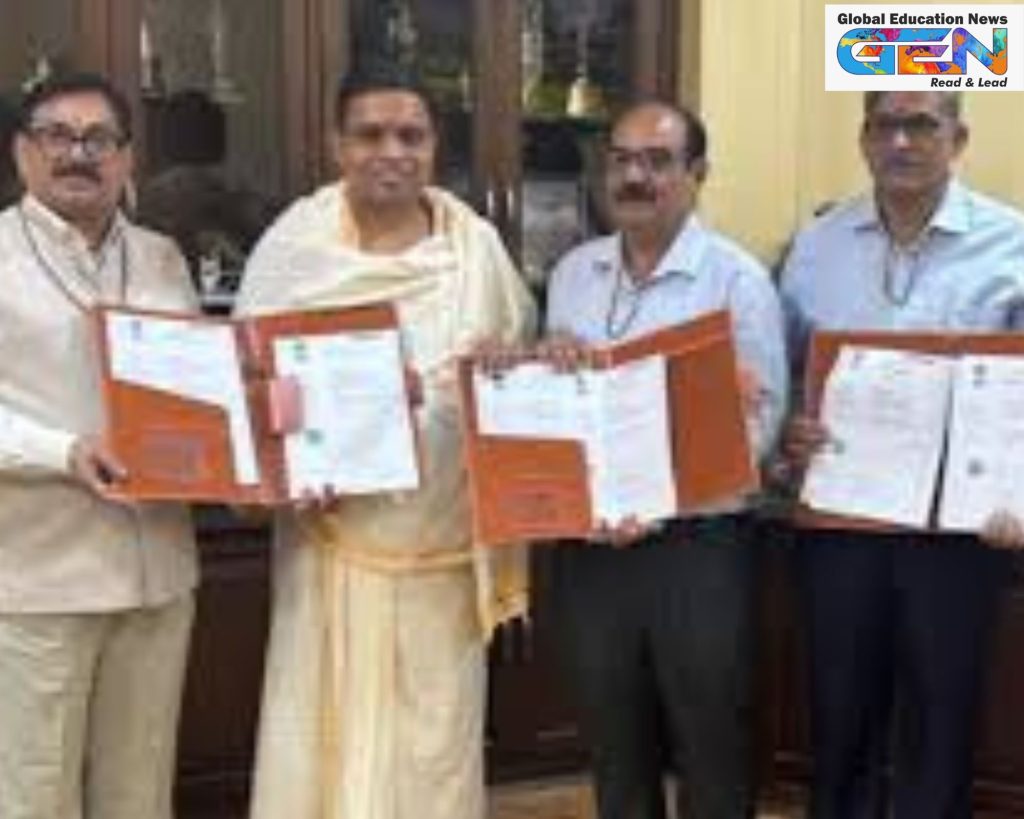
On June 26, 2025, a groundbreaking moment unfolded as Patanjali University, alongside three prestigious Indian universities, joined forces to breathe new life into Traditional Indian Knowledge Systems (TIKS). This collaboration, sealed through Memorandums of Understanding (MoUs), is set to weave ancient wisdom—think Vedas, Ayurveda, and yogic sciences—into modern education. From launching innovative courses to fostering global outreach, this initiative is a bold step toward reviving India’s cultural heritage while aligning with the National Education Policy (NEP) 2020.
- Patanjali University and three leading Indian universities signed MoUs on June 26, 2025.
- Focus: Integrate Vedic knowledge, Ayurveda, and Indian heritage into modern curricula.
- Aims to globalize India’s traditional knowledge systems.
Why This Collaboration Matters
Key Points:
- Revives disciplines like Vedic studies, Sanskrit, and traditional agriculture.
- Aligns with NEP 2020’s vision for holistic, value-based education.
- Promotes India’s soft power through global academic partnerships.
India’s ancient knowledge systems—rooted in the Vedas, Upanishads, and practices like Ayurveda and Yoga—have shaped global philosophy and science for centuries. Yet, modern education often overlooks these treasures. This partnership aims to change that by embedding TIKS into university curricula. By blending Gurukul-style learning with cutting-edge research, the universities are creating a model that honors India’s past while preparing students for a global future. The initiative also supports Atmanirbhar Bharat, promoting self-reliance through indigenous knowledge, from herbal medicine to sustainable farming. It’s not just education—it’s a cultural renaissance!
What’s on the Horizon?
Key Points:
- New courses in Ayurveda, Yoga, Sanskrit, and Vedic sciences.
- Collaborative research centers for traditional knowledge.
- Global outreach through workshops, seminars, and exchange programs.
The MoUs outline an ambitious roadmap:
- Innovative Curricula: Expect degree programs and certifications in Ayurveda medicine, yogic sciences, Vedic mathematics, and Sanskrit literature.
- Research Hubs: Joint centers will explore ancient texts and their modern applications, like Panchakarma therapies or Vedic astronomy.
- Global Platforms: The universities plan to host international conferences and exchange programs, showcasing India’s wisdom to the world.
- Skill Development: Short-term courses will train students in traditional practices like organic farming and herbal product development, aligning with market needs.
This isn’t just about classrooms—it’s about making ancient wisdom relevant in 2025 and beyond!
The Powerhouses Behind the Movement
Key Points:
- Patanjali University leads with its expertise in Yoga and Ayurveda.
- Three unnamed top universities bring academic rigor and resources.
- Supported by experts like Acharya Balkrishna and aligned with NEP 2020.
While Patanjali University, under the guidance of Acharya Balkrishna, is the driving force, the three partnering institutes (names undisclosed in the announcement) are among India’s academic elite, known for excellence in research and education. Together, they combine Patanjali’s deep roots in Yoga, Ayurveda, and Vedic studies with the others’ strengths in modern disciplines like science and technology. This synergy ensures a balanced approach, making TIKS accessible to students while meeting global academic standards. The initiative also draws inspiration from NEP 2020, which emphasizes holistic education rooted in Indian ethos.
A Cultural and Economic Game-Changer
Key Points:
- Boosts India’s soft power through global promotion of Yoga and Ayurveda.
- Creates job opportunities in herbal medicine, wellness tourism, and cultural education.
- Preserves India’s heritage for future generations.
This collaboration is more than academic—it’s a catalyst for cultural and economic growth. By promoting Yoga and Ayurveda globally, the universities are enhancing India’s soft power, positioning it as a leader in wellness and spirituality. The focus on practical applications, like herbal product development and sustainable agriculture, opens career paths in booming sectors like wellness tourism (valued at $639 billion globally in 2023). Plus, by digitizing ancient texts and creating online courses, the initiative ensures India’s heritage reaches Gen Z and beyond, preserving it for centuries to come.
How Students and Educators Can Get Involved
Key Points:
- Enroll in upcoming TIKS courses via university portals like patanjali.university.
- Attend workshops and seminars announced on educationtimes.com.
- Explore research opportunities in Vedic sciences and Ayurveda.
Excited to join the movement? Students can look forward to enrolling in TIKS-based programs starting in the 2025–26 academic year—check patanjali.university or partner institute websites for updates. Educators and researchers can collaborate through joint projects or attend webinars and conferences hosted by the universities (details on educationtimes.com). Aspiring entrepreneurs in Ayurveda or wellness can tap into skill-based courses to launch startups. Follow Times of India Education on social media for the latest announcements and application deadlines.
Tips to Make the Most of This Opportunity
Key Points:
- Research courses in Yoga, Ayurveda, or Sanskrit for your career goals.
- Network with professors and peers at TIKS-focused events.
- Stay updated via educationtimes.com or patanjali.university.
To dive into this cultural revival:
- Explore Programs: Check eligibility for degrees or certifications in Vedic sciences or Ayurveda on university portals.
- Attend Events: Join seminars or workshops to connect with experts and learn about TIKS applications.
- Leverage Resources: Use online platforms like SWAYAM for free courses on Indian knowledge systems.
- Stay Informed: Follow Times of India Education or Patanjali University on social media for updates on course launches and events.
This is your chance to blend ancient wisdom with modern skills—don’t miss out!
Why This Matters for India’s Future
Key Points:
- Revives India’s 5,000-year-old knowledge systems for modern relevance.
- Supports Atmanirbhar Bharat through indigenous innovation.
- Inspires youth to embrace cultural pride and global opportunities.
The collaboration between Patanjali University and its partners is a bold step toward reclaiming India’s intellectual legacy. By integrating Traditional Indian Knowledge Systems into mainstream education, it empowers students to carry forward the wisdom of the Vedas, Ayurveda, and Yoga while meeting 21st-century demands. Aligned with NEP 2020 and Atmanirbhar Bharat, this initiative fosters cultural pride, economic growth, and global recognition. As one X post aptly put it, “Learn traditional knowledge… live in the past, thrive in the future!”
Join the Cultural Renaissance
Key Points:
- MoUs signed on June 26, 2025, to promote TIKS globally.
- Check patanjali.university or educationtimes.com for updates.
- Be part of India’s journey to blend heritage with innovation.
The Four Top Universities Collaboration 2025 is a game-changer, uniting Patanjali University and three academic giants to revive India’s ancient wisdom. From Ayurveda to Vedic sciences, this initiative is set to transform education, create jobs, and elevate India’s global stature. Visit patanjali.university or educationtimes.com to explore courses, events, and research opportunities. Join the movement to celebrate India’s heritage while shaping a vibrant, self-reliant future—let’s make 2025 the year of Traditional Indian Knowledge!