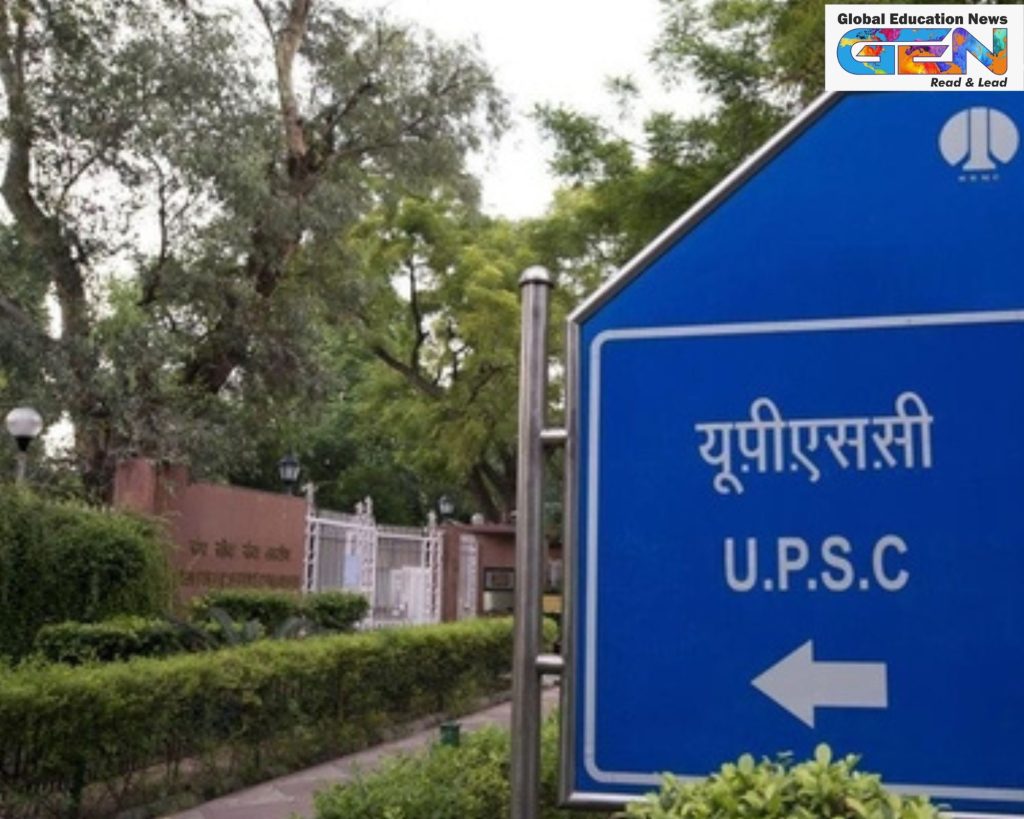
The highlights of critical topics for UPSC Prelims and Mains: the United Nations Watercourses Convention, Presidential Reference under Article 143, and the National Education Policy (NEP) 2020. These subjects span international relations, constitutional law, and educational reforms, offering essential insights for aspirants. This article breaks down each topic, its relevance, and key points for exam preparation.
Key Points:
- Covers UN Watercourses Convention, Presidential Reference, and NEP 2020.
- Relevant for UPSC Prelims (Current Affairs) and Mains (GS II, GS III).
- Provides actionable insights for effective exam preparation.
India’s First Private Heavy Water Test Facility
India’s nuclear sector has taken a significant step by involving private players in testing equipment for upgrading depleted heavy water, a process previously handled by Bhabha Atomic Research Centre (BARC).
Key Points:
- TEMA India’s Role: Mumbai-based TEMA India opened a test facility in Achchad, Palghar, to manufacture and test distillation columns for heavy water upgradation, supporting Pressurised Heavy Water Reactors (PHWRs).
- Technology Transfer: Facility built under BARC’s technology transfer and NPCIL’s purchase order, reflecting public-private synergy under Atma-Nirbhar Bharat.
- Significance: First batch of tested equipment dispatched for Rawatbhata Nuclear Power Plant (RAPP-8), set to go critical by December 2025.
- Heavy Water (D2O): Used as coolant and moderator in PHWRs, requiring 99.9% purity; depleted D2O is upgraded via distillation.
- Nuclear Goals: India targets 100 GW nuclear capacity by 2047, with 24 reactors (8,780 MW) operational and 13.6 GW under construction.
UPSC Relevance:
- Prelims: Current events, nuclear energy basics, Atma-Nirbhar Bharat.
- Mains: GS III (Infrastructure, Energy); discuss private sector role in nuclear energy and its alignment with self-reliance goals.
China’s Yarlung Tsangpo Hydropower Project and UN Watercourses Convention
China’s $167.8 billion hydropower project on the Yarlung Tsangpo River, launched on July 19, 2025, raises concerns for lower riparian India, highlighting the importance of the UN Watercourses Convention.
Key Points:
- Project Details: Located in Medog County, Tibet, 30 km from India, it will generate 300 billion kWh annually, involving five cascade hydropower plants and river diversion.
- India’s Concerns: Potential disruption of Brahmaputra’s flow (25–35% from Tibet), flooding risks, ecological damage, and seismic hazards in Seismic Zone V.
- UN Watercourses Convention (1997): Promotes “equitable and reasonable utilisation” and “no significant harm” principles, part of customary international law, though neither India nor China is a signatory.
- China’s Track Record: Limited cooperation with India under three MoUs, with intermittent suspension of wet-season hydrographic data.
- Brahmaputra Path: Originates near Mount Kailash, enters India as Siang in Arunachal Pradesh, becomes Brahmaputra in Assam, and flows into Bangladesh as Jamuna/Meghna.
UPSC Relevance:
- Prelims: Map work (Brahmaputra’s course), UN Watercourses Convention, Harmon Doctrine.
- Mains: GS II (India-China relations, international law); analyze India’s rights as a lower riparian and China’s upper riparian actions.
ICJ’s Climate Change Advisory Opinion
The International Court of Justice (ICJ) delivered a landmark advisory opinion on July 23, 2025, affirming states’ legal obligations to address climate change, initiated by Vanuatu.
Key Points:
- Case Origin: Vanuatu led a UNGA resolution (March 2023, co-sponsored by 130+ countries) seeking ICJ’s opinion on states’ climate obligations and consequences of inaction.
- ICJ Ruling: States must reduce GHG emissions under international law (UNFCCC, Paris Agreement, UNCLOS), regulate fossil fuels, and provide reparations for climate harm.
- Human Rights Link: Climate inaction violates rights to life, health, and adequate living standards.
- India’s Position: Did not co-sponsor but did not oppose; balances climate action (50% renewables by 2030, net-zero by 2070) with development needs.
- Impact: Strengthens climate litigation, supports vulnerable nations, and influences COP30 and Loss and Damage Fund discussions.
UPSC Relevance:
- Prelims: ICJ structure, advisory vs. contentious cases, climate treaties.
- Mains: GS II (International Organizations), GS III (Environment); discuss climate justice and India’s role in global climate diplomacy.
Presidential Reference and Tamil Nadu Governor Case
The Supreme Court’s April 8, 2025, ruling on Tamil Nadu vs. Governor prompted a Presidential Reference under Article 143(1), raising questions about judicial overreach.
Key Points:
- April 8 Ruling: SC set a three-month timeline for Governors and the President to act on bills, citing implicit constitutional obligations for timely action.
- Presidential Reference: President Droupadi Murmu invoked Article 143(1) to seek SC’s advisory opinion on whether this timeline applies to the President’s powers under Article 201.
- Article 143(1): Allows the President to refer questions of law or fact of public importance to SC; opinion is non-binding but persuasive.
- Concerns: SC’s extension of timeline to presidential powers may constitute judicial overreach, as Article 201 sets no timeframe.
- Article 142: SC invoked its extraordinary powers to ensure justice, but critics argue it risks encroaching on executive prerogatives.
UPSC Relevance:
- Prelims: Articles 143, 201, 142; advisory jurisdiction; judicial overreach vs. encroachment.
- Mains: GS II (Polity, Federal Structure); analyze balance of power between judiciary and executive.
National Education Policy (NEP) 2020: Five-Year Progress
Marking five years since its launch, NEP 2020 has driven significant educational reforms, reshaping school and higher education structures.
Key Points:
- New Structure: Replaced 10+2 with 5+3+3+4 (foundational, preparatory, middle, secondary stages); NCERT’s new textbooks for classes 1–8 reflect this.
- Early Childhood Education: Aims for universal pre-primary access by 2030; Jaadui Pitara kits introduced, ECCE curriculum issued.
- Academic Bank of Credits (ABC): Enables credit storage and transfer, supporting multiple entry-exit options and four-year multidisciplinary degrees.
- Challenges: Training Anganwadi workers, improving early education infrastructure, and aligning state policies (e.g., minimum age of 6 for Class 1).
- NEP and SDGs: Aligns with SDG 4 (Quality Education) through inclusive, equitable education reforms.
UPSC Relevance:
- Prelims: NEP 2020 features, SDG 4, ECCE framework.
- Mains: GS II (Education, Social Sector); evaluate NEP’s impact and challenges in implementation.
Thailand-Cambodia Border Conflict
The recent Thailand-Cambodia conflict over the Preah Vihear temple highlights cultural and nationalist tensions, resolved by a ceasefire on July 28, 2025.
Key Points:
- Conflict Trigger: Escalation in May 2025 after a Cambodian soldier’s death, followed by tit-for-tat actions (e.g., Cambodia’s ban on Thai imports, Thailand’s border closures).
- Preah Vihear Dispute: 1907 colonial border demarcation by France led to competing claims; temple awarded to Cambodia by ICJ in 1962, but tensions persist.
- Cultural Rivalry: Both nations claim cultural ownership, fueled by nationalist narratives; Theravada Buddhism ties add complexity.
- Ceasefire: Negotiated by Malaysian PM Anwar Ibrahim, ending clashes that killed 35 and displaced 2.6 lakh people.
- Geopolitical Impact: Affects ASEAN stability and India’s Act East Policy interests in Southeast Asia.
UPSC Relevance:
- Prelims: Map work (Thailand, Cambodia, Preah Vihear), ICJ’s 1962 ruling.
- Mains: GS II (International Relations); discuss nationalism’s role in border disputes and India’s regional interests.
Nigeria’s GDP Rebasing
Nigeria’s GDP rebasing exercise on July 21, 2025, elevated it to the 55th largest economy, adding $50 billion to its 2024 GDP.
Key Points:
- Rebasing Explained: Updated base year from 2010 to 2019, incorporating digital services, e-commerce, and pension funds.
- Impact: Nigeria’s 2024 GDP rose to $243 billion from $187 billion; agriculture’s share increased to 26%, informal sector to 42.5%.
- India’s Context: India’s MoSPI is rebasing GDP to 2022-23, with results due in February 2026; last rebasing (2015) raised concerns about accuracy.
- Challenges: Currency devaluation (naira fell 49% in 2023, 41% in 2024) hinders Nigeria’s $1 trillion economy goal by 2030.
UPSC Relevance:
- Prelims: GDP rebasing, base year concept, India’s base year (2011-12).
- Mains: GS III (Economy); analyze rebasing’s impact on economic indicators and India’s methodology.
India-EU Trade Talks: Regulatory Certainty for FDI
India is negotiating a new chapter in the India-EU FTA to offer regulatory certainty in manufacturing to attract EU investments.
Key Points:
- New Chapter: Focuses on non-services (manufacturing) FDI, addressing shared concerns about China’s overcapacity in pharmaceuticals, electronics, and defense.
- Conditions: 100% FDI allowed with stipulations like local employment, value addition, and joint ventures.
- Context: Follows EFTA deal ($100 billion investment over 15 years); EU deal aims for a robust investment framework.
- Progress: Advances in services, investment, and dispute settlement texts, targeting FTA conclusion by end of 2025.
UPSC Relevance:
- Prelims: India-EU FTA, EFTA, FDI policies.
- Mains: GS II (Bilateral Agreements); discuss India’s strategy to balance FDI liberalization with economic protectionism.