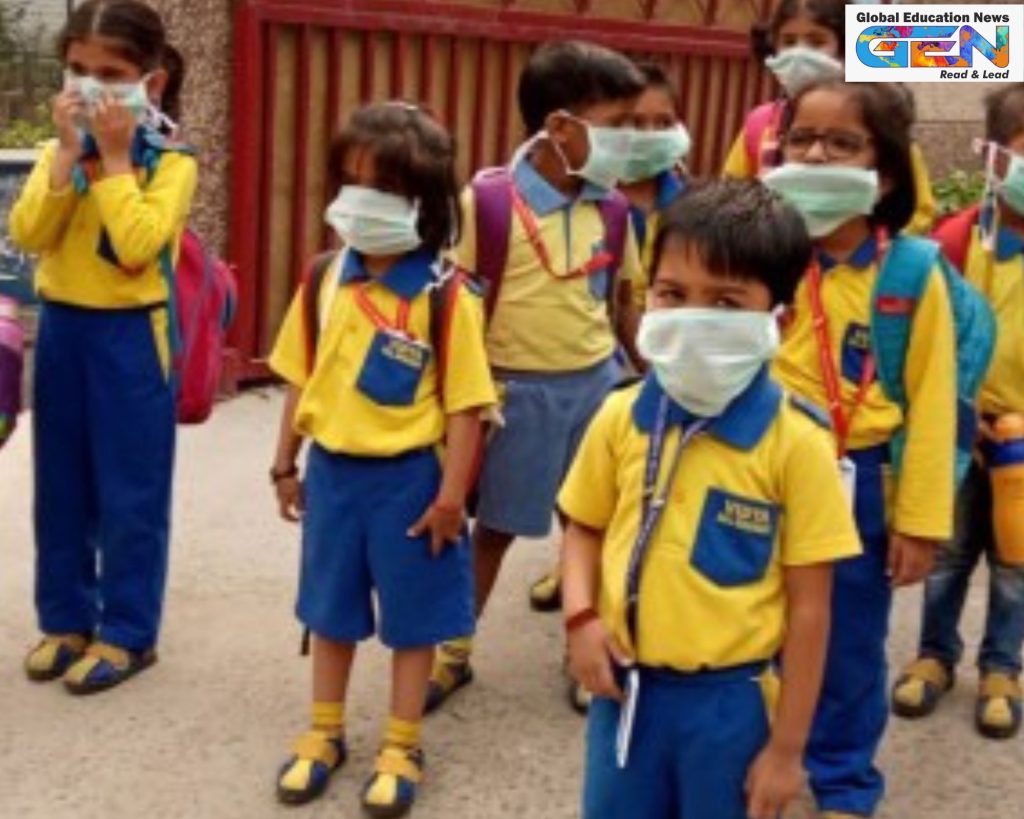
As Delhi grapples with its annual smog apocalypse in December 2025, the government’s latest salvo targets an often-overlooked battleground: school classrooms. With Air Quality Index (AQI) levels routinely plunging into “very poor” and “severe” categories—exacerbated by vehicle emissions, industrial fumes, and seasonal crop burning—this initiative represents a proactive pivot toward child-centric environmental health. But is it a comprehensive fix or a necessary first step? This analysis dissects the announcement, its context, potential impacts, and broader implications, drawing on official statements and recent developments to evaluate its promise amid Delhi’s persistent pollution crisis.
The Core Announcement: Phased Installation and Immediate Action
Announced on December 19, 2025, the Delhi government’s plan to install air purifiers in 10,000 government school classrooms marks a significant escalation in urban air quality interventions. Education Minister Ashish Sood, under Chief Minister Rekha Gupta’s administration, emphasized the urgency, aligning the effort with Prime Minister Narendra Modi’s vision for healthier public spaces.
Key Points:
- Scale and Scope: Targets 10,000 classrooms in the first phase out of approximately 38,000 total in Delhi’s government schools, focusing on high-pollution hotspots for rapid deployment.
- Timeline: Tenders issued immediately on December 19, 2025, with installations to commence shortly thereafter; full expansion to all classrooms planned in subsequent phases.
- Technology Focus: Purifiers designed to capture PM2.5 and other fine particulates, aiming to improve indoor air quality by up to 90% in enclosed spaces, based on similar urban deployments elsewhere.
- Official Quote: “We do not play with children’s breathing, nor will we allow anyone to do so,” Sood stated, underscoring the non-negotiable priority of student health.
This structured rollout—prioritizing tenders for efficiency—signals administrative resolve, but its success hinges on swift procurement and maintenance protocols to avoid delays seen in past environmental projects.
Pollution Context: Why Schools Are Ground Zero for Delhi’s Smog War
Delhi’s winter pollution isn’t abstract; it’s a measurable menace, with AQI spikes often exceeding 400, triggering school closures and hybrid learning in prior years. Children, whose developing lungs absorb toxins at twice the adult rate, face heightened risks of asthma, bronchitis, and cognitive impairments from prolonged exposure. Indoor air in schools, stagnant and unventilated, can trap pollutants at levels 2-5 times higher than outdoors during peak hours.
Key Points:
- Health Vulnerabilities: Studies link chronic exposure to a 20-30% rise in pediatric respiratory cases; Delhi reported a 15% uptick in school absenteeism due to pollution-related illnesses last winter.
- Seasonal Triggers: Stubble burning from Punjab and Haryana, coupled with Diwali aftermath and vehicular traffic, pushes AQI into “severe” zones (301-500) from November to February.
- School-Specific Challenges: Overcrowded classrooms amplify risks, with minimal natural ventilation in many facilities; past measures like odd-even traffic rules offered temporary relief but failed to address indoor hazards.
- Comparative Insights: Similar initiatives in Beijing and Seoul reduced school-based pollution incidents by 25% within a year, suggesting Delhi’s plan could yield tangible gains if scaled effectively.
Analytically, this targets a critical gap: While outdoor bans (e.g., construction halts) dominate headlines, indoor protections like purifiers address the “silent exposure” in educational hubs, potentially cutting healthcare costs by millions annually.
Broader Strategy: Integration with Long-Term Pollution Controls
The purifier rollout isn’t isolated—it’s woven into Delhi’s multifaceted anti-smog framework, including emergency protocols and infrastructure overhauls. A parliamentary panel recently echoed this urgency, recommending school purifiers alongside stricter vehicular emission norms. Public discourse on X (formerly Twitter) reflects cautious optimism, with news clips of Sood’s announcements garnering thousands of views and calls for faster implementation.
Key Points:
- Complementary Measures: Parallel efforts include clearing the Bhalswa landfill—a major emission source—by September 2026, alongside enhanced waste segregation and green buffers around schools.
- Innovation Spotlight: Student-led DIY purifiers, like those prototyped by Delhi high schoolers earlier this year, highlight grassroots momentum that could inspire community involvement.
- Funding and Oversight: Allocated via the Education Department budget, with tenders ensuring transparency; monitoring via AQI-linked apps could track efficacy in real-time.
- Potential Challenges: Logistical hurdles in maintenance and equitable distribution across 1,000+ schools could dilute impact, as noted in expert critiques of similar programs.
This holistic approach positions the initiative as a linchpin in Delhi’s National Clean Air Programme, potentially reducing overall PM2.5 exposure by 15-20% in educational settings over two years.