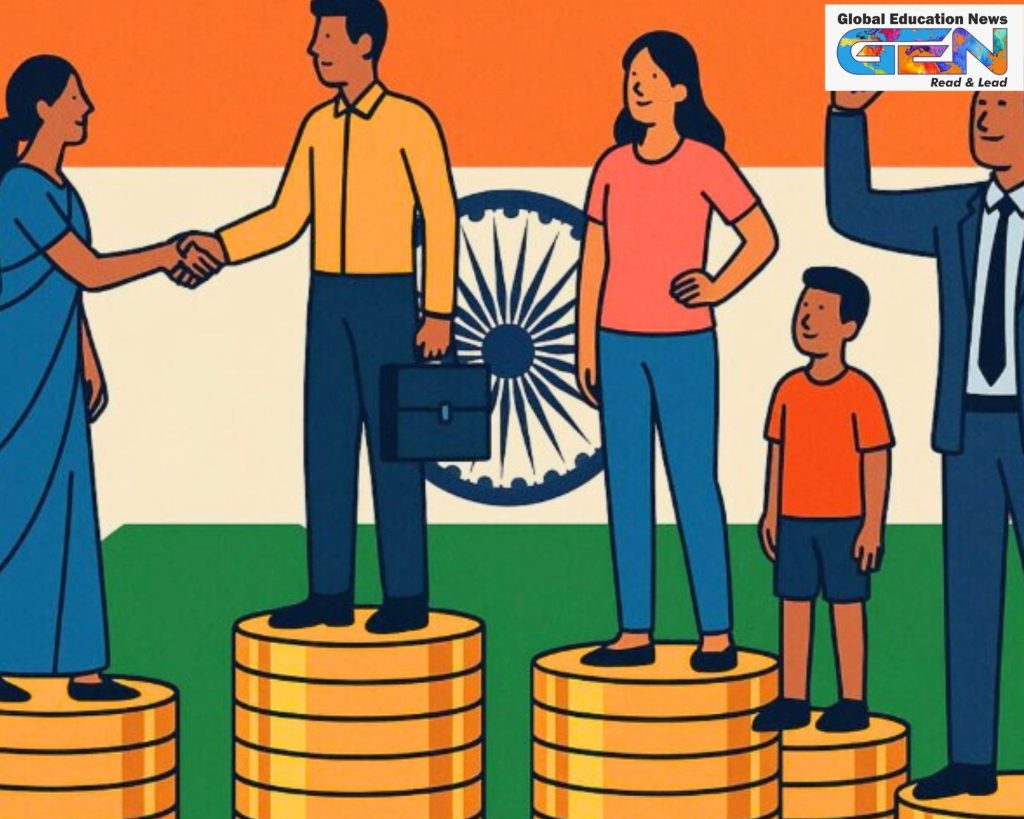
The Gini Index, also known as the Gini Coefficient, is the go-to metric for gauging income inequality or wealth distribution within a country or region. Think of it as a report card for economic fairness. Ranging from 0 (perfect equality, where everyone has the same income) to 1 (extreme inequality, where one person hoards all the wealth), this index, developed by Italian statistician Corrado Gini in 1912, offers a clear lens into how unevenly resources are shared. It’s a number that tells a story—of fairness, disparity, or somewhere in between.
- Definition: Measures income or wealth inequality on a scale from 0 to 1.
- Perfect Equality: A Gini of 0 means everyone earns the same.
- Extreme Inequality: A Gini of 1 indicates one person holds all wealth.
How Does the Gini Index Work? The Math Behind the Gap
Key Points:
- Lorenz Curve: Plots cumulative income against population share.
- Calculation: Derived from the gap between the Lorenz curve and perfect equality.
- Practical Use: Higher Gini values signal greater economic disparity.
At its core, the Gini Index is built on the Lorenz Curve, a graph that shows how income or wealth is distributed across a population. Picture a line of perfect equality (where 10% of people hold 10% of wealth, 50% hold 50%, and so on). The further the Lorenz Curve bows away from this line, the more unequal the society. The Gini Index quantifies this gap as a single number between 0 and 1 (or 0–100 when expressed as a percentage). It’s a simple yet powerful way to measure economic disparity and guide policy decisions.
Gini Index in India: A Mixed Picture
Key Points:
- India’s Gini: Estimated at 0.35–0.37 for income, higher for wealth (0.75–0.85).
- Rising Wealth Gap: Top 1% hold over 40% of wealth, per Oxfam reports.
- Rural vs. Urban: Urban areas show higher inequality than rural regions.
India’s Gini Index tells a tale of contrasts. For income, it hovers around 0.35–0.37, suggesting moderate inequality compared to global peers. However, wealth inequality is stark, with a Gini of 0.75–0.85, driven by the top 1% owning over 40% of the nation’s wealth. Rural areas tend to have lower Gini values due to more uniform (albeit modest) incomes, while urban centers, fueled by rapid economic growth, show sharper divides. Programs like MGNREGA and PM-KISAN aim to bridge the gap, but India’s economic disparity remains a hot topic for policymakers.
Global Perspective: Where Does India Stand?
Key Points:
- Global Range: Gini Index varies from 0.25 (Nordic countries) to 0.60 (South Africa).
- India’s Position: Moderate income inequality, high wealth inequality.
- Data Challenges: Inconsistent reporting can skew comparisons.
Globally, the Gini Index paints a diverse picture. Countries like Denmark and Sweden boast low Gini scores (around 0.25–0.30), reflecting strong welfare systems. In contrast, South Africa tops the charts with a Gini near 0.60, signaling extreme inequality. India sits in the middle for income but leans toward higher inequality for wealth, akin to nations like the United States. However, data gaps—especially in informal economies like India’s—can make cross-country comparisons tricky, urging caution when interpreting global rankings.
Why the Gini Index Matters
Key Points:
- Policy Tool: Guides taxation, welfare, and redistribution strategies.
- Social Stability: High inequality can fuel unrest and economic stagnation.
- Global Goals: Aligns with SDGs to reduce inequality by 2030.
The Gini Index isn’t just a number—it’s a wake-up call. High Gini values signal risks of social unrest, reduced economic growth, and barriers to social mobility. For India, addressing inequality is key to achieving Sustainable Development Goals (SDGs), particularly Goal 10 (Reduced Inequalities). Governments use the Gini to shape policies like progressive taxation, social welfare, or skill development programs. In a world where the rich-poor gap is under scrutiny, the Gini Index is a compass for building fairer societies.
Limitations of the Gini Index: Not the Whole Story
Key Points:
- Narrow Focus: Measures income/wealth, not access to education or healthcare.
- Data Issues: Relies on surveys, which may miss informal incomes.
- Regional Variations: National Gini masks local disparities.
The Gini Index has its blind spots. It doesn’t capture non-income factors like access to education, healthcare, or opportunities, which are critical to holistic equality. In India, where informal economies dominate, survey-based data may underestimate true inequality. Plus, a single national Gini can hide stark differences between states or rural-urban divides. For a fuller picture, policymakers pair it with metrics like the Human Development Index (HDI) or poverty rates.
The Road Ahead: Can India Bridge the Gap?
Key Points:
- Policy Push: Progressive taxes and inclusive growth are key.
- Education and Skills: Empowering the marginalized reduces disparity.
- Global Lessons: Learning from low-Gini nations like Norway.
India’s journey to a lower Gini Index hinges on bold action. Strengthening social welfare, boosting rural economies, and investing in education and skilling can narrow the income gap. Learning from low-inequality nations like Norway, India could prioritize equitable wealth distribution through transparent policies. As the Gini Coefficient continues to spotlight disparities, it’s a reminder that economic growth must lift all boats—not just the yachts.
Gini Index: A Mirror to Our Society
The Gini Index is more than a statistic—it’s a reflection of how societies share their prosperity. For India, it highlights the challenge of balancing rapid growth with fairness. As the nation strives for economic equity, the Gini Index will remain a vital tool, guiding efforts to create a future where opportunity isn’t a privilege but a right. Ready to dive deeper into the numbers that shape our world?