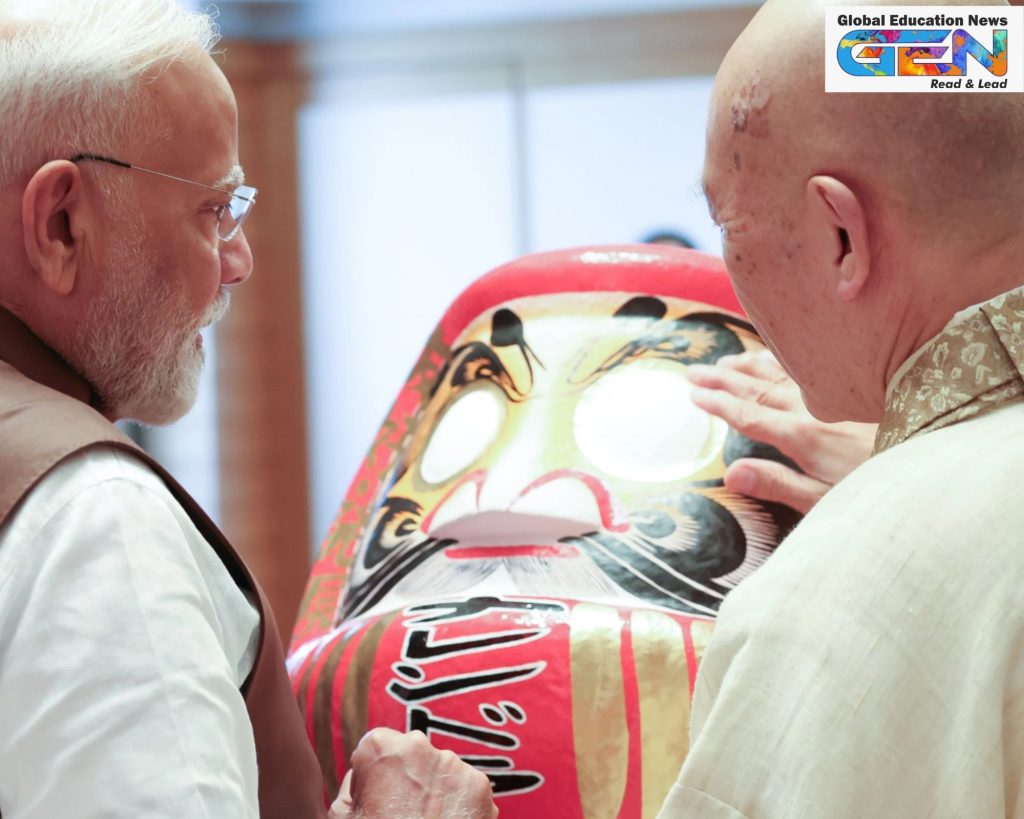
During his two-day visit to Japan for the 15th India-Japan Annual Summit on August 29–30, 2025, Prime Minister Narendra Modi was presented with a Daruma doll by Rev. Seishi Hirose, Chief Priest of Shorinzan Daruma-ji Temple in Takasaki, Gunma. This iconic Japanese talisman, symbolizing perseverance and good luck, reflects the deep cultural and spiritual ties between India and Japan, rooted in the legacy of Bodhidharma, an Indian monk from Kancheepuram.
- Key Points:
- Gifted during PM Modi’s visit to strengthen India-Japan bilateral ties.
- Represents shared values of resilience, goal-setting, and spiritual heritage.
- Highlights cultural diplomacy through a symbol with Indian origins.
Origins Rooted in Indian Spirituality
The Daruma doll is modeled after Bodhidharma, a 5th–6th century monk from Kancheepuram, Tamil Nadu, revered in Japan as Daruma Daishi. Credited with founding Zen Buddhism (Chan in China), Bodhidharma’s legendary nine-year meditation facing a wall at the Shaolin Temple inspired the doll’s unique design. Stories of his limbs atrophying or eyelids falling off symbolize unwavering dedication, shaping the Daruma’s limbless, wide-eyed form.
- Key Points:
- Bodhidharma, born in the Pallava kingdom, spread Buddhism to China and Japan.
- His meditation practices inspired the Daruma’s design and Zen philosophy.
- The doll’s name derives from the Sanskrit “Dharma”, meaning cosmic law.
Design and Symbolism of Resilience
Crafted from papier-mâché, Daruma dolls are hollow, round, and typically red, though colors like pink (love), yellow (wealth), and black (business) carry specific meanings. Their weighted base ensures they return upright when tilted, embodying the Japanese proverb “Nanakorobi yaoki” (“Fall seven times, stand up eight”). The tradition of painting one eye when setting a goal and the other upon completion reinforces perseverance and focus.
- Key Points:
- Red color links to priestly robes and historical associations with smallpox recovery.
- Eye-painting ritual symbolizes commitment and achievement.
- Facial hair represents longevity, with crane-shaped eyebrows and tortoise-shell cheeks.
Shorinzan Daruma-ji Temple: The Birthplace
Established in 1697 by Zen monk Shorinzan Shinetsu, the Shorinzan Daruma-ji Temple in Takasaki, Gunma, is the epicenter of Daruma production, creating 80% of Japan’s Daruma dolls. Since the 18th century, local farmers crafted these dolls as lucky charms for harvests and protection. The temple, visited by emperors and shoguns, remains a spiritual hub where locals seek blessings before exams or business ventures.
- Key Points:
- Takasaki produces most Daruma dolls using traditional papier-mâché techniques.
- Annual Daruma Kuyo ceremony burns old dolls to honor past goals.
- Rev. Seishi Hirose, trained in Zen Buddhism, upholds the temple’s legacy since 1981.
India-Japan Cultural Bridge
The Daruma doll embodies a profound cultural connection between India and Japan, rooted in Bodhidharma’s journey from Kancheepuram to China, influencing Japanese Zen Buddhism. The gift to PM Modi during his visit underscores cultural diplomacy, symbolizing shared values of resilience and aspiration. This exchange highlights India’s role as the birthplace of Buddhism and its enduring influence on Japanese traditions.
- Key Points:
- Bodhidharma’s legacy links India’s Buddhist heritage to Japanese culture.
- Daruma doll gift to Modi reflects mutual respect and shared spiritual values.
- Strengthens India-Japan ties in trade, technology, and cultural exchange.
Cultural Significance in Modern Japan
Beyond its religious roots, the Daruma doll is a cultural icon in Japan, found in homes, businesses, and pop culture, including anime and games. Used during New Year or festivals, the dolls inspire goal-setting in areas like prosperity and personal growth. The Daruma Kuyo ceremony, held at temples like Nishi-Arai Daishi and Dairyū-ji, burns old dolls to mark completed goals and new beginnings.
- Key Points:
- Daruma dolls are versatile symbols for academic, business, and personal success.
- Annual burning ceremonies honor past efforts and inspire new aspirations.
- Modern variations in color and design cater to diverse goals and aesthetics.