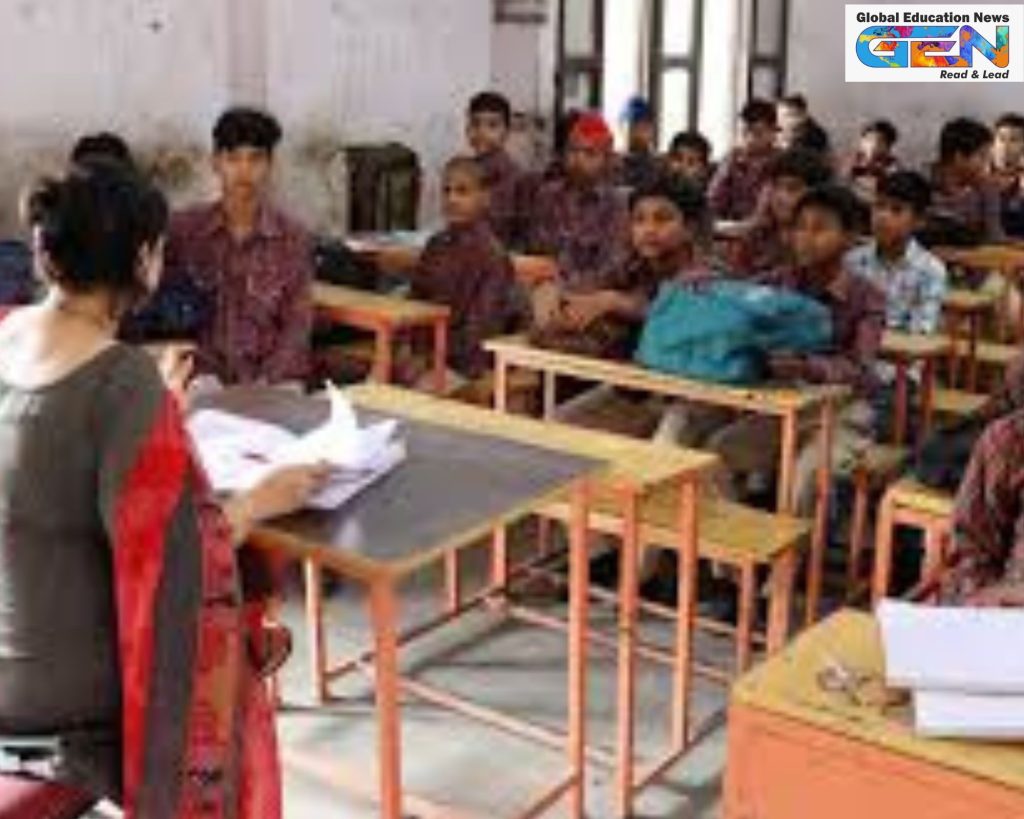
A groundbreaking survey released in late 2024 has pulled back the curtain on the everyday realities of India’s primary classrooms, revealing systemic hurdles that undermine the National Education Policy (NEP) 2020’s ambitious push for foundational literacy and numeracy (FLN). The Teaching Learning Practices Survey 2024-25, conducted by the Language and Learning Foundation with support from Tata Trusts, scrutinized 1,050 government school classrooms in Classes 1 and 2 across nine diverse states: Tamil Nadu, Meghalaya, Assam, Jharkhand, Maharashtra, Rajasthan, Uttar Pradesh, Haryana, and Chhattisgarh.
This initiative, aligned with the NIPUN Bharat Mission’s goal of universal FLN by Grade 3 in 2026-27, uncovers not just data points but a narrative of mismatched policies and ground-level disconnects. With two-thirds of these classrooms operating in multigrade setups and foundational tools like home languages sidelined, the findings signal a critical inflection point for India’s education ecosystem. As enrollment nears universal levels, the focus must shift from access to quality—lest the learning crisis deepens amid rising stakes for 25 crore schoolchildren.
Background: The Evolution and Persistent Gaps in Primary Education
India’s primary education landscape has transformed dramatically since the Right to Education Act (RTE) 2009, boasting near-100% enrollment in Grades 1-5 by 2024. Yet, learning outcomes remain abysmal: only 42% of Class 3 students can read Class 2 text, per recent national assessments. The NEP 2020 and National Curriculum Framework for School Education (NCFSE) 2023 advocate child-centered, multilingual approaches, emphasizing mother-tongue instruction up to age 8 and activity-based learning.
However, rural and semi-urban government schools—serving 70% of students—grapple with structural legacies: teacher shortages (estimated at 1 million in elementary levels), infrastructure deficits in 45% of schools, and a digital divide affecting 30% of learners. The survey builds on ASER 2024’s observation that two-thirds of Std I and II classrooms are multigrade, where monograde curricula leave educators adrift. These nine states, representing 40% of India’s primary enrollment, exemplify a nationwide pattern where policy ambition collides with resource realities.
- Survey Scope: 1,050 classrooms, focusing on teaching practices for FLN.
- Policy Anchors: NIPUN Bharat (FLN by 2026-27); NEP’s multilingualism mandate.
- Broader Context: Post-COVID recovery has improved foundational learning slightly, but equity gaps persist in multilingual, low-resource settings.
Key Findings: Dissecting Classroom Realities Across Nine States
The survey paints a vivid, if sobering, portrait of early-grade instruction, where innovative intents falter against entrenched practices. Key issues cluster around pedagogy, language, and resources, with stark data underscoring the urgency.
Multigrade Classrooms: A Prevalent Yet Unsupported Norm
- Prevalence: 66% of surveyed classrooms (693 out of 1,050) combined multiple grades, often with varying proficiency levels in one room—mirroring ASER 2024’s national estimate of two-thirds for Std I/II.
- Challenges: Curricula and teacher training presume single-grade, monolingual environments, leaving educators without tools for differentiated instruction. This leads to fragmented attention, where advanced students stagnate and beginners lag further.
- Impacts: In resource-scarce rural areas, multigrade setups exacerbate teacher overload, contributing to 20-30% lower learning gains in foundational skills. Union Education Secretary Sanjay Kumar acknowledged: “In one room, there’s more than one class… children of multiple learning levels. That is the challenge of the Indian schooling system.”
Limited Use of Home Language: Silencing the Student’s Voice
- Awareness vs. Action Gap: 73% of teachers knew students’ home languages, but only 10% used them consistently for comprehension and engagement; 61% actively avoided or discouraged it, sometimes reprimanding children.
- Consequences: One-fourth of teachers noted comprehension struggles, aligning with research showing mother-tongue mismatches reduce literacy by 15-20% and boost dropout risks by 37% in low-income contexts. Multilingualism, per NEP, enhances cognitive transfer, yet 40% of non-English medium schools enforce regional languages prematurely.
- Regional Nuances: States like Meghalaya and Assam, with diverse dialects, face amplified barriers, where home-language integration could lift reading comprehension by 25%.
Sparse Use of Teaching-Learning Materials (TLM): From Theory to Tangible Tools
- Usage Deficit: In 53% of classrooms, children never handled TLM; even when available, it was teacher-led rather than child-initiated, defying NCFSE 2023’s call for toys, models, and audio-visuals.
- Barriers: Infrastructure lags—zero-enrollment schools and teacher shortages in 72-80% of Meghalaya’s primaries—compound this, with only 91% trained but few equipped for hands-on methods.
- Expert Insight: Dhir Jhingran, survey lead, noted: “There has been a focus on student learning outcomes… but not that much on what happens inside early-grade classrooms.” This echoes broader trends where TLM absence correlates with 10-15% lower numeracy scores.
Implications for Stakeholders: Ripples Through the Education Ecosystem
These findings reverberate across levels, threatening NEP’s equity goals and economic dividends—each year of quality primary education yields 10% higher lifetime earnings.
- For Students: Linguistic alienation and multigrade dilution hinder FLN, perpetuating a cycle where 50% enter Grade 3 without basics, widening urban-rural divides.
- For Teachers: Overburdened by shortages (91% trained but facing 1:35 ratios in some states), they default to rote methods, eroding morale and efficacy.
- For Policymakers and States: Nine states’ data spotlight scalable fixes, but inaction risks missing 2026-27 targets, costing ₹1-2 lakh crore in lost productivity by 2030.
In multilingual powerhouses like Uttar Pradesh, quiet reforms show promise, but national scaling lags.
Challenges and Criticisms: Beyond the Data to Systemic Inertia
Critics argue the survey underplays deeper woes: 326,000 small schools (≤30 students) lack toilets, electricity, and digital aids, fueling zero-enrollment traps. Teacher training, while robust at 91%, rarely addresses multigrade or multilingual pedagogies, per 2025 analyses. Moreover, NEP’s mother-tongue push faces resistance in English-aspirant urban pockets, where 52% of parents prioritize it over comprehension. Funding shortfalls—education at 3% GDP—exacerbate infra gaps, with 45% schools unequipped for 2025’s hybrid demands.
Recommendations and Future Outlook: Charting a Path to Inclusive Classrooms
The survey urges immediate, layered interventions to align practice with policy:
- Pedagogical Overhauls: Develop multigrade-specific curricula and TLM kits, extending FLN to Grades 3-5 post-2026-27.
- Language Integration: Mandate home-language modules in training, targeting 50% consistent use by 2027; pilot multilingual apps in high-diversity states.
- Resource Mobilization: Boost infrastructure via ₹50,000 crore Samagra Shiksha outlay; train 5 lakh teachers in child-centered methods by 2026.
- Monitoring Mechanisms: Annual classroom audits like ASER, with state dashboards for real-time fixes.
Looking ahead, 2025’s UDISE+ data could benchmark progress, while models from Odisha’s mother-tongue success offer blueprints. If harnessed, these could elevate foundational GER to 95% with equitable outcomes by 2030.