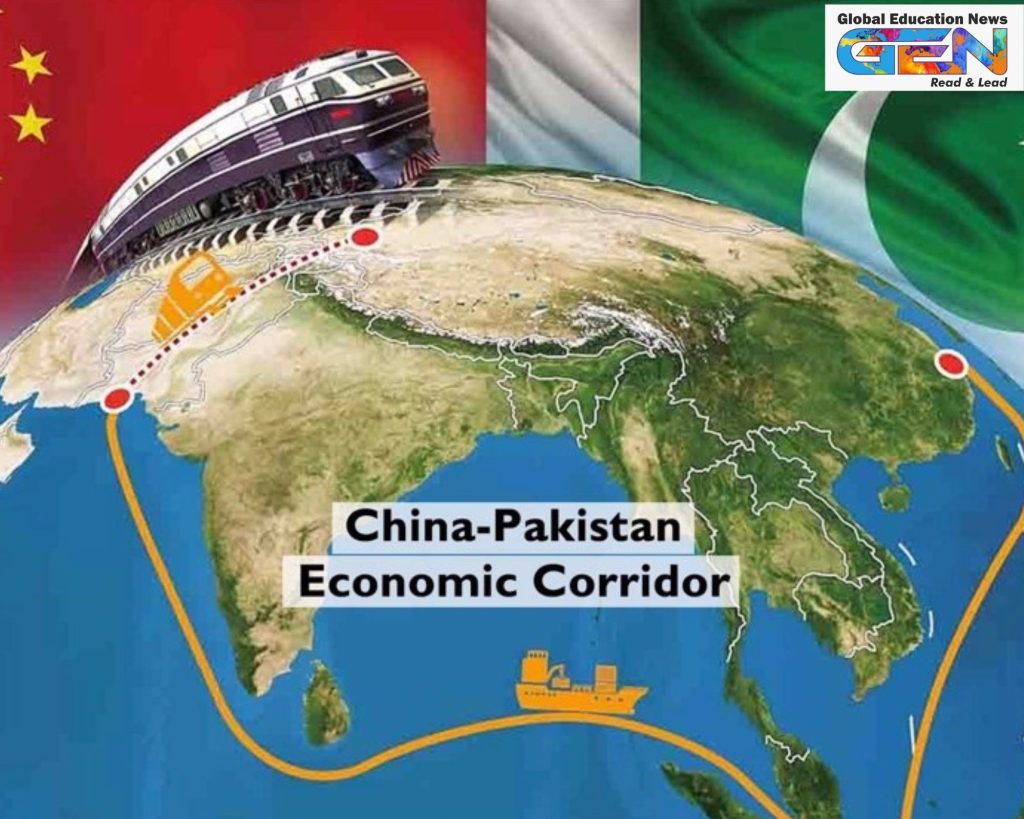
In a bold geopolitical move, China and Pakistan have announced the extension of the China-Pakistan Economic Corridor (CPEC) into Afghanistan. The decision, made during a high-level trilateral dialogue involving the foreign ministers of China, Pakistan, and Afghanistan, marks a new phase of strategic cooperation in the region.
The expansion aims to integrate Afghanistan into the Belt and Road Initiative (BRI), China’s global infrastructure and investment strategy. However, this development has already sparked strong opposition from India, citing concerns over sovereignty and regional stability.
What Is CPEC?
The China-Pakistan Economic Corridor (CPEC) is a flagship component of the Belt and Road Initiative. Launched in 2015, it was initially valued at $46 billion, later expanding to $62 billion. The core objective: revamp Pakistan’s infrastructure and link it directly to China via the strategic Gwadar Port on the Arabian Sea.
CPEC projects include:
- Power generation facilities
- Highways and railways
- Special economic zones (SEZs)
- Oil and gas pipelines
It is designed not only to uplift Pakistan’s economy but also to offer China direct access to the Middle East and Africa through Pakistan’s coast.
Why Pakistan Relies Heavily on CPEC
CPEC is more than just an infrastructure boost for Pakistan—it is a lifeline.
- Power Crisis Relief: Major energy projects helped alleviate crippling electricity shortages.
- Infrastructure Modernization: Roads, railways, and digital connectivity received overdue upgrades.
- Job Creation & Investment: The projects created thousands of jobs and attracted foreign investment.
Yet, this dependency comes at a cost. Pakistan is increasingly vulnerable to debt stress and sovereignty concerns, especially as most financing is China-driven. The halt of coal projects under climate obligations has added pressure on an already strained energy sector.
CPEC’s Expansion into Afghanistan: Economic Gateway or Military Foothold?
The latest announcement includes:
- New railway and highway connections between Pakistan and Afghanistan
- Improved access to Afghan mineral wealth and potential energy corridors
- Enhanced border infrastructure and logistics systems
While framed as economic development, analysts warn the infrastructure may have dual-use military potential, with logistics and surveillance capabilities camouflaged under trade cooperation.
🇮🇳 India’s Strong Opposition: A Matter of Sovereignty
India has vehemently opposed CPEC since its inception. Its primary objections are:
- Sovereignty Violation: CPEC passes through Pakistan-occupied Kashmir (PoK), a region India claims as its own.
- Security Concerns: Enhanced Chinese presence in Pakistan raises alarms for Indian national security.
- Regional Power Shift: The corridor strengthens the China-Pakistan alliance at India’s strategic expense.
India views the inclusion of Afghanistan as a deliberate move to encircle its influence and reshape regional dynamics in favor of Beijing and Islamabad.
Geopolitical Ripple Effects: What This Means for South Asia
CPEC’s expansion could have wide-reaching consequences:
- China-Pakistan-Afghanistan Axis: A growing bloc that could limit India’s diplomatic space in the region.
- Taliban Alignment: Afghanistan’s participation under the Taliban suggests deeper political engagement with China and Pakistan.
- New Trade Routes, Old Tensions: While the infrastructure may bring economic benefits, the underlying geopolitical frictions are likely to intensify.
This trilateral move may also signal China’s intent to replace the US as a key influencer in post-war Afghanistan, using development as a soft-power tool backed by hard strategic interests.
Conclusion: Connectivity or Control?
The expansion of CPEC into Afghanistan represents a strategic recalibration in South Asia. While it promises connectivity and economic integration, the initiative also serves as a platform for power projection and diplomatic maneuvering.
As China and Pakistan tighten their grip on the region through infrastructure, India faces a challenge to maintain its strategic balance and counter what it sees as a creeping encroachment on its sphere of influence.