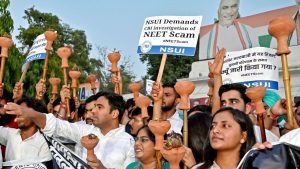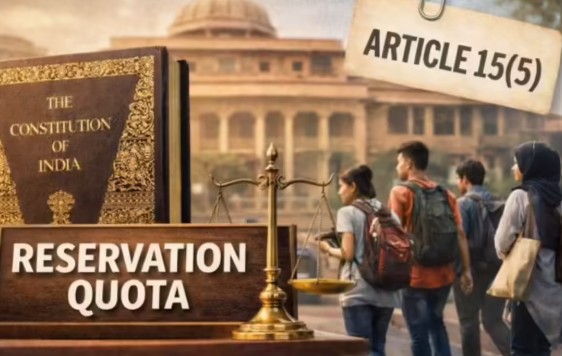
Marking the 20th anniversary of Article 15(5)—a cornerstone of affirmative action in education—the Congress party has renewed its push for the Narendra Modi government to enact legislation extending reservations for Scheduled Castes (SCs), Scheduled Tribes (STs), and Other Backward Classes (OBCs) to private higher education institutions (HEIs). Issued on January 20, 2026, by Congress general secretary (communications) Jairam Ramesh, the statement underscores the unfulfilled potential of the 93rd Constitutional Amendment, introduced by the Manmohan Singh-led UPA government in 2006, which empowers states to mandate quotas in private unaided institutions. While the article has enabled 27% OBC reservations in central HEIs like IITs and IIMs—benefiting lakhs and fostering social mobility—its extension to the burgeoning private sector remains legislative limbo, despite a Supreme Court upholding in 2014. Ramesh’s missive, timed with the article’s silver jubilee, ties into the ongoing debate over the Viksit Bharat Shiksha Adhishthan Bill 2025, urging that any new higher education regulator must enforce compliance. Amid NEP 2020’s equity focus and a Parliamentary Standing Committee’s August 2025 report decrying “abysmally low” reserved representation in private colleges, this advocacy highlights persistent disparities where private HEIs—now 60% of admissions—sidestep quotas, potentially stalling inclusive growth for 40% of India’s OBC population.
Key Points:
- Anniversary Anchor: January 20, 2026; 20 years since 93rd Amendment (2006).
- Ramesh’s Renewed Call: Legislation for private HEI quotas; ties to Viksit Bharat Bill.
- Quota Legacy: 27% OBC in central HEIs; lakhs benefited, but private gap persists.
- Disparity Data: 60% private admissions quota-free; 40% OBC exclusion risk.
Article 15(5): Historical Context and Legal Foundations
Enacted via the 93rd Constitutional Amendment on January 20, 2006, Article 15(5) empowers states to make special provisions for SCs, STs, and OBCs in private educational institutions, excluding minority-run ones, to advance social justice without infringing on Article 30’s minority rights. Introduced by the UPA under Manmohan Singh, it built on the 2004-05 Mandal-like momentum, enabling the 27% OBC quota in central institutions—a move upheld by the Supreme Court in the Pramati Educational and Cultural Trust vs Union of India case on May 6, 2014. Despite this green light, no enabling law has materialized for private HEIs, leaving implementation voluntary and uneven. Ramesh lauded the UPA’s “historic moment” for OBC mobility, contrasting it with the current government’s inaction, as flagged in the August 2025 Parliamentary Standing Committee report on education, which decried the “abysmally and unacceptably low” reserved seats in private colleges.
Key Points:
- Amendment Origin: 93rd CAA, 2006; UPA’s Mandal echo for private quotas.
- Exclusion Clause: Spares minority institutions (Article 30).
- Judicial Nod: Pramati case, May 6, 2014; voluntary to mandatory gap.
- Report Rebuke: August 2025 PSC: “Abysmally low” private representation.
Congress Statement: Key Demands and Critical Quotes
Ramesh’s January 20 statement demands immediate legislation to operationalize Article 15(5) in private HEIs, insisting that the proposed Viksit Bharat Shiksha Adhishthan Bill 2025—introduced December 15, 2025, and referred to a Joint Parliamentary Committee—explicitly mandate the new higher education regulator to enforce quotas. He praised the article’s impact: “Since then, lakhs of students from the OBC communities have availed of this reservation, bringing economic and social mobility to millions.” Yet, he lambasted the unfulfilled promise: “Parliament has not enacted any law to enforce the provision,” urging the regulator to address this void. This advocacy revives UPA’s equity legacy amid NEP 2020’s push for inclusive access, where private sector expansion (now 60% of seats) risks deepening divides without quotas.
Key Points:
- Legislative Plea: Enact law via Viksit Bharat Bill; regulator enforcement clause.
- Ramesh Quote 1: “Lakhs of OBC students… economic and social mobility to millions.”
- Ramesh Quote 2: “Parliament has not enacted any law to enforce the provision.”
- Bill Backdrop: Dec 15, 2025, intro; JPC referral for quota integration.
Implications for Higher Education Policy: Equity, Regulation, and Social Mobility
Mandating Article 15(5) in private HEIs could transform access, filling the 20-25% reserved seat shortfall in non-central institutions and uplifting 40% OBC/SC/ST aspirants sidelined by fees and location. The Viksit Bharat Bill’s regulator—potentially subsuming UGC/AICTE—would gain teeth for compliance audits, curbing evasion and aligning with NEP’s 50% GER target by 2035. Yet, challenges loom: private sector resistance (citing Article 19(1)(g) rights) and implementation costs (₹5,000-7,000 crore annually). Success here could model national equity, reducing inter-state disparities where southern states lead in private quotas.
Implications Table:
| Aspect | Potential Gain | Challenge Horizon |
|---|---|---|
| Access Uplift | 20-25% reserved fill; 40% marginalized entry | Private fee hikes; rural infra lag. |
| Regulatory Reach | UGC-like audits; NEP 50% GER push | Article 19 resistance; ₹5-7kCr costs. |
| Mobility Boost | OBC/SC/ST upward trajectory | Southern lead emulation; equity model. |
Key Points:
- Seat Surge: 20-25% private reserved; 40% uplift.
- Audit Arm: Regulator teeth; 50% GER 2035.
- Cost Calculus: ₹5-7kCr; southern equity cue.
- Trajectory Turn: Mobility model nationwide.
Historical and Political Context: UPA Legacy vs. Current Stagnation
The 93rd Amendment’s 2006 genesis under UPA addressed post-Mandal inequities, with Ramesh crediting it for “lakhs of students” gaining entry to elite HEIs. Yet, the 2014 SC nod notwithstanding, BJP-led inaction—despite NEP’s equity rhetoric—has stalled private extension, as the 2025 PSC report indicted “low representation.” Congress’s anniversary salvo politicizes the void, contrasting UPA’s action with NDA’s delay, amid 2025 Bill debates where JPC scrutiny could force concessions.
Key Points:
- UPA Genesis: 2006 Mandal fix; “lakhs” entry credit.
- SC Seal: 2014 nod; inaction indict (2025 PSC).
- Politic Pivot: UPA action vs. NDA rhetoric.
- JPC Juncture: Bill scrutiny for concessions.