Nestled in the Himalayas, Nepal has undergone dramatic transformations since 1951, evolving from a monarchy-dominated system under Rana rule to a federal democratic republic in 2008. The office of Prime Minister has been pivotal, witnessing 57 leaders amid frequent shifts driven by coups, protests, and elections. From the end of absolute monarchy to the recent Gen Z-led anti-corruption uprising in September 2025, which forced KP Sharma Oli’s resignation and elevated Sushila Karki as the first female PM, Nepal’s leadership reflects resilience and instability. This comprehensive list, divided by eras, highlights the nation’s progress toward democracy while underscoring ongoing challenges like ethnic tensions and governance crises.
Key Points:
- Total Leaders: 57 Prime Ministers since 1951, with some serving multiple non-consecutive terms.
- Recent Upheaval: On September 9, 2025, KP Sharma Oli resigned amid deadly protests (51+ deaths), leading to Sushila Karki’s interim appointment on September 12 as Nepal’s first woman PM.
- Historical Shifts: Eras include the transition from Rana rule (1951–1960), partyless Panchayat system (1960–1990), constitutional monarchy (1990–2008), and the republican era (2008–present).
Current Prime Minister: Sushila Karki’s Historic Tenure
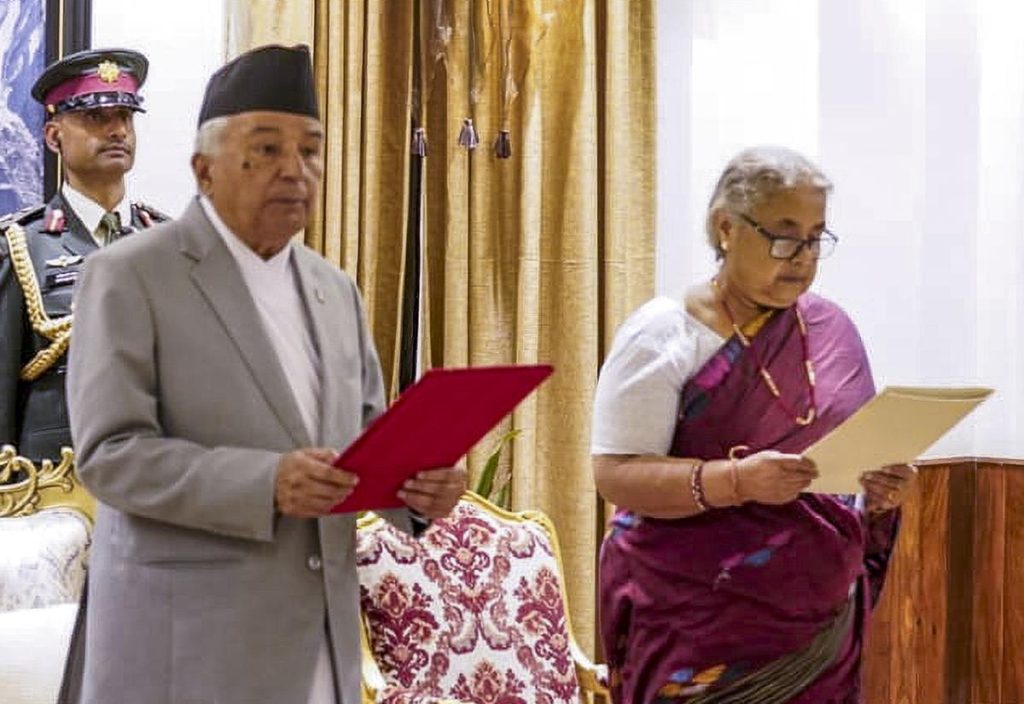
Sushila Karki, a former Chief Justice of Nepal’s Supreme Court (2016–2017), became the interim Prime Minister on September 12, 2025, following the resignation of KP Sharma Oli amid widespread Gen Z protests against corruption and a social media ban. As the first woman to lead the Government of Nepal, Karki’s appointment marks a milestone in the country’s politics. Known for her anti-corruption stance and integrity, she is tasked with stabilizing the nation, forming an interim cabinet, and overseeing elections by March 2026. Her role comes after violent unrest that saw parliament stormed, government buildings torched, and the army deployed, highlighting Nepal’s fragile democracy.
Key Points:
- Appointment Context: Sworn in by President Ramchandra Paudel after negotiations involving protesters, the army, and political parties; parliament dissolved for fresh polls.
- Background: First female Chief Justice; her selection by Gen Z leaders emphasizes youth-driven change and judicial independence.
- Challenges Ahead: Addressing 1,300+ injuries, escaped prisoners (12,500+), and economic fallout from the protests that began on September 8, 2025.
Transition Era (1951–1960): Dawn of Democracy Post-Rana Rule
This period marked Nepal’s shift from autocratic Rana rule to initial democratic experiments, with kings exercising direct power alongside elected leaders. The first general elections in 1959 paved the way, but instability persisted.
Key Points:
- Key Figure: Matrika Prasad Koirala served twice, representing early Nepali Congress influence.
- Royal Interventions: Kings Tribhuvan and Mahendra imposed direct rule multiple times.
- Milestone: Bishweshwar Prasad Koirala’s 1959 election victory symbolized multiparty democracy’s brief triumph before the 1960 coup.
| S. No. | Name | Political Party | Took Office | Left Office |
|---|---|---|---|---|
| 1. | Matrika Prasad Koirala | Nepali Congress | 16 November 1951 | 14 August 1952 |
| 2. | Tribhuvan Bir Bikram | Direct Rule By King | 14 August 1952 | 15 June 1953 |
| 3. | Matrika Prasad Koirala | Rashtriya Praja Party | 15 June 1953 | 11 April 1955 |
| 4. | Surya Bahadur Thapa | Rashtriya Praja Party | 11 April 1955 | 14 April 1955 |
| 5. | Mahendra Bir Bikram Shah | Direct Rule By King | 14 April 1955 | 27 January 1956 |
| 6. | Tanka Prasad Acharya | Nepal Praja Parishad | 27 January 1956 | 26 July 1957 |
| 7. | Kunwar Inderjit Singh | United Democratic Party | 26 July 1957 | 15 May 1958 |
| 8. | Subarna Shamsher Rana | Nepali Congress | 15 May 1958 | 27 May 1959 |
| 9. | Bishweshwar Prasad Koirala | Nepali Congress | 27 May 1959 | 15 December 1960 |
Partyless Panchayat Era (1960–1990): Monarchy’s Grip Tightens
King Mahendra’s 1960 coup dissolved parliament and banned parties, introducing the Panchayat system—a non-party governance model under royal control. Prime Ministers were royal appointees, leading to a 30-year era of authoritarian rule.
Key Points:
- Dominant Figures: Surya Bahadur Thapa and Kirti Nidhi Bista served multiple terms, loyal to the monarchy.
- Instability: Frequent changes reflected palace politics; no elections for PM.
- End of Era: People’s Movement of 1990 forced restoration of multiparty democracy.
| S. No. | Name | Took Office | Left Office |
|---|---|---|---|
| 10. | Mahendra Bir Bikram Shah | 15 December 1960 | 2 April 1963 |
| 11. | Tulsi Giri | 2 April 1963 | 23 December 1963 |
| 12. | Surya Bahadur Thapa | 23 December 1963 | 26 February 1964 |
| 13. | Tulsi Giri | 26 February 1964 | 26 January 1965 |
| 14. | Surya Bahadur Thapa | 26 January 1965 | 7 April 1969 |
| 15. | Kirti Nidhi Bista | 7 April 1969 | 13 April 1970 |
| 16. | Gehendra Bahadur Rajbhandari | 13 April 1970 | 14 April 1971 |
| 17. | Kirti Nidhi Bista | 14 April 1971 | 16 July 1973 |
| 18. | Nagendra Prasad Rijal | 16 July 1973 | 1 December 1975 |
| 19. | Tulsi Giri | 1 December 1975 | 12 September 1977 |
| 20. | Kirti Nidhi Bista | 12 September 1977 | 30 May 1979 |
| 21. | Surya Bahadur Thapa | 30 May 1979 | 12 July 1983 |
| 22. | Lokendra Bahadur Chand | 12 July 1983 | 21 March 1986 |
| 23. | Nagendra Prasad Rijal | 21 March 1986 | 15 June 1986 |
| 24. | Marich Man Singh Shrestha | 15 June 1986 | 6 April 1990 |
| 25. | Lokendra Bahadur Chand | 6 April 1990 | 19 April 1990 |
Constitutional Monarchy Era (1990–2008): Rise of Multiparty Democracy
The 1990 Jana Andolan restored democracy, limiting the king’s powers. Elected Prime Ministers from Nepali Congress and communists dominated, but royal coups (2002, 2005) caused turmoil, ending with the monarchy’s abolition in 2008.
Key Points:
- Frequent Turnover: 16 PMs in 18 years due to coalition instability and Maoist insurgency.
- Notable Leaders: Girija Prasad Koirala served four terms; royal interventions by King Gyanendra.
- Culmination: 2006 People’s Movement led to the republic.
| S. No. | Name | Political Party | Took Office | Left Office |
|---|---|---|---|---|
| 26. | Krishna Prasad Bhattarai | Nepali Congress | 6 April 1990 | 26 May 1991 |
| 27. | Girija Prasad Koirala | Nepali Congress | 26 May 1991 | 30 November 1994 |
| 28. | Man Mohan Adhikari | Communist Party of Nepal | 30 November 1994 | 12 September 1995 |
| 29. | Sher Bahadur Deuba | Nepali Congress | 12 September 1995 | 12 March 1997 |
| 30. | Lokendra Bahadur Chand | Rastriya Prajatantra Party (Chand) | 12 March 1997 | 7 October 1997 |
| 31. | Surya Bahadur Thapa | Rastriya Prajatantra Party | 7 October 1997 | 15 April 1998 |
| 32. | Girija Prasad Koirala | Nepali Congress | 15 April 1998 | 31 May 1999 |
| 33. | Krishna Prasad Bhattarai | Nepali Congress | 31 May 1999 | 22 March 2000 |
| 34. | Girija Prasad Koirala | Nepali Congress | 22 March 2000 | 26 July 2001 |
| 35. | Sher Bahadur Deuba | Nepali Congress | 26 July 2001 | 4 October 2002 |
| 36. | Gyanendra Bir Bikram Shah | – | 4 October 2002 | 11 October 2002 |
| 37. | Lokendra Bahadur Chand | Rashtriya Prajatantra Party | 11 October 2002 | 5 June 2003 |
| 38. | Surya Bahadur Thapa | Rashtriya Prajatantra Party | 5 June 2003 | 3 June 2004 |
| 39. | Sher Bahadur Deuba | Nepali Congress | 3 June 2004 | 1 February 2005 |
| 40. | Gyanendra Bir Bikram Shah | – | 1 February 2005 | 25 April 2006 |
| 41. | Girija Prasad Koirala | Nepali Congress | 25 April 2006 | 28 May 2008 |
Federal Democratic Republic Era (2008–Present): Republic and Recent Revolution
Post-2008, Nepal became a republic with the PM as executive head. Communists and Nepali Congress alternated power, but instability continued. The 2025 Gen Z protests, sparked by a social media ban and corruption allegations, led to Oli’s ouster and Karki’s interim role.
Key Points:
- Power Rotation: KP Sharma Oli and Pushpa Kamal Dahal held multiple terms; coalitions often collapsed.
- 2025 Crisis: Protests caused 51 deaths, parliament dissolution; Karki’s term until 2026 elections.
- Ongoing Issues: Youth unemployment, economic woes, and calls for systemic reform dominate.
| S. No. | Name | Political Party | Took Office | Left Office |
|---|---|---|---|---|
| 42. | Girija Prasad Koirala | Nepali Congress | 28 May 2008 | 18 August 2008 |
| 43. | Pushpa Kamal Dahal | Unified Communist Party of Nepal (Maoist) | 18 August 2008 | 25 May 2009 |
| 44. | Madhav Kumar Nepal | Communist Party of Nepal (Unified Marxist–Leninist) | 25 May 2009 | 6 February 2011 |
| 45. | Jhala Nath Khanal | Communist Party of Nepal (Unified Marxist–Leninist) | 6 February 2011 | 29 August 2011 |
| 46. | Baburam Bhattarai | Unified Communist Party of Nepal (Maoist) | 29 August 2011 | 14 March 2013 |
| 47. | Khil Raj Regmi | Independent | 14 March 2013 | 11 February 2014 |
| 48. | Sushil Koirala | Nepali Congress | 11 February 2014 | 12 October 2015 |
| 49. | KP Sharma Oli | Communist Party of Nepal (Unified Marxist–Leninist) | 12 October 2015 | 4 August 2016 |
| 50. | Pushpa Kamal Dahal | Communist Party of Nepal (Maoist Centre) | 4 August 2016 | 7 June 2017 |
| 51. | Sher Bahadur Deuba | Nepali Congress | 7 June 2017 | 15 February 2018 |
| 52. | KP Sharma Oli | Communist Party of Nepal (Unified Marxist–Leninist) | 15 February 2018 | 13 May 2021 |
| 53. | KP Sharma Oli | Communist Party of Nepal (Unified Marxist–Leninist) | 13 May 2021 | 13 July 2021 |
| 54. | Sher Bahadur Deuba | Nepali Congress | 13 July 2021 | 26 December 2022 |
| 55. | Pushpa Kamal Dahal | Communist Party of Nepal (Maoist Centre) | 26 December 2022 | 15 July 2024 |
| 56. | KP Sharma Oli | Communist Party of Nepal (Unified Marxist–Leninist) | 15 July 2024 | 9 September 2025 |
| 57. | Sushila Karki | Independent (Interim) | 12 September 2025 | Incumbent |
Legacy and Lessons: What Nepal’s PMs Teach Us
Nepal’s parade of Prime Ministers illustrates a nation in flux—from royal dominance to youth-powered change. Leaders like Girija Prasad Koirala (five terms) and KP Sharma Oli (four terms) shaped eras, while Karki’s rise signals gender progress and anti-corruption resolve. Yet, with 57 PMs in 74 years, instability persists. The 2025 protests underscore demands for transparency, jobs, and reform, testing Karki’s interim government as Nepal eyes stable democracy.
Key Points:
- Gender Milestone: Karki breaks barriers, inspiring women in South Asian politics.
- Youth Influence: Gen Z’s role highlights generational shifts in governance.
- Future Outlook: Elections by March 2026 could redefine Nepal’s trajectory amid economic and security challenges.