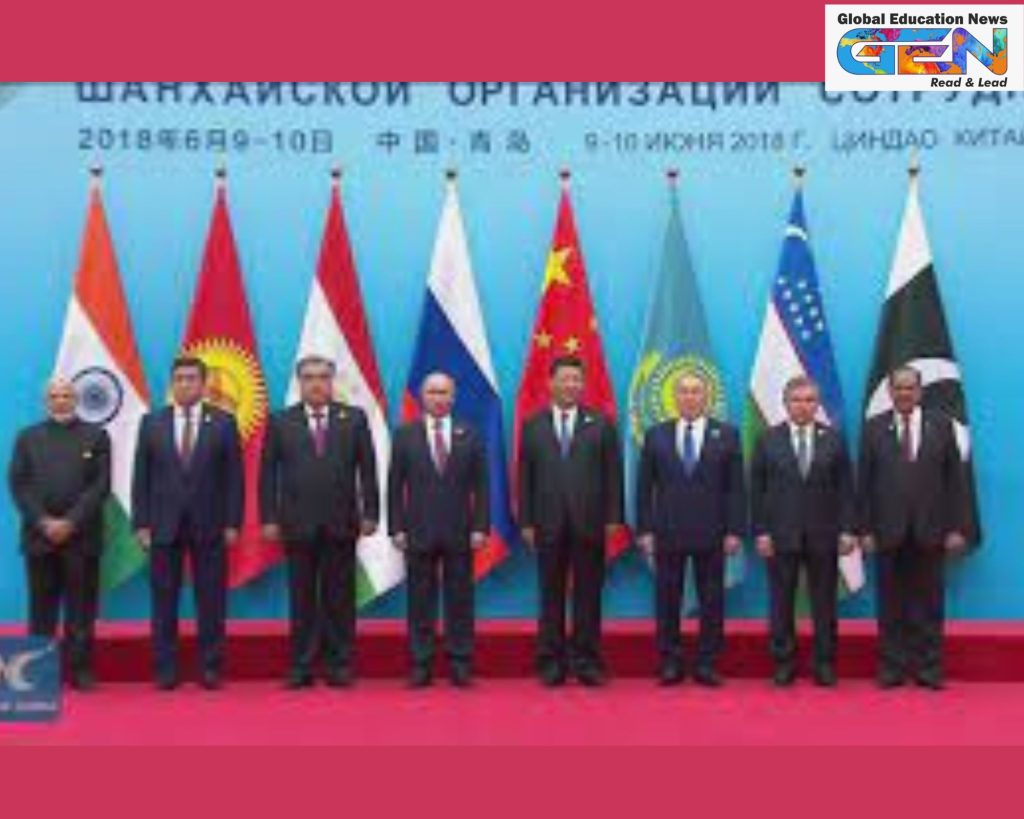
On September 1, 2025, Chinese President Xi Jinping introduced the Global Governance Initiative (GGI) at the Shanghai Cooperation Organization (SCO) Plus Summit in Tianjin, China. Addressing leaders from over 20 countries and heads of 10 international organizations, Xi called for a “more just and equitable global governance system,” positioning the GGI as a cornerstone of China’s vision for a multipolar world. The largest SCO summit in its 24-year history, the event underscored China’s growing influence in regional and global affairs.
Key Points:
- The GGI is Xi’s fourth major global initiative, following the Global Development, Security, and Civilization Initiatives.
- It emphasizes sovereign equality, international law, multilateralism, a people-centered approach, and real actions.
- The summit, held at the Tianjin Meijiang Convention and Exhibition Center, adopted the Tianjin Declaration to advance economic and security cooperation.
The Shanghai Cooperation Organization: A Growing Force
Founded in 2001 in Shanghai, the SCO has evolved from the Shanghai Five (1996) into the world’s largest regional organization, covering 24% of global land area and 42% of the world’s population. Its members include China, Russia, India, Pakistan, Iran, Belarus, Kazakhstan, Kyrgyzstan, Tajikistan, and Uzbekistan, with dialogue partners like Türkiye and observer states like Mongolia. The SCO Plus format expands collaboration with non-members, fostering trade, security, and cultural ties.
Key Points:
- The SCO’s Shanghai Spirit promotes mutual trust, equality, and respect for cultural diversity.
- It addresses terrorism, separatism, extremism, and issues like drug trafficking and cybercrime.
- China’s investment in SCO member states exceeds $84 billion, with bilateral trade surpassing $500 billion annually.
Core Principles of the Global Governance Initiative
The GGI is built on five pillars designed to reshape global governance:
- Sovereign Equality: All nations, regardless of size or wealth, are equal participants in global decision-making.
- International Rule of Law: Adherence to fair and transparent international laws.
- Multilateralism: Promoting inclusive cooperation over unilateralism or hegemony.
- People-Centered Approach: Prioritizing human welfare and development.
- Real Actions: Focusing on tangible outcomes rather than mere declarations.
Xi criticized the persistence of Cold War mentality, hegemonism, and protectionism, arguing that global governance stands at a “new crossroads.” The GGI positions China as a counterweight to Western-dominated institutions, advocating for greater representation of the Global South.
Key Points:
- The GGI challenges the U.S.-led global order, opposing alliances like NATO and questioning universal human rights frameworks.
- It aligns with China’s Belt and Road Initiative and Digital Silk Road, promoting inclusive economic globalization.
- Russia’s President Vladimir Putin endorsed the GGI, calling for “genuine multilateralism” and a Eurasian security model.
China’s Concrete Commitments
Xi announced practical initiatives to support the GGI and SCO cooperation, emphasizing tangible outcomes:
- Healthcare Support: Over the next five years, China will treat 500 patients with congenital heart disease, perform 5,000 cataract operations, and conduct 10,000 cancer screenings for SCO countries.
- Energy and Technology: China pledged to increase photovoltaic and wind power capacity by 10 million kilowatts each and establish an AI Cooperation Center.
- Infrastructure and Innovation: Plans include SCO platforms for energy, green industry, digital economy, and centers for scientific innovation, higher education, and vocational training.
- Space Collaboration: SCO nations are invited to join China’s Beidou satellite system and lunar research station.
These commitments reflect China’s focus on people-centered development and technological leadership, strengthening ties with SCO partners.
Key Points:
- China’s SCO Development Bank and financial aid packages will support infrastructure and economic growth.
- The initiatives aim to enhance industrial and supply chain resilience in critical sectors like energy and semiconductors.
- Turkmenistan expressed strong support for the GGI, aligning with its vision of equitable international relations.
Tianjin Summit: A Geopolitical Milestone
The 2025 SCO Plus Summit, held from August 31 to September 1, was a landmark event, showcasing the SCO’s growing global influence. Hosted at the Tianjin Meijiang Convention and Exhibition Center, it featured 2,500 delegates, 998 volunteers from universities like Tianjin University, and cultural showcases like the Haihe River Nightscape Enhancement Project. Leaders from India (Narendra Modi), Russia (Vladimir Putin), Malaysia (Anwar Ibrahim), Myanmar (Min Aung Hlaing), and others attended, highlighting the summit’s scale.
Key Points:
- The Tianjin Declaration outlined a 10-year SCO Development Strategy (2025–2035), focusing on multipolarity and integration.
- Discussions covered AI, cybersecurity, digital economy, and counter-terrorism, aligning with the SCO’s Regional Anti-Terrorist Structure (RATS).
- India’s participation, with Modi’s first China visit in seven years, signaled a thaw in Sino-Indian relations, with talks on trade and Ukraine.
Global Context and Strategic Implications
The GGI comes at a time of heightened global tensions, with Xi taking a veiled swipe at the U.S. for “bullying practices” and protectionist policies, such as tariffs under President Donald Trump’s America First agenda. The SCO’s expansion, now representing 23% of global GDP and 43% of the world’s population, positions it as a counterbalance to Western institutions like the UN and NATO.
Key Points:
- The GGI aligns with China’s broader push for a multipolar world, supported by Russia, India, and African nations.
- Critics, including Indian commentators, note the SCO’s challenges in resolving bilateral disputes, dubbing it the “Shanghai Contradiction Organization.”
- China’s financial commitments, including billions in loans and an SCO Development Bank, aim to institutionalize a non-Western governance model.