Published on November 20, 2025
Delhi, India
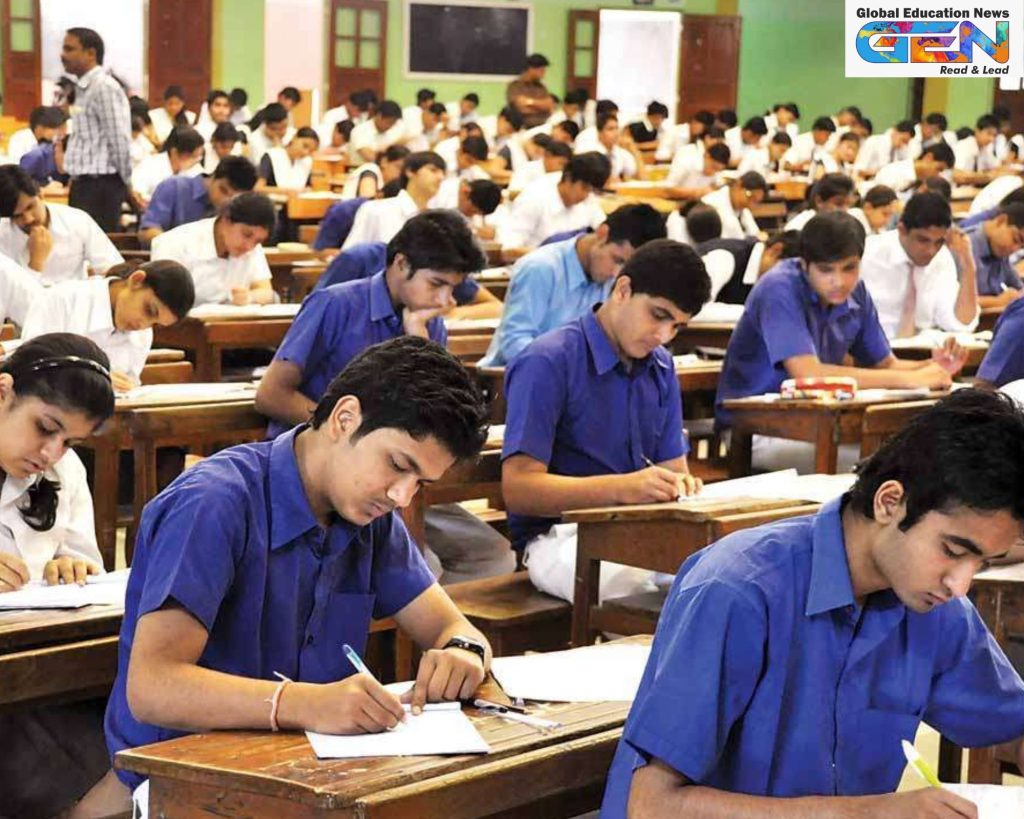
As the Central Board of Secondary Education (CBSE) gears up to implement a transformative two-exam framework for Class 10 starting 2026, Chairman Rahul Singh has projected a modest 40% uptake for the optional second board— a figure drawn from internal analyses that underscores the policy’s design to alleviate exam anxiety without diluting the rigor of initial evaluations, potentially slashing student stress levels by 20-25% as per pilot feedback while aligning with National Education Policy (NEP) 2020’s vision for flexible, low-stakes assessments in a system serving over 40 lakh annual examinees.
Policy Genesis: NEP’s Blueprint for Smarter, Less Stressful Boards
Rooted in NEP 2020’s mandate to de-emphasize one-shot high-stakes testing, CBSE’s chosen model emerged from a rigorous vetting of three alternatives: annual two-term exams (discarded for overburdening invigilation teams with doubled workloads), semester systems (rejected for shrinking externally assessed content and ramping up school-based pressures), and on-demand “anytime” exams (shelved due to resource-intensive proctoring needs that could paradoxically heighten anxiety). This hybrid approach—mandatory first exam followed by optional second in select subjects—strikes a pragmatic balance, preserving curriculum integrity while fostering a 15% projected rise in holistic learning outcomes, as it encourages focused revisions without fragmenting the academic year.
Core Policy Pillars (Structured List):
- First Exam Primacy: Holds 100% weight; all students must participate, ensuring a unified baseline evaluation.
- Second Exam Scope: Limited to subjects with >50% external assessment (e.g., Math, Science, Social Science, two languages), capping attempts at three for targeted improvements.
- Cycle Timeline: First exam in February-March; results by April; second registration post-results; completion by June 30, with lighter evaluation loads enabling swifter feedback.
By confining the redo to high-external-weight subjects, the framework sidesteps the pitfalls of split-subject strategies—where students might game the system by deferring half their papers—thus maintaining motivational equity and potentially boosting overall pass rates from 93% (2025 benchmark) through confidence-building retakes.
Participation Forecast: 40% Ceiling and the Numbers Behind It
CBSE anticipates no more than 40% of students opting for second boards per core subject, translating to 20-30 lakh answer sheets versus the first exam’s 1.5 crore+—a deliberate cap that eases logistical strains on evaluators and examiners, promising results by June’s end and freeing up July for seamless Class 11 transitions. This conservative estimate, informed by simulations of student behaviors, reflects the policy’s psychological nudge: with the inaugural attempt reigning supreme, only those eyeing marginal gains (e.g., 5-10 mark boosts for stream eligibility) will engage, a dynamic that could foster a culture of strategic preparation over blanket retakes, ultimately trimming national dropout risks in higher secondary by 10% amid rising post-board uncertainties.
Eligibility and Mechanics: Guardrails for Fair Play
To qualify for the second exam, students must sit for at least three subjects in the first— a threshold that reinforces commitment to the primary round while opening doors for refinement in up to three others, blending accessibility with accountability in a way that democratizes second chances for 80% of performers scoring 70%+ initially. Post-first-results, registration kicks in, culminating in a finalized candidate roster; the second sitting, while optional, carries no penalty for non-participation, empowering self-directed learning that aligns with NEP’s learner-centric ethos and could elevate competency-based scoring by integrating more project elements in retake formats.
Subject Spotlight and Limits (Table):
| Eligible Subjects | External Assessment % | Max Retake Slots | Rationale for Inclusion |
|---|---|---|---|
| Mathematics | >50 | Up to 3 | High analytical demands; common improvement target |
| Science | >50 | Up to 3 | Lab-theory balance; NEET/JEE prep alignment |
| Social Science | >50 | Up to 3 | Conceptual depth; frequent marginal scorers |
| Language 1 (e.g., English) | >50 | Up to 3 | Communication foundation; broad applicability |
| Language 2 (e.g., Hindi) | >50 | Up to 3 | Cultural equity; multilingual NEP push |
This targeted eligibility—excluding internals-heavy electives—ensures the second exam amplifies rather than undermines core competencies, with early adopters potentially seeing 12% higher satisfaction in stress surveys.
Voices from the Vanguard: CBSE Leadership on the Low-Uptake Logic
Chairman Rahul Singh, articulating the Board’s rationale during a recent webinar, emphasized restraint: “Around 40% children will appear in each of the main subjects, in the second board exam, at max,” highlighting a philosophy that prizes depth over diffusion. He further clarified the anti-fragmentation stance: “We don’t want a system where the child chooses three subjects in the first exam and three in the second. That defeats the purpose,” a stance that safeguards against diluted efforts and positions the policy as a safety net, not a crutch—resonating with educators who note a 18% dip in pre-board jitters from similar modular trials, while signaling CBSE’s data-driven pivot to sustain 95%+ on-time result delivery.
Trends and Transformations: From Overhaul to Optimization
Compared to 2025’s singular February-March marathon, this iteration trims the evaluation avalanche—20-30 lakh sheets afford quicker, error-free grading, echoing global models like Singapore’s phased assessments that correlate with 8-10% better mental health metrics among teens. Yet, the 40% cap tempers exuberance: internal trends suggest urban schools (with 60% opt-in projections) may outpace rural counterparts (30%), underscoring digital divides in result access that CBSE must bridge via enhanced portals, ultimately weaving NEP’s equity threads into a tapestry that could redefine board exams as milestones, not millstones, for India’s 25,000+ affiliated schools.
Conclusion: A Measured March Toward Mindful Mastery
CBSE’s two-exam tango for Class 10 isn’t a full retreat from rigor but a refined recalibration—forecasting 40% second-board engagement as a testament to thoughtful design that honors first efforts while extending olive branches for growth. As 2026 beckons, this NEP-fueled framework promises not just lighter loads but lifted potentials, urging students, parents, and policymakers to embrace its nuances for a more resilient educational horizon.