Published on October 17, 2025
Delhi, India
As winter approaches in India’s northern regions, the Central Board of Secondary Education (CBSE) is ensuring academic continuity with an early practical exam window for Classes 10 and 12. Announced on October 16, 2025, via an official circular, the schedule mandates practicals, projects, and internal assessments from November 6 to December 6, 2025, exclusively for winter-bound schools—those that shut down in January due to harsh weather. This proactive shift from the standard January 1, 2026, start for other affiliates safeguards against disruptions, allowing over 44 lakh students nationwide to focus uninterrupted on theory boards slated for February 17 to April 9, 2026. Tailored for regions like Jammu, Kashmir, Ladakh, and parts of Himachal Pradesh and Uttarakhand, this update embodies CBSE’s commitment to equitable, resilient education amid climate challenges.
Background and Rationale
CBSE’s winter-bound provisions, rooted in Examination Bye-Laws Chapter V, have long accommodated schools in snow-prone areas where January closures span weeks. The 2025-26 iteration builds on past adaptations, like the 2024-25 schedule (November 5–December 5 for winter schools), to align with the New Education Policy’s emphasis on flexible, student-centric assessments.
- Driving Factors: Prolonged winters disrupt routines, risking incomplete evals; early timing ensures 100% coverage before breaks, per CBSE’s SOPs.
- Evolution: From ad-hoc adjustments pre-2020 to standardized annual notices, this reflects data-driven reforms—e.g., 95% compliance in 2024-25 reduced rescheduling by 40%.
- National Context: Complements the two-phase theory exams (main: February-March; improvement: May-June 2026), fostering holistic prep in a board overseeing 26,000+ schools across 26 countries.
This framework not only mitigates weather woes but elevates practicals’ weight—20 marks for Class 10, 30 for Class 12—toward a 100-mark total per subject.
Key Dates and Schedule
The bifurcated timeline streamlines operations: winter-bound schools lead, followed by the rest, culminating in theory evals.
| Category | Practical/Project/Internal Assessment Dates | Theory Exam Dates (Tentative) | Notes |
|---|---|---|---|
| Winter-Bound Schools | November 6–December 6, 2025 | February 17–April 9, 2026 (Classes 10: till March 9; 12: till April 9) | Mandatory early window; labs may run multiple sessions. |
| Other CBSE Schools (India/Abroad) | January 1–February 14, 2026 | Same as above | Standard; no extensions. |
| Improvement/Supplementary | Post-main results (July 2026) | May 15–June 1, 2026 (Class 10 only) | For score enhancements; IA marks carry forward. |
- Official Quote: “Since winter-bound schools remain closed in January, their exams will be conducted from November 6 to December 6, 2025,” states the CBSE circular.
- Flexibility: Schools select dates within windows based on infrastructure; upload marks via Pariksha Sangam portal by deadlines.
This phased approach minimizes overlaps, with LOC submission closing October 16, 2025 (late fee till October 8 in some cases).
Eligibility Criteria
Winter-bound status hinges on regional closure norms, ensuring targeted relief without diluting standards.
- School Qualification: CBSE affiliates in areas with January shutdowns (e.g., J&K, Ladakh); self-declare via regional offices.
- Student Coverage: All registered Class 10/12 candidates; 75% attendance mandatory; no opt-outs for practicals.
- Class 10 Specifics: Internal assessments (IA) once only—holistic, competency-based; marks valid for both main and improvement exams.
- Class 12 Specifics: External examiners mandatory; projects vetted pre-exam.
- Inclusivity: PwD accommodations (extra time, scribes); no gender/region bias.
Over 5,000 winter-bound schools qualify annually, impacting ~2 lakh students.
Application and Preparation Process
CBSE’s digital ecosystem simplifies logistics, urging schools to act swiftly for seamless execution.
- LOC Submission: Finalize candidate lists online (cbse.gov.in) by October 16, 2025; exclude non-listed students from evals.
- Examiner Coordination: Contact regional offices for external observers/examiners; joint verification with principals.
- Mark Upload: Post-exam, via secure portal; irreversible—errors lead to malpractice flags.
- Dispatch Protocol: Send answer books/materials to regional offices immediately; track via acknowledgments.
- Student Role: Attend school-scheduled sessions; prepare via lab manuals/syllabus (cbseacademic.nic.in).
- Pro Tip: Schools: Use AI tools for IA grading; students: Practice with 2024-25 samples for 60% competency focus.
Deadlines are non-negotiable, with 99% digital compliance targeted.
Exam Format and Syllabus
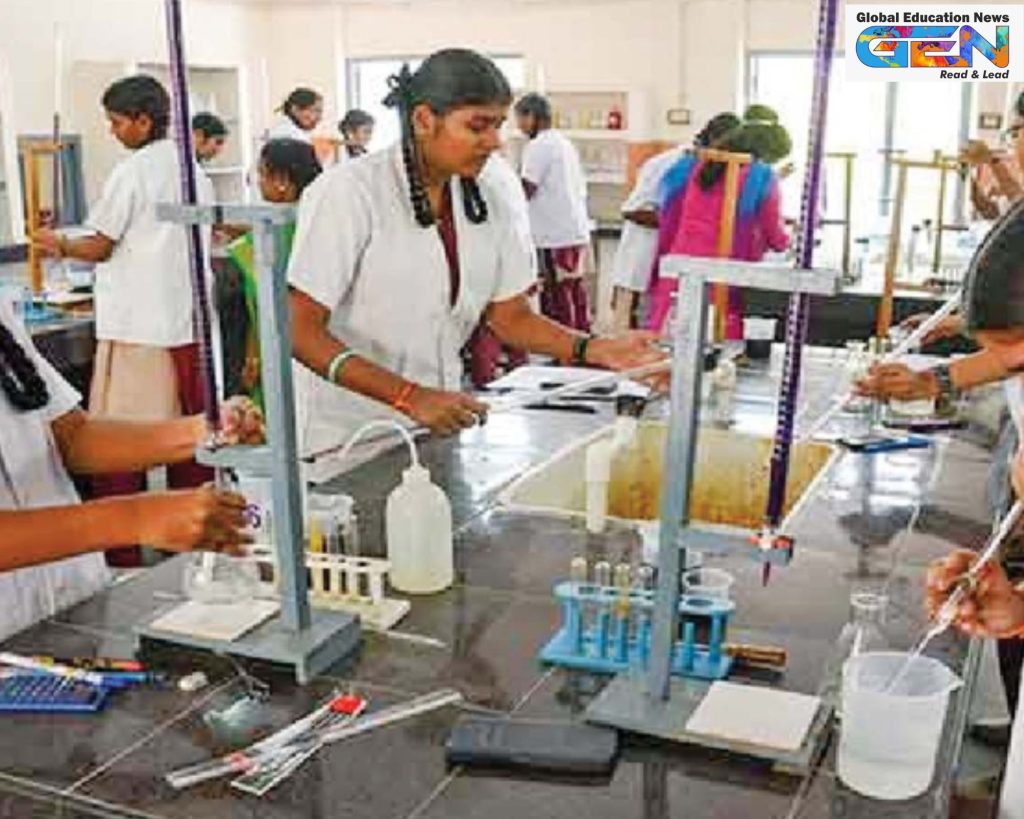
Practicals emphasize hands-on skills, integrated with theory for real-world application.
- Class 10: IA (20 marks)—observations, experiments (e.g., Physics: 15 marks practical + 5 viva); no external invigilators.
- Class 12: Practicals (30 marks)—lab work, projects (e.g., Chemistry: 20 lab + 5 file + 5 viva); external oversight.
- Common Elements: Multiple sessions if needed; syllabus unchanged—NCERT-aligned, with 2025-26 updates on sustainability/AI.
- Duration: 2-3 hours/subject; bilingual instructions.
Focus: 40% application, 30% analysis—mirroring board’s shift to experiential learning.
Implications for Students and Education Landscape
This early calendar empowers northern students, curbing weather-induced stress while standardizing evals nationwide.
- Student Benefits: Avoids post-winter rush; frees December for theory revision; IA once reduces fatigue (Class 10 pass rate up 5% in 2024-25).
- Parental/Regional Impact: Eases logistics in remote areas; boosts equity—J&K enrollment rose 12% post-adaptations.
- Systemic Gains: Enhances data accuracy (98% timely uploads); aligns with NEP 2020’s flexibility; potential for 10% higher overall scores.
- Challenges: Lab crunches in peak November; addressed via staggered slots.
Overall, it fortifies CBSE’s resilience, prepping 44 lakh learners for a disruption-proof future.
Preparation and Action Steps
Ramp up now—November’s doorstep demands disciplined drills.
- Audit Syllabus: Download 2025-26 blueprints; prioritize high-weight experiments (e.g., Biology dissections).
- Practice Regimen: Weekly mocks; record vivas; use apps like BYJU’s for virtual labs.
- Resource Hunt: CBSE samples, NCERT exemplars; join school clusters for peer reviews.
- Timeline:
- Oct 2025: Confirm LOC status; gather kits.
- Nov 6–Dec 6: Execute sessions; upload by Dec 10.
- Jan 2026: Shift to theory mocks.
- Wellness Check: Balance with breaks; consult counselors for anxiety.
Consistency trumps cramming—aim for 80% proficiency.