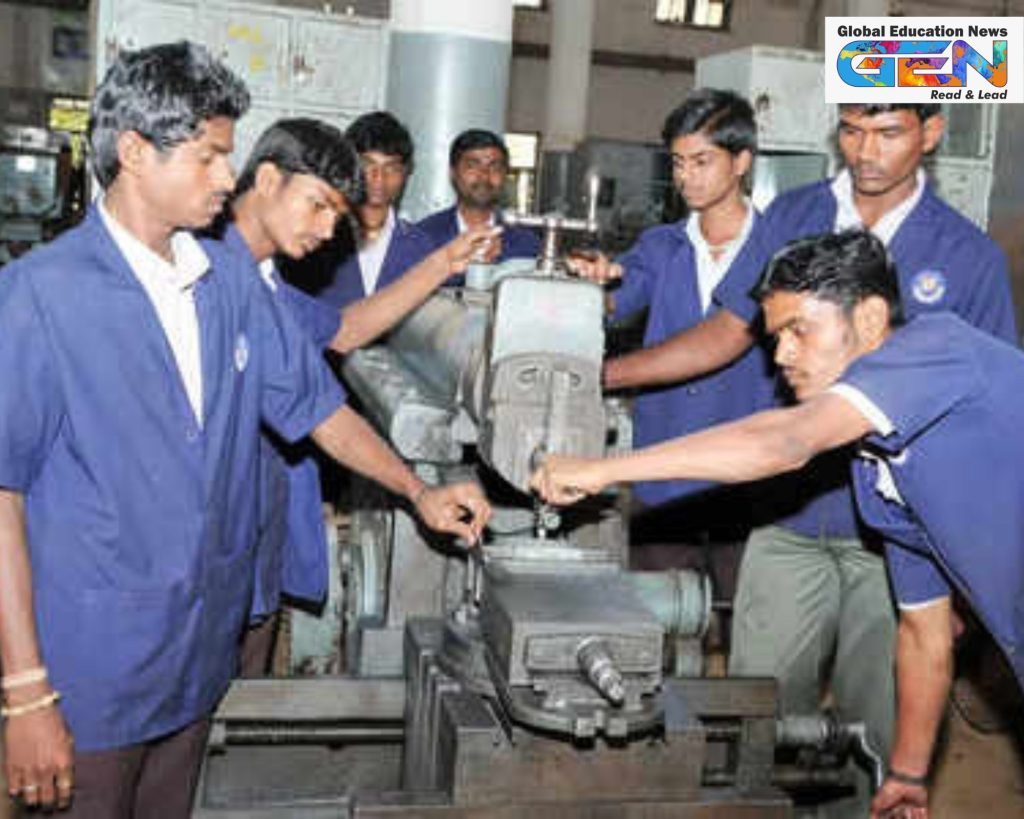
On May 7, 2025, the Union Cabinet, chaired by Prime Minister Narendra Modi, approved a transformative National Scheme for Industrial Training Institute (ITI) Upgradation as a Centrally Sponsored Scheme with a total outlay of ₹60,000 crore. This ambitious initiative aims to modernize 1,000 ITIs across India and establish five National Centres of Excellence (CoEs) for skilling, targeting to skill over 20 lakh youth over the next five years. The scheme, announced via posts on X by key ministers including Nitin Gadkari and Dharmendra Pradhan, is set to enhance employability and align India’s workforce with global industry demands. This article details the scheme’s objectives, key features, locations of the CoEs, and its potential impact on vocational education.
Overview of the National Scheme
The scheme is designed to strengthen India’s skill development ecosystem by upgrading infrastructure, introducing advanced courses, and fostering industry-aligned training. With a focus on preparing a future-ready workforce, it addresses the skill gap highlighted by NITI Aayog member Arvind Virmani, who noted that wages lag due to insufficient skills despite rising employment. The initiative aligns with India’s demographic advantage, where 67% of the population is aged 15–64, positioning the country to become an education hub, as stated by NITI Aayog CEO BVR Subrahmanyam.
Key Points:
- Budget: ₹60,000 crore, with ₹30,000 crore as a low-cost loan from multilateral agencies, ₹20,000 crore from states, and ₹10,000 crore from the Centre.
- Target: Skill 20 lakh youth over five years through 1,000 upgraded ITIs.
- Funding Model: Centrally Sponsored Scheme with contributions from Centre, states, and industry partners.
- Objective: Enhance employability, boost industrial competitiveness, and support India’s goal to become a knowledge economy.
- Announcement: Approved on May 7, 2025, as confirmed by ministers on X.
Upgradation of 1,000 ITIs
The scheme will modernize 1,000 government ITIs across various states, equipping them with state-of-the-art facilities, updated curricula, and training in emerging technologies like artificial intelligence, robotics, and renewable energy. This builds on the success of previous ITI upgrades, which have improved placement rates and industry relevance.
Key Points:
- Scope: 1,000 ITIs to be upgraded with modern tools, labs, and digital learning platforms.
- Curriculum: New courses in high-demand sectors such as IT, electronics, and green energy.
- Industry Collaboration: Partnerships with industries to ensure training meets market needs.
- Impact: Expected to benefit 15 lakh students directly through enhanced training quality.
- Timeline: Upgradation to be rolled out over five years, starting in 2025–26.
Five National Centres of Excellence
The establishment of five National Centres of Excellence in Bhubaneswar, Dehradun, Hyderabad, Mumbai, and Bengaluru is a cornerstone of the scheme. These CoEs will serve as premier hubs for advanced skilling, research, and innovation, similar to initiatives like the Manekshaw Centre of Excellence led by IITs for national security. Each CoE will specialize in cutting-edge fields to prepare youth for global opportunities.
Key Points:
- Locations: Bhubaneswar (Odisha), Dehradun (Uttarakhand), Hyderabad (Telangana), Mumbai (Maharashtra), Bengaluru (Karnataka).
- Focus Areas: Advanced manufacturing, AI, IoT, cybersecurity, and sustainable technologies.
- Capacity: Each CoE to train 1 lakh youth annually, totaling 5 lakh over five years.
- Infrastructure: World-class facilities with industry-grade equipment and expert faculty.
- Inspiration: Modeled on successful CoEs like IIT Kanpur’s AI Centre and IIM Lucknow’s Blockchain CoE.
Funding and Implementation
The ₹60,000 crore scheme is structured to ensure financial sustainability and scalability. The funding model leverages multilateral loans, state contributions, and central support, reducing fiscal strain while maximizing impact. The Ministry of Skill Development and Entrepreneurship will oversee implementation, with states playing a key role in execution.
Key Points:
- Funding Breakdown: ₹30,000 crore loan, ₹20,000 crore state share, ₹10,000 crore central share.
- Multilateral Support: Low-cost loans from agencies like the World Bank or Asian Development Bank.
- State Role: States to manage ITI upgrades and contribute funding, ensuring regional customization.
- Monitoring: A central oversight committee to track progress and ensure transparency.
- Industry Input: Private sector to provide equipment, trainers, and job placement support.
Impact on Youth and Economy
The scheme aligns with India’s vision to become a knowledge economy, as emphasized by NITI Aayog’s focus on leveraging the country’s low dependency ratio (31.2% by 2030). By skilling 20 lakh youth, it aims to boost employability, reduce unemployment, and support industrial growth, particularly in manufacturing, as discussed in NITI Aayog’s National Manufacturing Mission roadmap.
Key Points:
- Employability: Training in high-demand skills to improve job placement rates.
- Economic Growth: Skilled workforce to drive sectors like IT, manufacturing, and green energy.
- Demographic Dividend: Targets India’s 15–64 age group (67% of population) for global competitiveness.
- Social Impact: Empowers marginalized groups, including women, with Tamil Nadu’s 44% women borrowers as a model.
- Global Positioning: Positions India as a skilling hub, complementing initiatives like NEP 2020.
Public and Political Support
The scheme has garnered strong backing, with ministers like Kiren Rijiju and Mansukh Mandaviya praising its potential to shape India’s future workforce. Posts on X reflect enthusiasm, with one user stating, “PM Modi’s vision for skilling youth through ITI upgrades and CoEs is a game-changer for Bharat’s growth.” The inclusion of Bhubaneswar as a CoE location was highlighted by Dharmendra Pradhan, emphasizing regional development.
Key Points:
- Political Endorsement: Cabinet approval led by PM Modi, supported by key ministers.
- Public Sentiment: Positive reactions on X, with users calling it a “transformative initiative.”
- Regional Pride: Bhubaneswar’s CoE celebrated as a boost for Odisha’s skilling ecosystem.
- Youth Focus: Aligns with Modi’s emphasis on “Yuva Shakti” (youth power).
Challenges and Considerations
While the scheme is ambitious, challenges include ensuring equitable access, maintaining quality across 1,000 ITIs, and aligning training with rapidly evolving industry needs. NITI Aayog’s Arvind Virmani stressed the need for skill development at all education levels to address wage stagnation, a concern the scheme must tackle.
Key Points:
- Access: Ensuring rural and marginalized youth benefit from ITI upgrades.
- Quality Control: Standardizing training and infrastructure across diverse states.
- Industry Alignment: Regularly updating curricula to match technological advancements.
- Funding Risks: Managing large-scale loans while maintaining fiscal prudence, as advised by the Parliamentary Committee.
Conclusion
The National Scheme for ITI Upgradation and Five National Centres of Excellence, approved on May 7, 2025, is a landmark step toward skilling India’s youth and fostering economic growth. With a ₹60,000 crore investment, the scheme will modernize 1,000 ITIs and establish CoEs in Bhubaneswar, Dehradun, Hyderabad, Mumbai, and Bengaluru, targeting 20 lakh youth over five years. By addressing skill gaps and leveraging India’s demographic dividend, it paves the way for a future-ready workforce. Stay updated on implementation details via msde.gov.in or official government announcements.