On July 7, 2025, the BRICS nations—Brazil, Russia, India, China, South Africa, and others—issued a powerful rejection of the European Union’s Carbon Border Adjustment Mechanism (CBAM) at their summit in Rio de Janeiro. The Leaders’ Framework Declaration on Climate Finance labeled the EU’s carbon tax as “unilateral, punitive, and discriminatory,” arguing it undermines their ability to invest in clean energy transitions and development priorities under the guise of environmental protection. This landmark opposition, voiced during a critical climate finance discussion, highlights a growing global divide over climate and trade policies.knnindia.co.in
- Key Points:
- BRICS summit in Rio de Janeiro condemned CBAM on July 7, 2025.
- The group called it a protectionist measure disguised as environmental policy.
- CBAM threatens BRICS nations’ clean energy and development goals.
What is the EU’s Carbon Border Adjustment Mechanism?
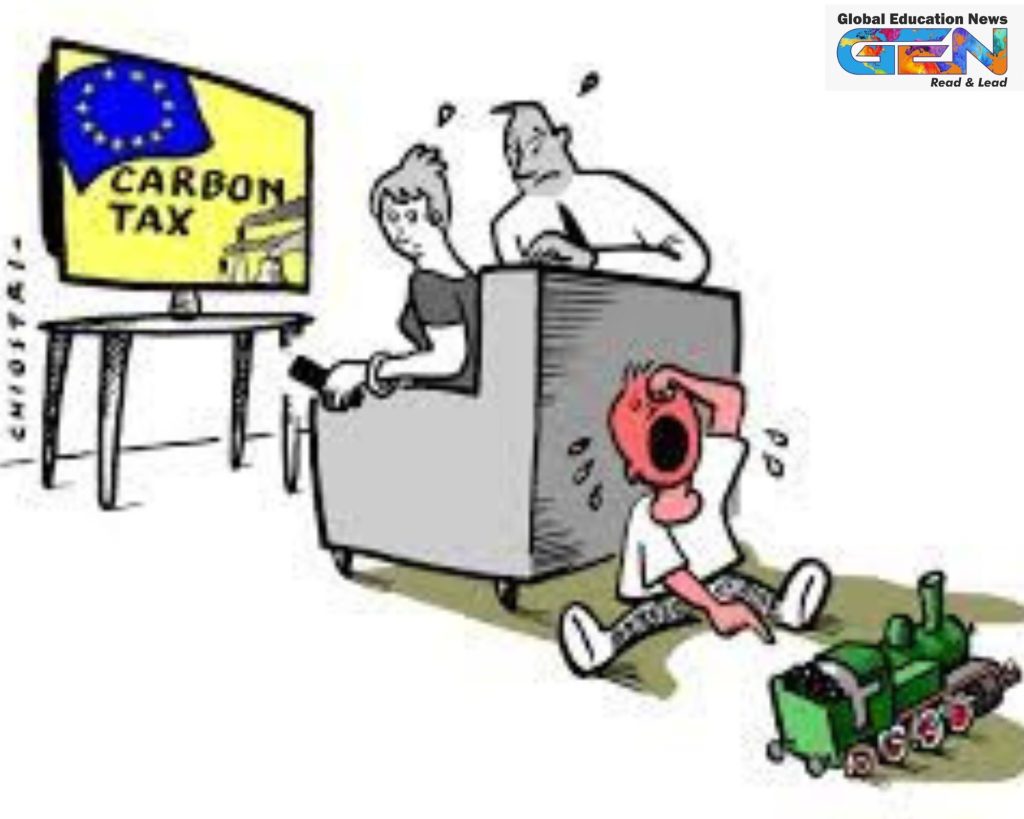
The EU’s CBAM, set to fully launch in 2026, imposes tariffs on carbon-intensive imports like iron, steel, aluminum, cement, fertilizers, electricity, and hydrogen to align their carbon costs with EU producers. Designed to prevent carbon leakage—where industries relocate to countries with laxer emission rules—it aims to level the playing field for EU manufacturers under the European Green Deal’s 55% emissions reduction target by 2030. However, BRICS nations argue it unfairly penalizes developing economies, making their exports less competitive in European markets.indianexpress.com
- Key Points:
- CBAM taxes carbon-intensive imports to match EU carbon pricing.
- Aims to prevent carbon leakage and support EU’s 2030 climate goals.
- BRICS sees it as a trade barrier that harms developing economies.
BRICS’ Critique: Unfair and Discriminatory
The BRICS declaration, adopted in Brazil, condemned CBAM as a violation of international trade and climate agreements, including the Paris Agreement’s principle of “common but differentiated responsibilities.” India, China, and others have long opposed the tax, with India’s Finance Minister Nirmala Sitharaman calling it a “trade barrier” that distorts global markets. The group argues that CBAM diverts critical resources from their energy transition and development needs, accusing the EU of green protectionism.timesofindia.indiatimes.comzerocarbon-analytics.org
- Key Points:
- BRICS claims CBAM violates international trade and climate laws.
- Labeled as green protectionism, it burdens developing nations’ economies.
- India and China lead vocal opposition at global forums like COP27 and COP29.
Climate Finance at the Core of the Debate
The BRICS nations also expressed “serious concern” over developed countries’ failure to meet pre-2020 emissions reduction commitments and called for net-zero emissions by 2030, well ahead of the 2050 global target. They demanded that wealthy nations fulfill their pledge to mobilize $100 billion annually through 2025 for developing countries’ climate needs, scaling up to $300 billion per year by 2035. The declaration emphasized concessional, grant-based finance to avoid increasing debt burdens in vulnerable nations.knnindia.co.inindianexpress.com
- Key Points:
- BRICS demands developed nations meet $100 billion annual climate finance goal.
- Calls for net-zero by 2030 and $300 billion yearly by 2035.
- Stresses grant-based finance to support vulnerable economies.
Global Implications and Challenges
The CBAM, which began its transitional phase in October 2023, affects only 3% of EU imports but targets key sectors like steel and cement, critical to developing nations’ economies. Critics warn of supply chain shifts, where companies may relocate production to the EU to avoid tariffs, potentially hollowing out industries in countries like India. The WTO compliance of CBAM remains contentious, with BRICS nations threatening legal action, citing violations of free trade principles.iasexpress.netoecd.orgesthinktank.com
- Key Points:
- CBAM impacts 3% of EU imports but hits key developing nation industries.
- Risks supply chain shifts, undermining local economies.
- BRICS threatens WTO challenges over trade violations.
A Call for Equitable Climate Action
The BRICS summit urged developed nations to honor the UNFCCC and Paris Agreement, emphasizing non-discriminatory access to trade and climate finance. They warned that unilateral measures like CBAM could disrupt global supply chains and distort competition, diverting resources from sustainable development. Social media buzz on X echoed this sentiment, with posts calling CBAM a “discriminatory move” that threatens clean energy progress in developing nations.
- Key Points:
- BRICS demands fair trade and climate finance access.
- Warns CBAM disrupts global supply chains and competition.
Why This Matters for Global Climate Policy
The BRICS rejection of CBAM highlights a critical tension between climate goals and economic equity. While the EU aims to lead with its carbon-neutral by 2050 vision, developing nations argue that policies like CBAM unfairly burden their growth, echoing post-colonial concerns about economic imperialism. As climate talks loom in Belem, Brazil, at COP20 in November 2025, the debate over CBAM could shape global climate cooperation, with BRICS pushing for a more inclusive approach to emissions reduction.indianexpress.comesthinktank.com
- Key Points:
- CBAM exposes tensions between climate goals and economic fairness.
- BRICS seeks inclusive climate policies at COP20 in 2025.
- Raises concerns about economic imperialism and trade inequity.