September 13, 2025
Delhi, India
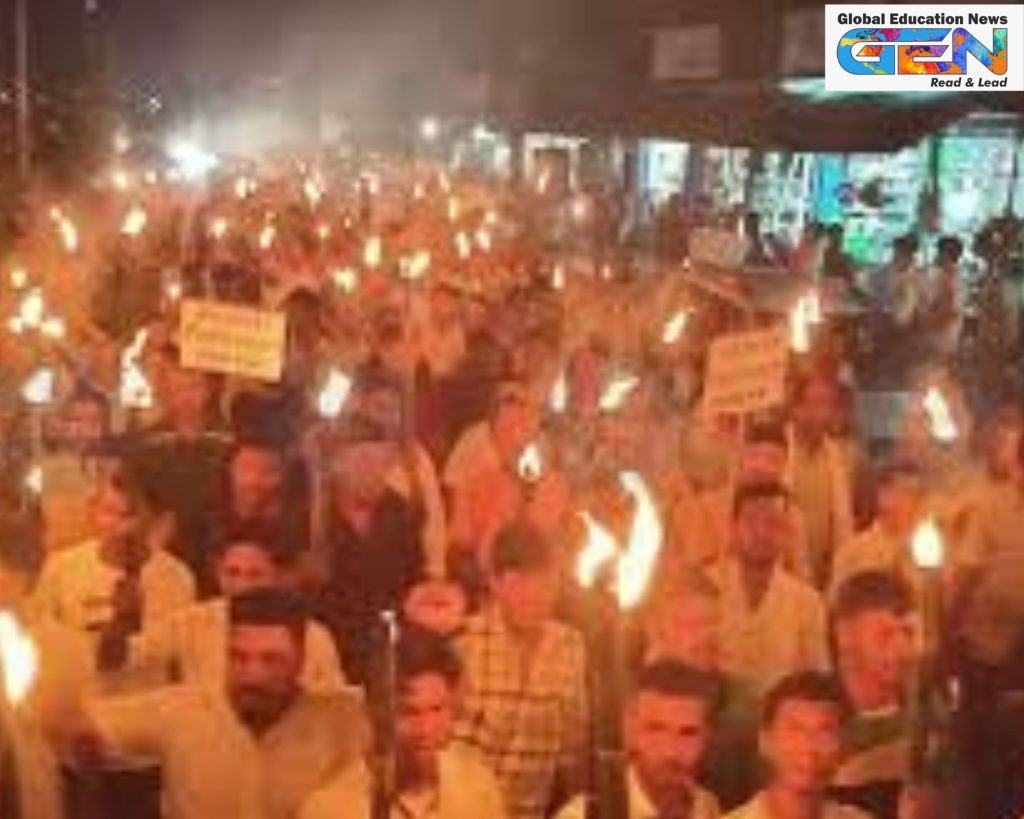
Hundreds of students illuminated Assam’s night with torches, their voices rising in a powerful demand for Scheduled Tribe (ST) status for the Koch-Rajbongshi and five other indigenous communities. Organized by the All Koch-Rajbongshi Students’ Union (AKRSU), a peaceful torchlight march turned chaotic when police intervened, sparking outrage and a district-wide shutdown. This movement isn’t just about recognition—it’s a fight for identity, rights, and justice.
Key Points:
- Torchlight March: Students marched from Chilarai College to Golakganj Bazaar in Dhubri, demanding ST status and a separate Kamatapur state.
- Police Crackdown: Allegations of a lathi-charge left several students, including women, injured, escalating tensions.
- Dhubri Bandh: A 12-hour shutdown paralyzed roads and markets, highlighting the intensity of the protest.
Why ST Status Matters: A Fight for Identity and Survival
The demand for Scheduled Tribe status is at the heart of Assam’s protests. For communities like the Koch-Rajbongshi, Tai-Ahom, Chutia, Matak, Moran, and Tea Tribes, ST recognition is a lifeline to protect their heritage and secure their future in a rapidly changing world.
Key Points:
- Land Rights: ST status would safeguard ancestral lands from encroachment and exploitation.
- Cultural Preservation: Recognition ensures traditions, languages, and identities are preserved.
- Socio-Economic Benefits: Access to education, job reservations, and welfare schemes for ST communities.
- Long-Standing Demand: These groups have been advocating for decades, with protests like the recent Margherita rally pushing for Sixth Schedule autonomy.
The Clash: From Peaceful March to Chaos
On a Wednesday evening, the AKRSU’s torchlight procession in Dhubri was meant to be a peaceful call for justice. But the mood shifted when police and paramilitary forces halted the march, allegedly using excessive force. The fallout was swift: injuries, outrage, and a 12-hour bandh that brought Dhubri to a standstill, drawing national attention to Assam’s indigenous rights movement.
Key Points:
- Alleged Police Brutality: Protesters claim the lathi-charge was unprovoked, injuring several, including women.
- District Shutdown: The bandh closed markets and roads in Dhubri, a district near the Bangladesh border.
- National Spotlight: The incident has amplified calls for constitutional recognition of Assam’s indigenous groups.
Government Response: Promises, Probes, and Accountability
Facing mounting pressure, Assam Chief Minister Himanta Biswa Sarma labeled the police action “unfortunate” and moved quickly to address the crisis. The government’s response aims to balance accountability with calming the unrest, but will it be enough to satisfy protesters?
Key Points:
- Officer Suspensions: The Golakganj police station officer was suspended, and Gauripur’s officer was withdrawn.
- Inquiry Ordered: A Deputy Inspector General will investigate allegations against three senior police officials, with a report due in five days.
- Ministerial Outreach: Minister Jayanta Malla Baruah visited injured students, calling the clash a “misunderstanding” and urging peace.
- Assembly Promise: A detailed report on the ST status demand is slated for the November assembly session.
Opposition’s Outcry: A Political Firestorm
The protests have ignited a political firestorm, with opposition leaders seizing the moment to criticize the BJP-led government. They accuse the state of neglecting indigenous communities and failing to deliver on long-standing promises.
Key Points:
- Congress MP’s Condemnation: Gaurav Gogoi called the police action a “brutal assault” and urged PM Narendra Modi to honor ST status promises.
- AJP’s Critique: Assam Jatiya Parishad president Lurinjyoti Gogoi accused the government of indifference to tribal struggles.
- Political Pressure: The opposition is framing the protests as a broader fight for indigenous dignity and rights.
The Road Ahead: A Delicate Balance
Assam’s torchlight protests are a powerful symbol of hope and frustration. The students’ demands for ST status and a Kamatapur state reflect deep-rooted aspirations for recognition and autonomy. As the government navigates this crisis, the stakes are high. Without meaningful dialogue, the flames of protest could burn brighter, challenging Assam’s delicate balance between governance and indigenous aspirations.
Key Points:
- Escalation Warning: Student groups have signaled intensified protests if demands remain unmet.
- Government’s Challenge: Balancing law enforcement with addressing long-standing grievances.
- National Implications: The protests highlight India’s broader struggle to protect indigenous rights in a modernizing world.