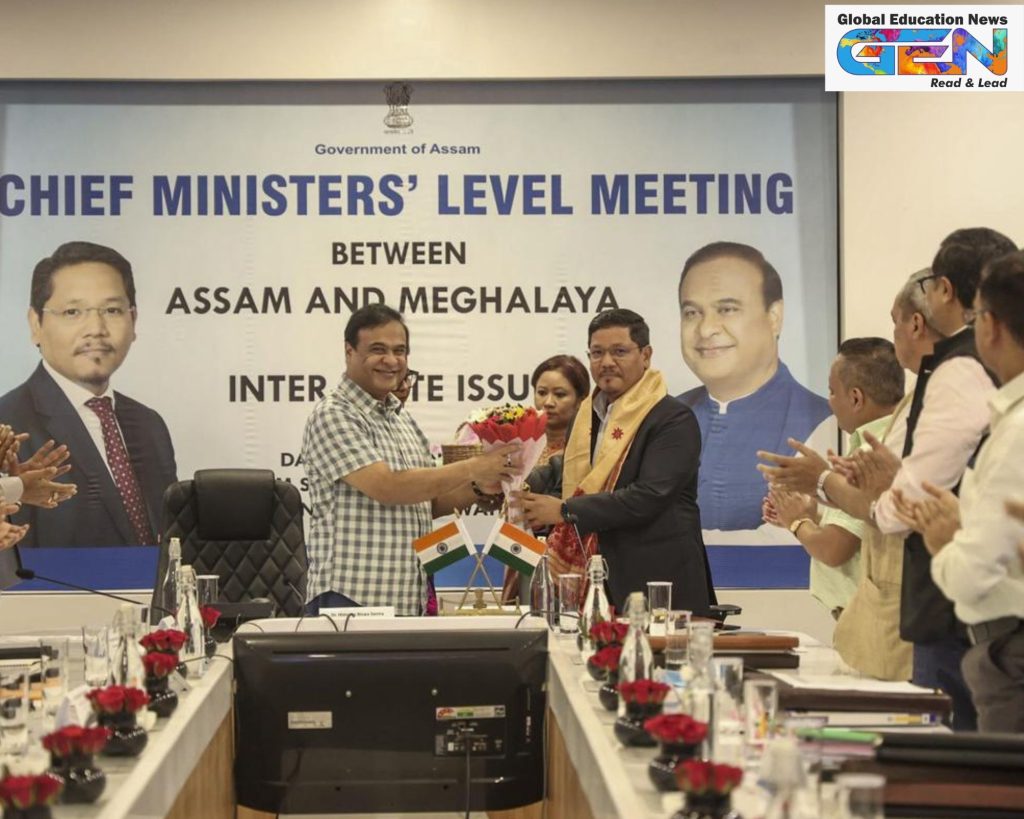
In a landmark move, the governments of Assam and Meghalaya have launched a collaborative effort to harness the Kulsi River for a 55-MW hydropower and irrigation project, announced on June 3, 2025. This initiative, coupled with plans to address urban flooding in Guwahati and settle a decades-old boundary dispute, reflects a commitment to collaborative governance and sustainable development. With satellite mapping by the North Eastern Space Application Centre (NESAC) and expertise from IIT Roorkee, this partnership aims to boost economic cooperation, tourism, and livelihoods.
- Announcement: June 3, 2025, during a meeting between Assam CM Himanta Biswa Sarma and Meghalaya CM Conrad K. Sangma.
- Key Project: 55-megawatt hydropower and irrigation project on the Kulsi River, a Brahmaputra tributary.
- Goals: Generate electricity, provide irrigation for Assam, mitigate Guwahati’s urban flooding, and resolve a 52-year boundary dispute.
55-MW Kulsi Hydropower and Irrigation Project
- Location: Kulsi River, a Brahmaputra tributary in Assam, known for its ecological significance as a nesting site for the Gangetic river dolphin.
- Capacity: 55 megawatts of hydropower to supply electricity to both Assam and Meghalaya.
- Irrigation Benefits: Supports agricultural productivity in Assam’s Kamrup and Goalpara districts.
- Community Engagement: Consultations with local communities to address concerns and ensure inclusive development.
The Kulsi River project is a multi-purpose initiative to generate clean energy while enhancing irrigation infrastructure. The river’s ecological role, particularly as a habitat for the endangered Gangetic river dolphin, will be safeguarded through environmental impact assessments. The project, estimated to cost ₹500–600 crore, aligns with India’s renewable energy goals and the North East Vision 2047, promoting sustainable growth in the region.
Tackling Urban Flooding in Guwahati
- Issue: Guwahati faces severe urban flooding, impacting over 1.5 million residents during monsoons due to poor drainage and hill runoff from Meghalaya.
- Strategy: Engage North Eastern Space Application Centre (NESAC) for satellite mapping to identify flood causes, including water flow from Meghalaya’s hills.
- Collaboration: Partner with IIT Roorkee to develop science-based flood mitigation strategies, such as improved drainage and watershed management.
- Timeline: Preliminary study to be completed by December 2025, with actionable plans by mid-2026.
Both CMs acknowledged the urgency of addressing Guwahati’s flooding, which caused ₹200 crore in damages in 2024 alone. NESAC’s satellite imagery will map flood-prone areas, while IIT Roorkee will propose solutions like stormwater drainage systems and check dams in Meghalaya’s hills. This joint effort aims to reduce flood risks and enhance urban resilience.
Resolving the 52-Year Boundary Dispute
- Background: The Assam-Meghalaya boundary dispute, ongoing since Meghalaya’s formation in 1972, spans 12 sectors over 2,700 sq km.
- Progress: Agreement reached on six sectors (Hahim, Borduar, Nongwah-Mawtamur, Deshdoomreah, Block I & II, Psiar-Khanduli) in March 2022, covering 36.79 sq km.
- Next Steps:
- Erect boundary pillars in five sectors by August 15, 2025.
- Address Meghalaya’s land adjustment requests for equitable distribution.
- Survey remaining six sectors (Langpih, Borduar, Nongwah-Mawtamur, Deshdoomreah, Block I & II, Psiar-Khanduli) by December 2025.
- Approach: Joint committees, led by cabinet ministers, will ensure mutual consent and community involvement.
The resolution process, guided by satellite surveys and historical records, has reduced tensions, with 90% of disputed areas in the six resolved sectors now demarcated. Both states aim for a win-win solution, with Assam ceding 18.46 sq km and Meghalaya 18.33 sq km in the first phase, setting a model for inter-state dispute resolution.
Collaborative Governance: A Shared Vision
- Leadership Commitment: CMs Sarma and Sangma emphasized dialogue and cooperation to resolve conflicts and drive development.
- Joint Initiatives:
- Hydropower Project: Shared investment and benefits, with Assam leading irrigation and Meghalaya contributing water resources.
- Flood Management: Cross-border coordination to tackle Guwahati’s flooding, involving NESAC and IIT Roorkee.
- Border Peace: Regular ministerial meetings to finalize boundary demarcation and prevent flare-ups.
- Community Focus: Engaging Karbi, Khasi, and Garo communities to ensure inclusive decision-making.
The meeting underscored a collaborative governance model, with both states aligning on economic, environmental, and social goals. This partnership builds on previous successes, like the 2022 MoU for border resolution, and aims to foster regional unity in the Northeast.
Future Prospects: Economic and Social Impact
- Economic Growth: The 55-MW project will create 5,000+ direct and indirect jobs, boosting Assam’s Kamrup and Meghalaya’s West Khasi Hills economies.
- Tourism Potential: The Kulsi River’s scenic beauty and dolphin habitat could attract eco-tourism, with plans for riverfront development.
- Agricultural Boost: Irrigation will benefit 50,000+ farmers, increasing crop yields in Assam’s drought-prone areas.
- Regional Model: Successful collaboration could inspire other Northeast states, like Arunachal Pradesh and Nagaland, to resolve disputes and co-develop projects.
The initiative aligns with the Act East Policy, positioning Assam and Meghalaya as hubs for renewable energy, tourism, and agriculture. By 2030, the project could add ₹1,000 crore annually to the regional economy, per initial estimates.
Implementation and Next Steps
- Hydropower Project:
- Feasibility Study: Complete by September 2025, with inputs from Central Electricity Authority (CEA).
- Community Consultations: Begin in July 2025 in Kamrup and West Khasi Hills.
- Construction Start: Targeted for mid-2026, with completion by 2030.
- Flood Mitigation:
- NESAC Mapping: Data collection by October 2025.
- IIT Roorkee Plan: Draft mitigation strategy by March 2026.
- Boundary Resolution:
- Pillar Erection: Five sectors by August 15, 2025.
- Final Survey: Remaining sectors by December 2025, with a resolution target of mid-2026.
Both governments have formed joint task forces to oversee implementation, with funding from the North Eastern Council (NEC) and Ministry of Jal Shakti. Regular progress reviews will ensure timelines are met.
Why This Matters
- Sustainable Energy: The 55-MW project supports India’s net-zero by 2070 goal, adding clean energy to the Northeast grid.
- Flood Resilience: Mitigating Guwahati’s flooding protects 1.5 million residents and ₹500 crore in assets annually.
- Border Peace: Resolving the dispute ends a 52-year conflict, fostering trust and stability.
- Regional Unity: The partnership sets a precedent for Northeast integration, aligning with Act East Policy.