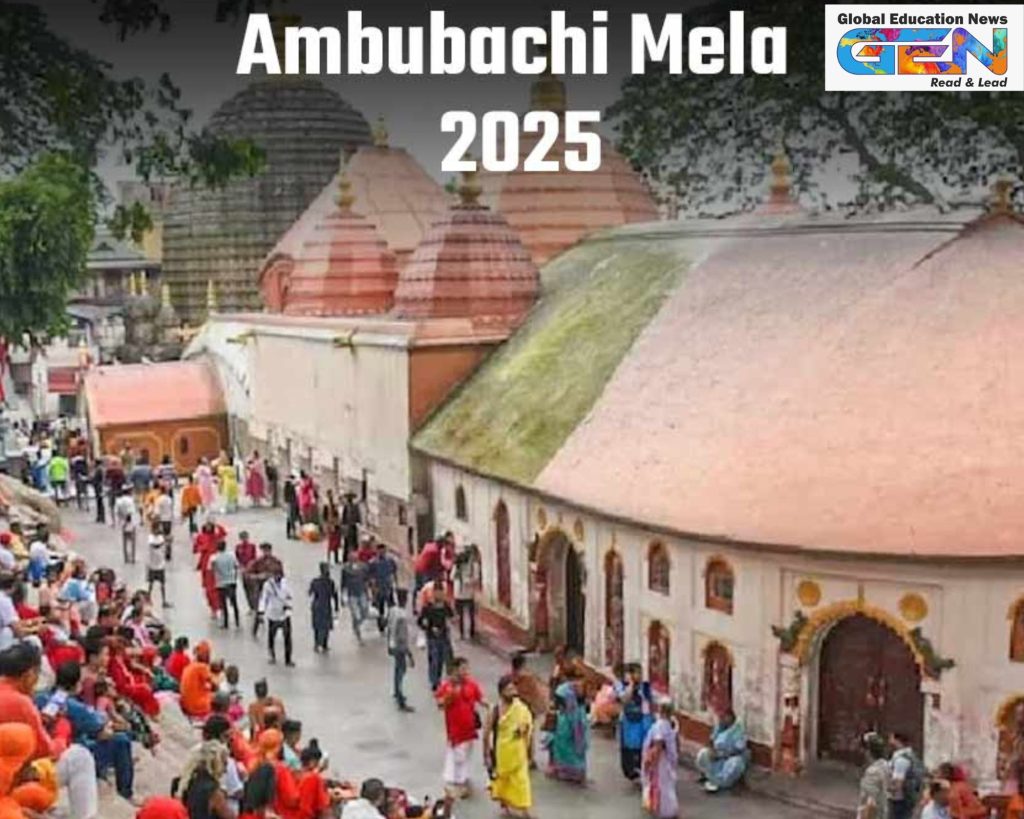
The Ambubachi Mela 2025 kicked off on June 22, 2025, at the sacred Kamakhya Temple atop Nilachal Hill in Guwahati, Assam, transforming the city into a vibrant hub of spirituality and culture. This unique festival, often called the “Mahakumbh of the East,” honors the annual menstruation of Goddess Kamakhya, celebrating the divine feminine as a source of creation and renewal. With lakhs of devotees, sadhus, and Tantric practitioners flocking to the temple, the Mela is a powerful blend of faith, tradition, and defiance against menstrual taboos.
- Ambubachi Mela 2025 runs from June 22–26 at Kamakhya Temple, Guwahati.
- Celebrates Goddess Kamakhya’s annual menstruation, symbolizing fertility.
- Over 10 lakh devotees expected, with a ₹5.4 crore budget for logistics.
The Sacred Story Behind Ambubachi Mela
Key Points:
- Rooted in Tantric mythology, linked to Goddess Sati’s yoni falling at Kamakhya.
- “Ambubachi” means “spoken with water,” tying menstruation to monsoon fertility.
- Challenges societal taboos by venerating menstruation as divine.
The Ambubachi Mela is steeped in mythology and Tantric tradition. Legend says the Kamakhya Temple, one of the 51 Shakti Peethas, marks the spot where Goddess Sati’s yoni (womb) fell during Lord Shiva’s cosmic dance of grief. Unlike most temples, Kamakhya has no idol—instead, a yoni-shaped stone, moistened by a natural spring, is worshipped as the goddess’s generative power. During the Mela, the goddess is believed to undergo her annual menstruation, symbolizing Earth’s fertility and renewal, especially during the monsoon-heavy Ahaar month (mid-June). This celebration boldly reframes menstruation as a sacred, life-giving force, challenging stigmas across India and beyond.
Rituals That Define the Mela’s Magic
Key Points:
- Temple closes from June 22–25 during the goddess’s menstrual seclusion.
- Reopens on June 26 with Mahasnan (ritual bathing) and prasad distribution.
- Angodak (sacred water) and Angabastra (red cloth) are prized prasad.
The Ambubachi Mela is a spiritual spectacle. On June 22 at 2:56 PM IST, the Pravritti ritual marks the start, closing the temple doors for three days to honor Goddess Kamakhya’s menstruation. No pujas or darshan occur, reflecting a period of divine rest, with devotees fasting and meditating outside. On June 26 at 3:19 AM IST, the Nivritti ceremony reopens the temple after a ceremonial cleansing (Mahasnan). Devotees receive Angodak (spring water) and Angabastra (a red cloth symbolizing the goddess’s menstrual energy), believed to bring fertility and protection. The air echoes with Vedic chants, traditional music, and the energy of Tantric rituals, creating an unforgettable spiritual vibe.
A Cultural Extravaganza on Nilachal Hill
Key Points:
- Features folk dances, music, and stalls with crafts and Assamese delicacies.
- Draws sadhus, Aghoris, Bauls, and global pilgrims for Tantric practices.
- Promotes menstrual hygiene and women’s empowerment.
Beyond its spiritual core, Ambubachi Mela is a cultural explosion! The temple premises buzz with folk dances like Bihu, vibrant rangolis, and stalls selling Assamese handlooms, jewelry, and treats like pitha and laru. Sadhus, Tantric practitioners, and Baul singers from Bengal add mystique, while foreigners join to experience this rare celebration. The festival also promotes menstrual hygiene, with Assam’s Tuloni Biya ritual celebrating girls’ womanhood, challenging taboos. With 20 lakh visitors expected post-reopening, the Mela fosters unity and cultural pride.
Why Ambubachi Mela Matters
Key Points:
- Celebrates fertility, womanhood, and nature’s cycles since over 500 years.
- Aligns with Assam’s push for menstrual awareness and gender equality.
- Boosts tourism with ₹5.4 crore in state funding for logistics.
The Ambubachi Mela, dating back over 500 years, is a powerful symbol of Shakti worship and Tantric traditions. By venerating menstruation, it challenges societal taboos, promoting gender equality and menstrual hygiene. Assam’s Tuloni Biya ritual, akin to a “small wedding” for girls, reinforces this ethos. The festival also drives economic growth, with ₹5.4 crore allocated for sanitation, security, and pilgrim facilities. Chief Minister Himanta Biswa Sarma’s call for devotees to join reflects its cultural and spiritual weight, making it a cornerstone of Assam’s heritage.
Join the Spiritual Journey
Key Points:
- Runs June 22–26, 2025; temple reopens June 26 at 6 AM.
- Follow updates on tourism.assam.gov.in or social media.
- Experience Tantric rituals and divine feminine energy firsthand.
The Ambubachi Mela 2025 is more than a festival—it’s a celebration of life, womanhood, and divine energy. From the sacred closure of Kamakhya Temple to the vibrant reopening on June 26, this Mela offers a rare glimpse into Tantric traditions and Assam’s cultural soul. Plan your visit, immerse in the chants and rituals, and witness the power of Goddess Kamakhya. Check tourism.assam.gov.in for updates, book your trip, and join lakhs of devotees in this spiritual odyssey from June 22–26, 2025