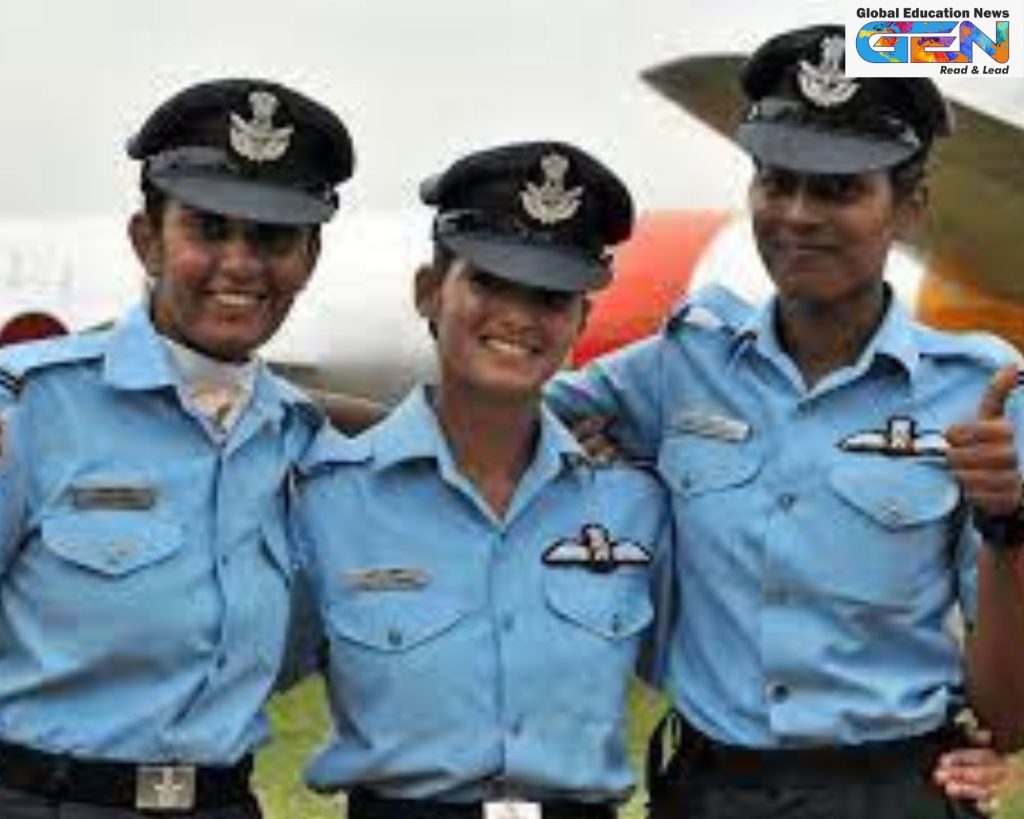
The Indian Air Force (IAF) has ignited the AFCAT 1 2026 recruitment drive on November 17, 2025, targeting 340 commissioned officer positions for the January 2027 course at the Air Force Academy, Dundigal. This notification, released on November 9, 2025, via afcat.cdac.in, underscores the IAF’s push for a tech-savvy, diverse force amid evolving threats like cyber warfare and unmanned systems. Yet, with over 2 lakh applicants vying for these slots annually, success demands more than aspiration—it’s a blend of strategic preparation and procedural precision. This in-depth breakdown analyzes the framework, from vacancy dynamics to selection rigors, drawing on official parameters to empower candidates in navigating this high-stakes arena.
Recruitment Landscape: Vacancies and Branch Dynamics
The 340 vacancies reflect a 5% uptick from 2025, prioritizing gender inclusivity (10-15% women) and technical expertise to bolster operational readiness. A closer look reveals:
- Flying Branch (AFCAT & NCC Special Entry): 38 slots (34 men PC, 4 women PC) – Pilots for fighters, transports, and helicopters; 10% reserved for NCC holders, emphasizing aerial combat versatility.
- Ground Duty (Technical): 185 slots (AE(L): 129; AE(M): 59) – Engineering roles in avionics, electronics, and mechanical systems; split across Permanent Commission (PC) and Short Service Commission (SSC) for men and women.
- Ground Duty (Non-Technical): 102 slots (Admin: 60; Logistics: 11; Accounts: 10; Education: 4; Meteorology: 3; Weapon Systems: 26) – Support functions in administration, finance, and strategy; SSC-focused with balanced gender allocation.
- NCC Special Entry: Up to 10% of Flying vacancies – Fast-track for certificate holders, enhancing grassroots talent integration.
Analytically, this distribution signals IAF’s pivot toward ground-based innovation, with Technical branches claiming over 50% to counter tech disruptions—yet Flying remains the prestige pinnacle, where cutoffs often exceed 150/300.
Eligibility Spectrum: Tailored Thresholds for Aspiring Guardians
AFCAT’s criteria ensure a holistic profile, blending academics, fitness, and patriotism. Unmarried status is mandatory, with violations risking discharge and cost recovery. Key facets:
- Nationality and Age (as of January 1, 2027):
- Flying: 20-24 years (born January 2, 2003–January 1, 2007); extendable to 26 for Commercial Pilot License holders.
- Ground Duty: 20-26 years (born January 2, 2001–January 1, 2007).
- Educational Benchmarks:
- Flying: 60% in 3-year graduation/BE/B.Tech; 50% in Class 12 Physics/Math; or equivalent professional quals like AMIE.
- Technical: 60% in Class 12 Physics/Math + 4-year engineering degree in specified streams (e.g., Aeronautical Electronics).
- Non-Technical: 60% in Class 12 Physics/Math + relevant graduation/post-graduation (e.g., MBA for Admin).
- Physical Standards:
- General: Height (men: 162.5 cm; women: 157 cm); weight proportional; vision 6/6 uncorrected for Flying (no color blindness).
- Branch-Specific: Flying demands LASIK eligibility and high G-tolerance; Technical/Non-Technical focus on overall fitness, with relaxations for SC/ST (e.g., height -2 cm).
This framework favors STEM graduates (70% selections), but Non-Technical opens doors for broader disciplines—highlighting IAF’s equity push, though rural candidates often cite access barriers in coaching.
Timeline Imperative: Key Dates to Anchor Your Preparation
Efficiency defines this cycle, with a single-shift exam to streamline logistics. Milestones include:
- Notification Release: November 9, 2025.
- Registration Window: November 17–December 14, 2025 (11:30 PM IST) – Peak rushes expected; apply mid-week.
- Admit Card Availability: January 22, 2026 – From 104 centers nationwide.
- Exam Day: January 31, 2026 (9:45 AM–11:45 AM IST) – Online CBT mode.
- Results and AFSB Calls: Mid-February 2026.
- Course Start: January 2027 (74-week training).
Delays in prior years underscore the need for buffer time—candidates should align with internship completions for seamless progression.
Application Mastery: A Foolproof Roadmap
The digital-only process at afcat.cdac.in is intuitive yet error-prone, with 90% rejections from upload glitches. Step-by-step:
- Initial Setup: Register via OTR (One-Time Registration) using email/mobile; generate credentials.
- Form Population: Select branch, input academics/address; prioritize 5 exam centers.
- Document Uploads: Scanned photo (20-50 KB), signature (10-20 KB), marksheets (Class 10/12, degree provisional).
- Fee Transaction: ₹550 + GST (non-refundable; waived for NCC) via net banking/cards.
- Finalization: E-sign, submit, and download acknowledgment—edits barred post-submission.
Tip: Draft on desktop for stability; verify against notification PDF to sidestep common pitfalls like mismatched DOB.
Exam and Selection Gauntlet: Testing the Triple Threat
AFCAT’s multi-layer sieve yields a 1:10 ratio, prioritizing resilience over rote:
- Written Exam (CBT): 100 questions (300 marks, 2 hours); sections: English (25Q), GK (25Q), Numerical/Reasoning (50Q), Military Aptitude (25Q). Negative marking (-1); 50% cutoff; Technical adds EKT (50Q on engineering basics).
- AFSB Interview (5-6 Days): Stage 1 screening (OIR, PPDT); Stage 2 (psych tests, group tasks, PI, CPSS for Flying)—40% weightage.
- Medical Board: At IAM Bengaluru/AFCME; appeals via AMB; final merit blends scores.
Syllabus spotlights: Current affairs (e.g., IAF’s Tejas Mk2), quant (ratios, interest), and aptitude (non-verbal series). Reforms like AI-scored psych tests enhance objectivity, but critics note urban bias in group tasks.