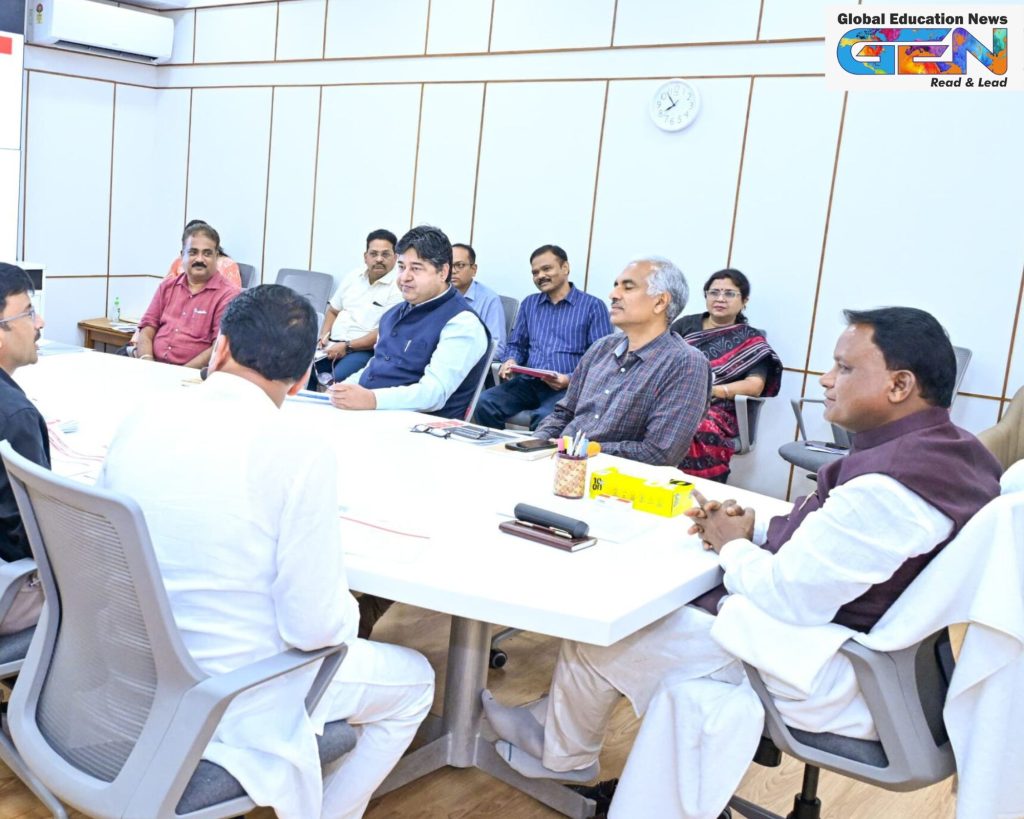
On August 21, 2025, Odisha’s Chief Minister Mohan Charan Majhi announced a transformative plan to recruit 44,433 primary school teachers over the next three years, with approximately 15,000 appointments annually, to address teacher shortages and align with the National Education Policy (NEP) 2020. This initiative, one of India’s largest state-level teacher recruitment drives, aims to bolster primary education across 45,292 primary schools with 1,60,319 sanctioned teacher posts, supporting the vision of a prosperous Odisha by 2036.
Key Points:
- 44,433 teacher posts to be filled by 2028, including 39,366 new posts and 5,067 vacancies by December 2025.
- Aligns with NEP 2020 to improve pupil-teacher ratios (target: 30:1).
- Supports 45,292 primary schools for enhanced foundational learning.
Key Reforms and Initiatives
The high-level meeting chaired by CM Majhi at Lok Seva Bhawan outlined several reforms to strengthen Odisha’s education system:
- Teacher Recruitment and Regularization:
- 44,433 posts to be filled, with 15,000 teachers recruited annually.
- Regularization of schematic (contractual) teachers to improve job security and morale, addressing long-standing demands from the teaching community.
- B.Ed.-trained teachers with special education qualifications to be appointed as resource persons for differently-abled students across clusters.
- Free Textbooks for All:
- Expansion of the free textbook program to include all students in Classes 9 and 10, previously limited to Classes 1–8 and SC/ST students in Classes 9–10, reducing financial barriers for over 10 lakh students.
- Unified Education Board:
- Merger of the Board of Secondary Education (BSE) and Council of Higher Secondary Education (CHSE) into a single board to streamline governance and ensure uniform standards for Class 10 and 12 examinations.
- Health and Well-Being:
- Appointment of Auxiliary Nurse Midwives (ANMs) at a ratio of one per 300 hostel students to enhance health monitoring in residential schools.
- Tribal Education Focus:
- Emphasis on mother-tongue education for tribal children to improve linguistic communication and learning outcomes.
- Establishment of a Multilingual Education Centre in Koraput, in collaboration with the Scheduled Castes and Scheduled Tribes Research and Training Institute (SCSTRTI).
- SCERT Development:
- Strengthening the State Council of Educational Research and Training (SCERT) on the lines of NCERT to enhance curriculum development and teacher training.
- Online School Approvals:
- Fully online approval process for new private schools to improve efficiency and transparency.
Key Points:
- Free textbooks extended to Classes 9-10 for inclusivity.
- Single board to unify BSE and CHSE governance.
- Multilingual Centre in Koraput for tribal education.
Alignment with NEP 2020
The reforms align with NEP 2020’s goals of improving foundational learning, inclusivity, and pupil-teacher ratios (PTR). Odisha’s current PTR in primary schools exceeds the NEP’s recommended 30:1, with a 1.5 million teacher vacancy gap nationwide. The addition of 39,366 new posts and filling 5,067 vacancies by 2025 addresses this gap, aiming to improve learning outcomes for over 50 lakh students in Odisha. The focus on mother-tongue education and inclusive education for differently-abled students supports NEP’s emphasis on equity.
Key Points:
- Addresses 1.5 million national teacher vacancies with 44,433 posts.
- Targets 30:1 PTR per NEP 2020 guidelines.
- Promotes inclusivity through tribal and special education.
Challenges and Implementation
While the initiative has been widely praised, several challenges remain:
- Logistical Scale: Recruiting 15,000 teachers annually requires a robust, transparent process to ensure qualified candidates, with past delays noted in Odisha’s recruitment cycles.
- Financial Commitment: Sustained funding for salaries, training, and infrastructure (e.g., Multilingual Education Centre) is critical, with concerns about long-term budget allocation.
- Teacher Training: Limited in-service training (only 10% of teachers trained under NPST) may hinder effective implementation of NEP-aligned pedagogies, such as open-book exams proposed by CBSE.
- Infrastructure Gaps: Issues like 86,934 unsafe classrooms in Rajasthan highlight the need for concurrent infrastructure upgrades in Odisha to ensure safe learning environments.
Key Points:
- Recruitment scale demands transparent processes.
- Funding critical for salaries and training.
- Infrastructure upgrades needed alongside reforms.
Broader Context and National Relevance
Odisha’s reforms complement national efforts, such as:
- CBSE’s open-book exams for Class 9 (2026-27), emphasizing critical thinking.
- NCERT’s space modules, inspiring STEM education.
- UGC’s curriculum introducing Kala Ganpana and Bharatiya Bijganit, blending tradition with modern learning.
- CBSE’s new regional offices in Gurugram, Lucknow, and others, enhancing governance.
However, challenges like 45% rural internet penetration and infrastructure deficits (e.g., 22% of school buildings with structural issues nationally) may impede digital and physical access to these reforms.
Key Points:
- Complements CBSE, NCERT, UGC initiatives for NEP 2020.
- Faces digital and infrastructure challenges.
- Impacts 50 lakh+ students in Odisha.