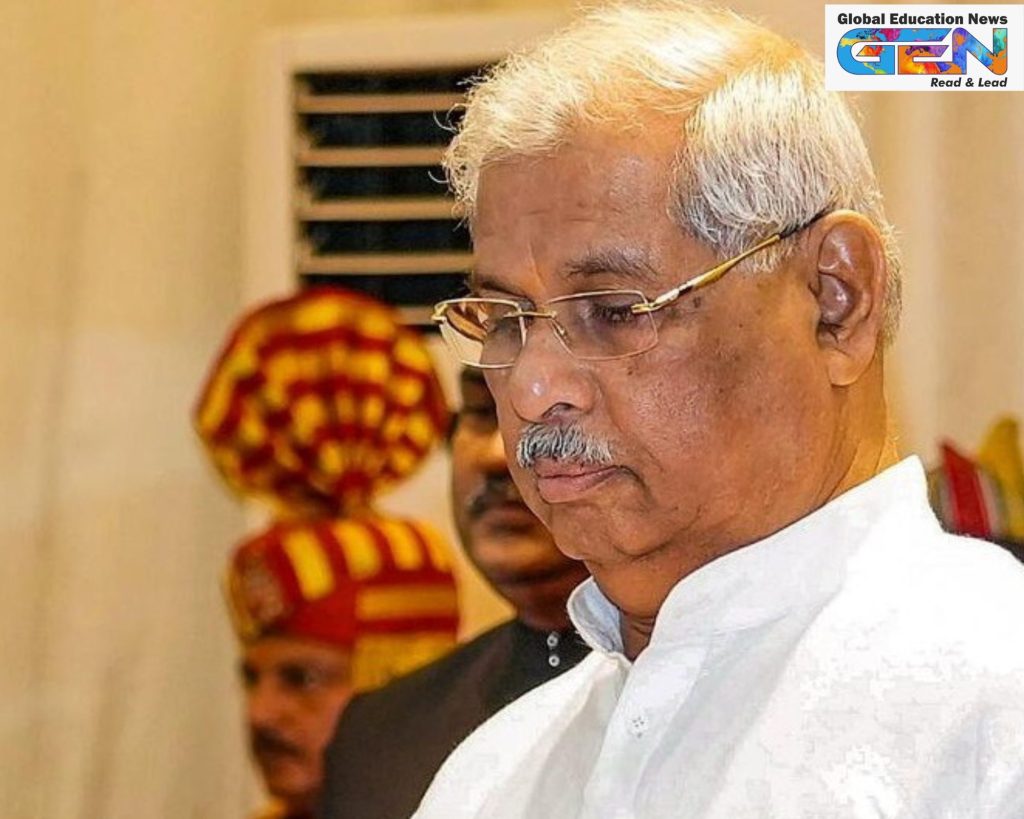
On August 6, 2025, the Kerala government, led by Chief Minister Pinarayi Vijayan, approved a draft ordinance to amend the Kerala University of Digital Sciences, Innovation and Technology Act, 2021, targeting provisions related to Vice-Chancellor (VC) appointments. This decision, made during a cabinet meeting, is a strategic response to an ongoing feud with Governor Rajendra Vishwanath Arlekar, who serves as the ex-officio Chancellor of state universities. The move aligns with University Grants Commission (UGC) regulations and recent court rulings, aiming to streamline the VC selection process and ease tensions that have disrupted higher education governance.
Key Points:
- Draft ordinance approved to amend VC appointment clauses in the Digital University Act.
- Move prompted by ongoing conflict with Governor Arlekar over university appointments.
- Amendments align with UGC rules and Supreme Court directives for institutional harmony.
The Root of the Conflict
The tussle stems from the Governor’s unilateral reappointment of Dr. Ciza Thomas and Dr. K. Sivaprasad as interim VCs for Digital University Kerala (DUK) and APJ Abdul Kalam Technological University (KTU) on July 31, 2025, without state government consultation. The Kerala High Court had previously ruled these appointments legally untenable on May 19, 2025, citing the Digital University Act and KTU Act, which mandate government-recommended panels for interim VC appointments. The state and opposition Congress alleged the appointees’ ties to the Sangh Parivar, escalating political tensions. The Supreme Court, on July 30, 2025, urged both parties to resolve the dispute amicably, emphasizing the need for permanent VC appointments to prioritize students’ interests.
Key Points:
- Governor reappointed interim VCs without state input, defying High Court rulings.
- High Court emphasized government’s role in recommending VC candidates.
- Supreme Court stressed cooperation to avoid harming students’ education.
What the Ordinance Changes
The draft ordinance targets sub-sections 3, 4, and 6 of Section 11 of the Digital University Act, focusing on the composition and process of the Search-cum-Selection Committee for VC appointments. Notably, it removes the Chief Secretary from the committee, addressing concerns that a bureaucrat unrelated to higher education was involved. The revised committee will likely include an Electronics and IT expert, an academia expert chosen by the pro-government Board of Governors, a UGC nominee, and a state government nominee. While the exact composition remains undisclosed, the changes aim to align with UGC Regulations 2018 and reduce friction by ensuring a more inclusive selection process.
Key Points:
- Ordinance amends Search-cum-Selection Committee composition and process.
- Chief Secretary removed to align with UGC guidelines.
- New committee to include diverse experts, balancing state and academic input.
Broader Context of the Tussle
This ordinance is part of a larger conflict between the Left Democratic Front (LDF) government and the Governor, a tension that predates Arlekar’s tenure. In 2022, the Kerala Assembly passed a University Laws (Amendment) Bill to remove the Governor as Chancellor of 14 state universities, proposing eminent academicians instead. Governor Arif Mohammed Khan withheld assent, and the issue remains unresolved, with bills pending presidential approval. The current dispute over VC appointments reflects this ongoing power struggle, with the state accusing the Governor of overstepping authority and the Raj Bhavan citing UGC regulations as overriding state laws.
Key Points:
- 2022 bill to replace Governor as Chancellor remains stalled.
- Tensions trace back to disputes over VC appointments and university autonomy.
- Governor cites UGC regulations, while state emphasizes local university acts.
Efforts Toward Resolution
Following the Supreme Court’s July 30, 2025, directive, Ministers P. Rajeev and R. Bindhu met Governor Arlekar on August 3, 2025, to seek a resolution. Despite these efforts, posts on X indicate that Arlekar refused to reconsider his interim VC appointments, prompting the state to pursue the ordinance route. The government’s move reflects a strategic push to assert control over university governance while adhering to judicial guidance. However, the Governor’s approval of the ordinance remains uncertain, given his stance and the precedent set by previous rejections.
Key Points:
- Ministers met Governor to resolve deadlock, but no consensus reached.
- Ordinance sent to Governor for promulgation, outcome uncertain.
- Supreme Court’s call for harmony shapes state’s legislative strategy.
Implications for Higher Education
The ongoing tussle risks disrupting Digital University Kerala, a pioneering institution established in 2020 to advance research in AI, cybersecurity, and digital technologies. The university, upgraded from the Indian Institute of Information Technology and Management-Kerala (IIITM-K), hosts innovation hubs like Kerala Blockchain Academy and Maker Village. Delays in appointing permanent VCs could hinder academic and research progress, affecting students and faculty. The ordinance, if enacted, could set a precedent for other universities in Kerala, reshaping the balance of power in higher education governance.
Key Points:
- Dispute threatens stability at Digital University Kerala, a hub for digital innovation.
- University’s advanced programs in AI and cybersecurity at risk due to leadership uncertainty.
- Ordinance could influence governance models across Kerala’s universities.
A Polarized Debate and Uncertain Future
The ordinance has sparked polarized sentiments, as seen in posts on X. Some support the state’s push for control, citing the need for local autonomy, while others back the Governor, arguing that UGC oversight ensures impartiality. Critics warn that political interference could undermine university autonomy, while supporters view the amendments as a step toward aligning with national educational standards. With three university-related bills, including the Private Universities Bill, still pending Governor or presidential assent, Kerala’s higher education landscape faces a critical juncture. The outcome of this ordinance will likely shape the state’s academic future and its relationship with the Raj Bhavan.
Key Points:
- X posts reflect divided views on state control versus Governor’s authority.
- Pending bills highlight broader governance challenges in Kerala’s universities.
- Ordinance’s fate will influence academic autonomy and state-Raj Bhavan dynamics.