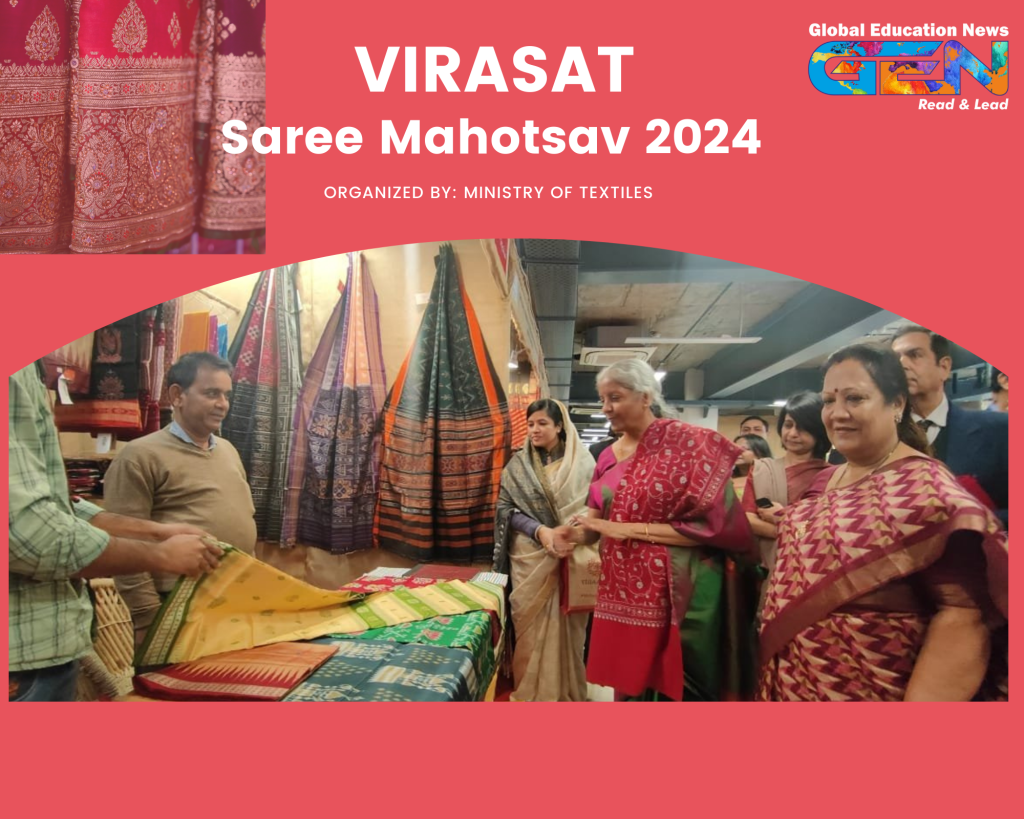
Experience the Best of Indian Handloom at the Viraasat Sari Festival in New Delhi
The Viraasat Sari Festival 2024, organized by the Ministry of Textiles, is a celebration of India’s timeless and diverse handloom sari traditions. Set to take place from December 15 to 28, 2024, at Handloom Haat, Janpath, New Delhi, this event is an exciting opportunity for visitors to immerse themselves in the artistry, craftsmanship, and cultural richness of India’s handwoven saris.
A Showcase of India’s Handloom Diversity
The festival will feature a wide range of traditional and contemporary handloom saris, showcasing weaving techniques from different regions of India. These include saris from Banaras, Kanchipuram, Pochampally, Khadi, and many more, each reflecting the unique cultural heritage and craftsmanship of the respective regions.
Promoting Handloom Craftsmanship
The Viraasat Sari Festival aims to bring attention to India’s handloom industry and the artisans who keep these age-old traditions alive. By highlighting the various weaving techniques, the festival plays a crucial role in preserving these crafts while also promoting sustainable fashion. It provides a platform for weavers and artisans to showcase their works, connect with a broader audience, and contribute to the growth of the handloom sector.
What to Expect at the Festival
Visitors to the festival can look forward to an impressive display of exquisite saris, with many available for purchase directly from the artisans. The event will feature various types of handwoven saris, including those with intricate designs, vibrant colors, and luxurious textures. Beyond saris, the festival will also have exhibitions on handloom fabrics, tools, and live weaving demonstrations, offering visitors a chance to see the meticulous work behind these masterpieces.
Supporting Sustainable and Ethical Fashion
The Viraasat Sari Festival is not just an exhibition; it is also a sustainability initiative. By promoting handwoven textiles, the festival encourages eco-friendly fashion choices and highlights the importance of preserving traditional craftsmanship. Handloom fabrics are known for their minimal environmental impact, and the event will emphasize the importance of supporting local artisans while promoting ethical consumerism.