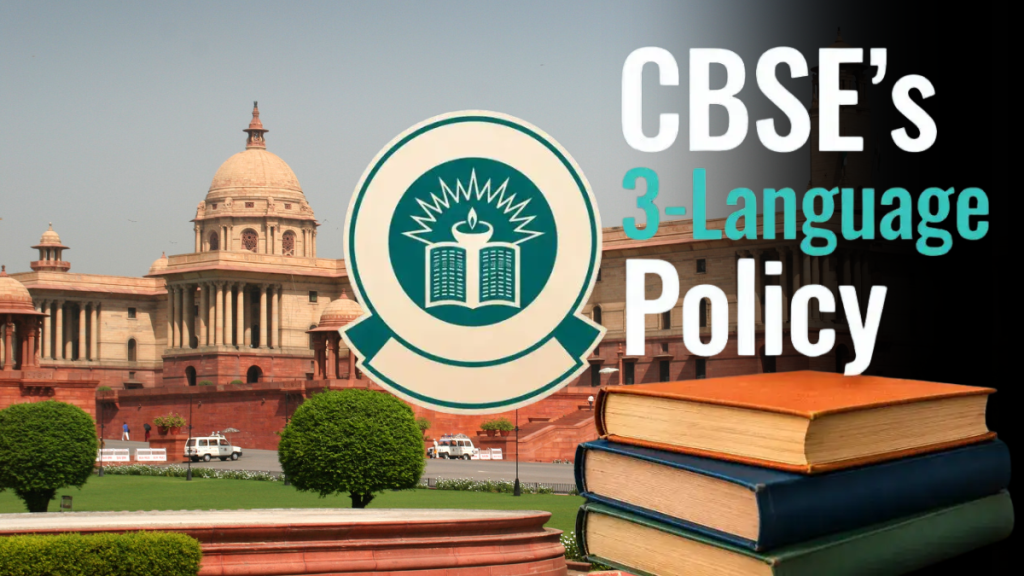
The Central Board of Secondary Education (CBSE) has released official guidelines clarifying the implementation of the Three-Language Policy in affiliated schools. The move brings much-needed clarity following the National Education Policy (NEP) 2020 recommendations and addresses concerns raised by schools, parents, and students.
Key Highlights of the Guidelines
- Exemption for Current Batch: Students currently in Class 10 are fully exempted from the Three-Language Policy requirements.
- Focus on Flexibility: Schools have been given clear directions to implement the policy without imposing undue burden on students.
- NEP 2020 Alignment: The guidelines reinforce the policy’s aim to promote multilingualism while respecting regional and linguistic diversity.
The announcement comes as a relief for thousands of students preparing for board examinations, eliminating last-minute confusion regarding language subjects.
Who is Affected and Implementation Timeline
The Three-Language Policy, as per NEP 2020, encourages students to learn three languages — with at least two being Indian languages — during their school years. However, the CBSE has adopted a phased and student-friendly approach:
- Current Class 10 students will continue under the existing two-language or previous norms and will not be required to study a third language for their board examinations.
- The policy will apply more comprehensively to incoming batches, particularly from lower classes, giving schools and students adequate time to adapt.
- Schools must ensure that language choices do not disadvantage students from diverse linguistic backgrounds.
This structured rollout aims to balance educational goals with practical considerations.
Why This Policy Matters
The Three-Language Formula seeks to foster national integration, cultural awareness, and cognitive development through multilingual education. Learning multiple languages has been linked to improved problem-solving skills, better memory, and enhanced employability in a globalized world.
However, implementation challenges — such as availability of qualified teachers, regional language resources, and student workload — have been points of discussion. The CBSE guidelines address these by providing schools with operational flexibility while maintaining the spirit of NEP 2020.
Analysis: Impact on Students, Schools, and the Education System
Positive Aspects:
- Student Relief: Exemption for the current Class 10 batch reduces academic pressure during crucial board exam preparation.
- Promotes Multilingualism: Long-term benefits include better communication skills and preservation of India’s linguistic heritage.
- School Autonomy: Guidelines allow customization based on regional needs and available infrastructure.
Potential Challenges:
- Teacher training and recruitment for regional languages may require additional investment from schools.
- Ensuring equitable access for students in non-Hindi speaking regions or those with limited exposure to multiple languages.
- Monitoring effective implementation across thousands of CBSE-affiliated schools spread across India and abroad.
Overall, the CBSE’s measured approach demonstrates a pragmatic balance between policy vision and ground realities. It signals that while multilingual education remains a priority, the Board is committed to avoiding disruption for students in the middle of their academic journey.
Expert Perspective and Broader Context
Educationists view this as a welcome step toward smoother NEP implementation. By exempting the current Class 10 cohort, the Board has prioritized student well-being without diluting long-term educational objectives.
The guidelines also reinforce India’s commitment to linguistic diversity — a key pillar of the National Education Policy — while addressing practical concerns raised by stakeholders since the policy’s announcement.