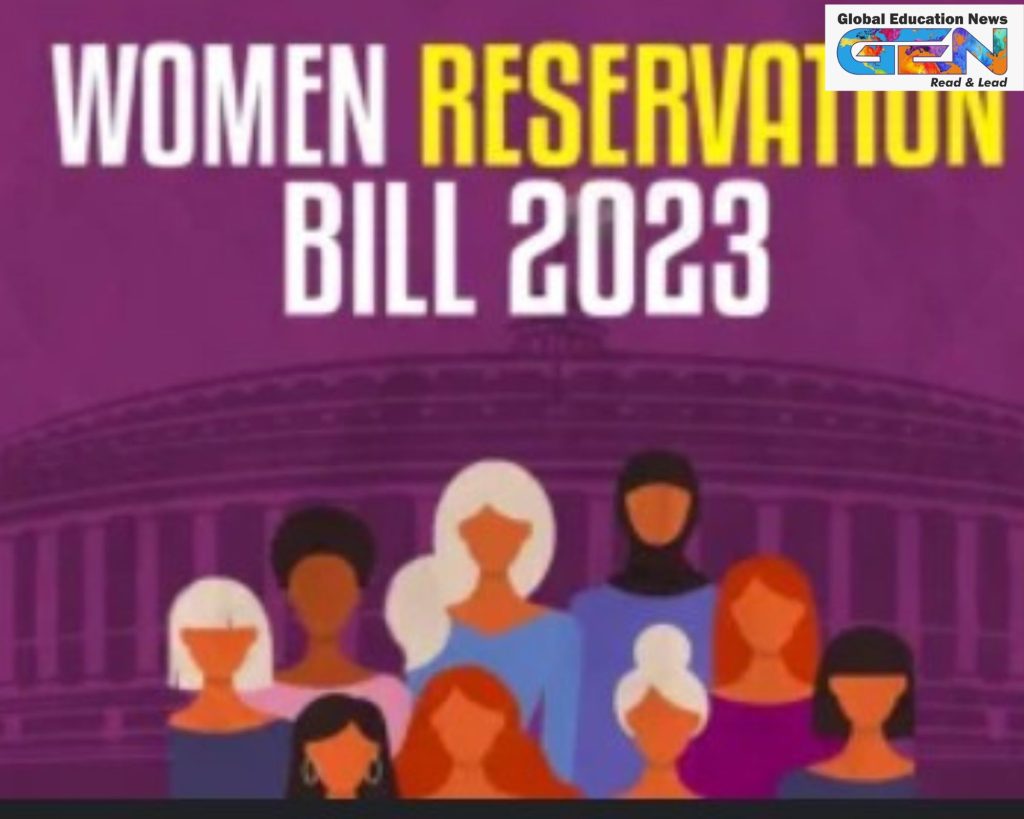
The Women’s Reservation Bill 2023, officially the Constitution (128th Amendment) Bill or Nari Shakti Vandan Adhiniyam, marks a historic leap toward gender equality in Indian politics. Passed unanimously in September 2023 by both the Lok Sabha (454-2 votes) and Rajya Sabha, it reserves one-third of seats in the Lok Sabha, state legislative assemblies, and the Delhi Legislative Assembly for women. This long-awaited legislation, first proposed in 1996, aims to address the stark underrepresentation of women in India’s political landscape, where women currently hold only 15% of Lok Sabha seats and 9% in state assemblies.
Key Points:
- 33% Reservation: Mandates one-third of seats for women in Lok Sabha, state assemblies, and Delhi assembly.
- Historic Passage: Passed in 2023 after decades of debate, with near-unanimous support.
- NEP 2020 Alignment: Supports inclusive governance and gender equality goals.
- Global Context: India ranks 143rd globally in women’s parliamentary representation, trailing neighbors like Nepal and Pakistan.
The Long Journey of the Bill
The fight for women’s reservation in politics dates back to India’s independence movement. Leaders like Sarojini Naidu in 1931 rejected preferential treatment, advocating for equal political status. However, post-independence, women’s representation remained low, prompting calls for affirmative action. The 81st Amendment Bill in 1996 first proposed 33% reservation but lapsed due to lack of consensus. Subsequent attempts in 1998, 1999, 2002, 2003, and 2008 faced similar fates, with the 2008 Bill passing the Rajya Sabha but lapsing in the Lok Sabha. The 2023 passage, after 27 years, is a triumph of persistence.
Key Points:
- Origins: First introduced as the 81st Amendment Bill in 1996 under PM Deve Gowda.
- Multiple Attempts: Reintroduced in 1998, 1999, 2002, 2003, and 2008, but lapsed each time.
- Rajya Sabha Success: Passed in 2010 but failed in Lok Sabha due to coalition disputes.
- 2023 Breakthrough: Unanimous passage reflects shifting political will.
Key Features of the Women’s Reservation Bill
The Nari Shakti Vandan Adhiniyam introduces transformative provisions to ensure women’s political participation, with implementation tied to the next census and delimitation exercise.
Key Points:
- 33% Quota: Reserves one-third of seats in Lok Sabha, state assemblies, and Delhi assembly, including SC/ST reserved seats.
- Sub-Reservation: One-third of SC/ST seats will be reserved for women from these communities.
- Rotation of Seats: Reserved seats will rotate after each delimitation to ensure fairness.
- 15-Year Tenure: Reservation effective for 15 years, with potential for parliamentary extension.
- Delimitation Dependency: Implementation awaits census and constituency redrawing, likely by 2029.
Why the Bill Matters
With women comprising nearly half of India’s population, their underrepresentation in politics—15% in the 17th Lok Sabha and 13% in Rajya Sabha—is a democratic shortfall. The bill addresses systemic barriers like patriarchal party structures and gender bias, empowering women to influence policy on issues like violence against women, health, and education. The success of 33% reservation in Panchayati Raj Institutions (73rd Amendment, 1992) shows how women’s leadership drives gender-sensitive decisions, a model this bill seeks to replicate at higher levels.
Key Points:
- Global Lag: India ranks 143rd out of 185 countries in women’s parliamentary representation.
- Panchayat Success: 33% reservation in local bodies led to inclusive governance.
- Policy Impact: More women MPs will prioritize gender-specific issues.
- Social Equity: Challenges patriarchal norms and promotes inclusive democracy.
Challenges and Criticisms
Despite its historic passage, the bill faces scrutiny. Critics argue it may limit voter choice, favor elite women over marginalized groups, or fail to address deeper patriarchal structures. The delay in implementation until 2029, due to the pending census and delimitation, has sparked accusations of political posturing ahead of the 2024 elections. Some demand sub-quotas for OBC women, as the bill only includes SC/ST sub-reservations.
Key Points:
- Implementation Delay: Tied to census and delimitation, likely pushing enforcement to 2029.
- OBC Concerns: No specific quota for OBC women, unlike SC/ST provisions.
- Voter Choice: Critics say reserved seats may restrict electoral freedom.
- Elite Bias: Risk of benefiting privileged women over marginalized groups.
Impact on Indian Politics
The bill promises to reshape India’s political landscape by ensuring at least 180 of 543 Lok Sabha seats and thousands in state assemblies are held by women. It aligns with global commitments like the Beijing Declaration (1995) and CEDAW, which India has signed, emphasizing women’s role in decision-making. By fostering gender-sensitive policies, the bill could transform governance, making it more inclusive and equitable.
Key Points:
- Increased Representation: Potential for 180+ women MPs in Lok Sabha post-2029.
- Global Alignment: Supports CEDAW and Beijing Declaration goals.
- Policy Shift: Expected to prioritize women’s health, safety, and education.
- Grassroots Impact: Builds on the success of women’s reservation in PRIs.
Relevance for UPSC Aspirants
The Women’s Reservation Bill is a critical topic for UPSC CSE 2025 and 2026, appearing in GS Paper II (Polity and Governance) and as a potential essay question. Aspirants should study its history, provisions, criticisms, and alignment with constitutional principles like Articles 325, 326 (voting rights), and 243D, 243T (local body reservations). Past UPSC questions, like the 2019 Mains query on women’s reservation in local bodies, highlight its importance.
Key Points:
- Syllabus Relevance: Key for GS II, essay, and current affairs preparation.
- Past Questions: 2019 Mains: “Limited impact of women’s reservation in local bodies on patriarchy.”
- Study Resources: Government reports, Inter-Parliamentary Union data, and UPSC PYQs.
- Exam Dates: UPSC Prelims 2025 (May 25), Mains 2025 (August 22).
Join the Movement for Gender Equality
The Women’s Reservation Bill 2023 is a transformative step toward empowering women in Indian politics, promising a more inclusive democracy. While challenges like implementation delays and OBC concerns remain, its passage reflects India’s commitment to gender equality. For UPSC aspirants, it’s a must-know topic that blends governance, social justice, and current affairs. Stay informed and be part of this historic change!