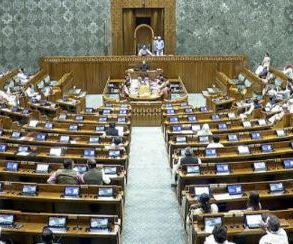
New Delhi: In a major legislative push to protect the integrity of public examinations, the Central Government has introduced the Public Examinations (Prevention of Unfair Means) Amendment Bill, 2026 in the Lok Sabha. The proposed legislation seeks to significantly strengthen the existing anti-paper leak law by imposing harsher punishments, expediting investigations, and tightening accountability for organised examination fraud.
The Bill comes against the backdrop of widespread concerns over paper leaks in competitive examinations, including national entrance and recruitment tests. With millions of students depending on transparent examinations for higher education and government jobs, the government says the amendments are aimed at rebuilding confidence in India’s examination system.
Why the Government Is Strengthening the Law
India conducts some of the world’s largest public examinations every year, including entrance tests for universities, recruitment examinations, and professional qualification tests. Recent incidents of question paper leaks and organised cheating have led to cancelled examinations, delayed admissions, and widespread anxiety among students.
The proposed amendments are intended to make paper leaks a high-risk offence by introducing stronger legal consequences and faster judicial action. According to the government, the reforms target organised criminal networks rather than genuine candidates.
Major Highlights of the Anti-Paper Leak Bill 2026
1. Up to 10 Years’ Imprisonment
One of the most significant changes is the increase in punishment for those involved in organised examination fraud.
The Bill proposes:
- Imprisonment ranging from 5 to 10 years for serious paper leak offences.
- A minimum sentence of seven years for organised criminal networks involved in examination fraud.
The tougher punishment is designed to deter individuals and syndicates from manipulating public examinations.
2. Heavy Financial Penalties
The amended law also introduces substantially higher fines.
Key provisions include:
- Fines up to ₹50 lakh for individuals found guilty of major offences.
- Fines up to ₹10 crore for organised crime or institutions involved in large-scale examination fraud.
These financial penalties aim to dismantle the economic incentives behind paper leak rackets.
3. Fast-Track Courts for Speedy Justice
To prevent prolonged legal proceedings, the Bill proposes:
- Dedicated fast-track courts in every state.
- Time-bound trials for examination-related offences.
- Quicker disposal of appeals.
The objective is to ensure that offenders are prosecuted promptly while reducing uncertainty for affected students.
4. Two-Month Deadline for Investigations
The proposed legislation mandates that investigations into paper leak cases should be completed within two months, helping authorities respond swiftly and minimise disruption to examination schedules.
5. Stronger Action Against Organised Networks
Unlike earlier provisions that focused primarily on individuals, the amended Bill expands accountability to include:
- Organised cheating syndicates
- Institutions facilitating malpractice
- Service providers involved in examination fraud
- Entities benefiting commercially from paper leaks
The reforms recognise that paper leaks often involve coordinated criminal operations rather than isolated incidents.
How the Bill Complements Broader Examination Reforms
The amendment is part of a larger effort to modernise India’s examination ecosystem.
Other ongoing initiatives include:
- Technology-driven reforms in the National Testing Agency (NTA)
- Enhanced cybersecurity for question paper management
- AI-enabled monitoring of examination centres
- Stronger digital authentication and biometric verification
- Improved governance and accountability mechanisms
Together, these measures seek to make examinations more secure, transparent, and resilient.
Impact on Students and Competitive Examinations
If enacted, the amended law is expected to benefit candidates appearing for examinations such as:
- NEET
- JEE Main
- CUET
- UGC NET
- SSC examinations
- UPSC recruitment tests
- Railway recruitment examinations
- Banking and other government recruitment tests
Students are expected to benefit from:
- Greater examination security
- Reduced chances of paper leaks
- Faster investigations into malpractice
- Improved transparency
- Increased confidence in examination outcomes
Parliamentary Debate on the Bill
The introduction of the Bill took place during the Monsoon Session of Parliament amid Opposition protests, which led to repeated disruptions in the Lok Sabha. The government has stated that it is prepared for a detailed debate and has urged all political parties to participate constructively, describing examination integrity as a matter that affects millions of students across the country.
Why Stronger Laws Are Increasingly Necessary
Education experts have long argued that technological safeguards alone cannot eliminate examination fraud. A combination of:
- Strict legal provisions
- Advanced cybersecurity
- Transparent governance
- Efficient investigations
- Institutional accountability
is essential to protect the credibility of India’s public examination system.
The proposed amendments aim to create a stronger legal deterrent while supporting broader reforms in examination administration.
Looking Ahead
The Public Examinations (Prevention of Unfair Means) Amendment Bill, 2026 marks one of the most significant efforts to strengthen India’s legal framework against examination malpractice. By introducing tougher punishments, faster investigations, and dedicated judicial mechanisms, the government hopes to restore public trust in competitive examinations and ensure that merit remains the foundation of educational admissions and public recruitment.
If passed by Parliament, the legislation could become a cornerstone of India’s broader examination reform agenda, complementing technological upgrades and institutional changes already underway.