September 13, 2025
Deli, India
A Diplomatic Clash in the Midst of Ukraine War Escalation
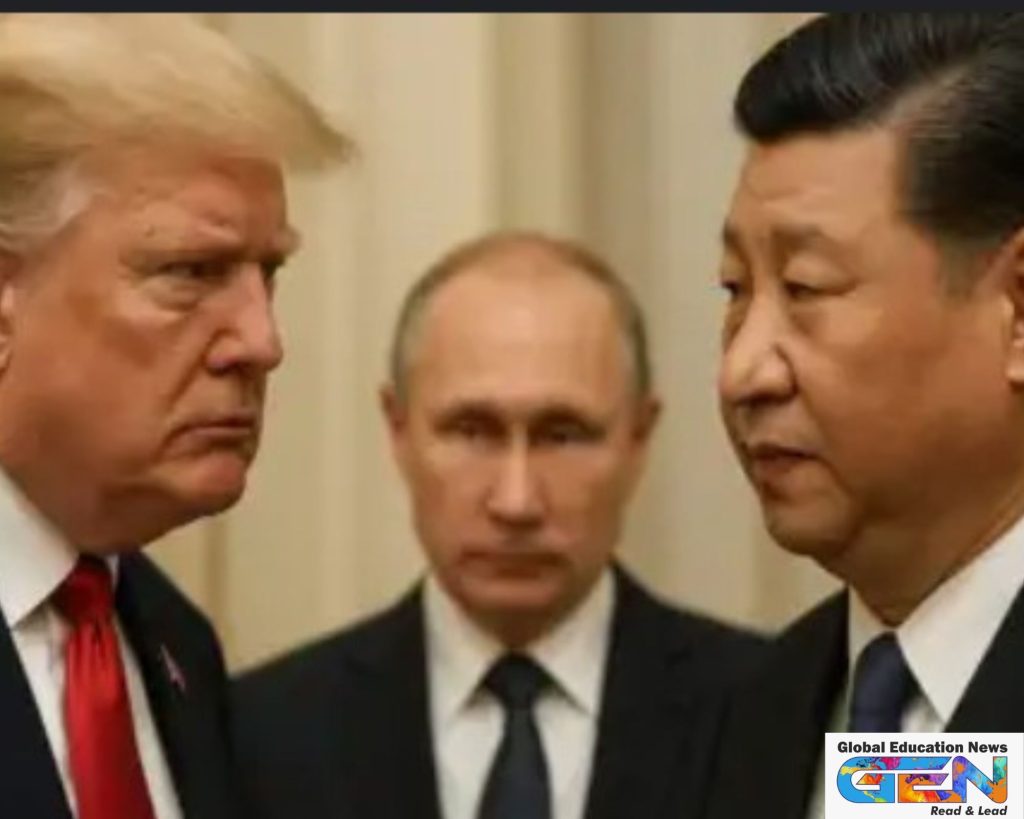
As the Russia-Ukraine war drags into its fourth year, US President Donald Trump has intensified pressure on allies and adversaries alike, urging NATO members to halt Russian oil imports and slap hefty tariffs on China for its role as Moscow’s top energy buyer. In a bold letter addressed to NATO nations and “the world” on September 13, 2025, Trump conditioned new US sanctions on Russia to collective action, warning that ongoing purchases weaken the alliance’s leverage. China’s swift response came hours later, with Foreign Minister Wang Yi declaring that Beijing “does not participate in or plan wars,” while slamming the US appeal as an attempt to coerce through economic threats. This exchange highlights deepening geopolitical fractures, with implications for global energy markets, trade relations, and the broader US-China rivalry, especially as NATO grapples with internal divisions over Russian energy dependence.
Key Points:
- Trump’s letter demands NATO stop buying Russian oil and impose 50-100% tariffs on China to “break” its “grip” on Russia and end the Ukraine war.
- China, the largest importer of Russian fossil fuels since 2022, views the proposal as unwarranted interference in its energy security and diplomatic efforts.
- The spat occurs amid recent escalations, including Russian drone incursions into NATO airspace (e.g., Poland and Romania) and civilian casualties in Ukraine.
- No immediate NATO consensus; members like Turkey, Hungary, and Slovakia continue significant Russian oil purchases.
Trump’s Ultimatum: Pressuring NATO and Targeting China
On September 13, 2025, Trump posted a detailed letter on Truth Social, framing the Ukraine conflict as “Biden’s and Zelenskyy’s WAR” that “would never have started” under his leadership. He pledged “major sanctions on Russia” but only if NATO aligns fully: ceasing all Russian oil imports and enacting steep tariffs on China. Trump argued that China’s economic leverage over Russia – through oil purchases funding the war – must be severed, stating, “China has a strong control, and even grip, over Russia, and these powerful Tariffs will break that grip.” He suggested the tariffs would be “fully withdrawn” post-war, positioning the move as a temporary tool to save lives (citing 7,118 weekly casualties) and end the “deadly, but RIDICULOUS, WAR.”
This builds on prior US actions, like doubling tariffs on India to 50% in August 2025 for similar oil purchases, which strained ties with New Delhi. Trump also criticized NATO’s “far less than 100 percent” commitment, pointing to “shocking” oil buys by allies like Turkey (third-largest buyer after China and India), Hungary, and Slovakia. The proposal comes as G7 finance ministers discussed sanctions on “enabling” countries, with US Treasury Secretary Scott Bessent emphasizing tariffs on all Russian oil buyers.
Key Points:
- Tariffs proposed: 50-100% on Chinese goods, conditional on war’s end; aims to pressure Putin indirectly.
- NATO-specific demands: Full oil embargo, despite EU’s partial bans reducing imports from $16.4B (Q1 2021) to $1.72B (Q1 2025).
- Trump’s rationale: Unified action would “end [the war] quickly,” contrasting with perceived Biden-era inaction.
- Broader context: Follows UK’s sanctions on 30 China/Turkey-based firms supplying Russia with weapons components.
China’s Firm Rebuttal: Rejecting Accusations and Advocating Peace
Hours after Trump’s letter, Chinese Foreign Minister Wang Yi issued a pointed response, asserting, “China does not participate in or plan wars, and what China does is to encourage peace talks and promote political settlement of hotspot issues through dialogue.” Wang criticized the US for using economic coercion to divide the world, calling for multilateralism and adherence to the UN Charter amid “intertwined chaos and continuous conflicts.” Beijing slammed the tariff threat as hypocritical, noting it neither joins conflicts nor plots against others, while positioning itself as a mediator in Ukraine – a role it has pursued through diplomatic channels.
China’s stance aligns with its “all-weather” partnership with Russia, but Wang emphasized non-interference, rejecting Trump’s narrative of Beijing “controlling” Moscow. This comes amid reports of Trump accusing Xi Jinping of “conspiring against” the US following China’s September 3 military parade attended by Putin and Kim Jong Un. Despite the rhetoric, US-China trade remains in a fragile truce, with US tariffs at 30% (down from higher levels) and China’s at 10%.
Key Points:
- Wang Yi’s key message: China promotes dialogue, not division; opposes “economic pressure from the West.”
- Rejects “grip” on Russia: Frames oil imports as legitimate energy needs, not war support.
- Calls for UN principles: Urges strengthening multilateral mechanisms over unilateral threats.
- Timing: Response on September 13, 2025, amid NATO concerns over Russian drones and Ukraine strikes.
NATO’s Dilemma: Internal Divisions and Energy Dependencies
Trump’s appeal exposes fractures within NATO, where energy security clashes with anti-Russia solidarity. While the EU has banned seaborne Russian oil since 2022, pipeline gas and LNG imports persist, with the bloc as Russia’s largest overall energy buyer. Turkey, a key NATO member, ranks third in Russian oil purchases, followed by Hungary and Slovakia, which rely on discounted supplies. Trump’s inclusion of NATO (vs. just EU) targets these holdouts, but leaders like Turkey’s Erdogan and Hungary’s Orban have resisted full decoupling, citing economic costs.
European officials, post a recent Trump meeting, deemed new tariffs on China/India “unlikely,” preferring cautious trade approaches. G7 discussions highlighted collective sanctions, but implementation remains uneven. Recent incidents, like Russian drones over Poland and Romania, have heightened urgency, yet no unified response to Trump’s demands has emerged.
Key Points:
- Key buyers in NATO: Turkey (3rd globally), Hungary, Slovakia; EU LNG/pipeline imports down but ongoing.
- Potential backlash: Tariffs could spike global energy prices; EU cautious on trade wars with China.
- Strategic angle: Trump leverages Article 4 of NATO treaty for consultations on threats to member security.
- Uncertainties: Confronting allies like Erdogan/Orban risky; no clear path to enforcement.
Global Reactions and Social Media Buzz: From Criticism to Speculation
The proposal has sparked widespread reactions. On X (formerly Twitter), users like @AXChristoforou questioned the feasibility, asking why not “walk away from Zelensky” instead of unpalatable tariffs. @ShaubJarid highlighted contradictions, calling it a “bluff” violating international norms. Indian users, like @Rajender_Indian, noted India’s existing 50% tariffs and questioned NATO’s own purchases. Pro-Trump voices, such as @TBifford, decried NATO’s “kickbacks” from Russian ties, while @sirpeeworld praised it as “statecraft” over Biden’s “endless checks.”
Media outlets like NPR and Reuters reported skepticism, with experts doubting NATO’s compliance due to energy needs. China state media amplified Wang’s response, framing the US as the aggressor. Globally, it risks collateral damage: US consumers face higher prices from retaliatory tariffs, while India protests “unjustified” penalties.
Key Points:
- X trends: Discussions on #TrumpNATO, #ChinaTariffs; posts criticize NATO hypocrisy and tariff realism.
- International views: G7 pushes for broader sanctions; UK targets China-linked firms but no full endorsement.
- Economic fallout: Potential market turmoil; Trump’s India tariffs already caused a “rift.”
- Speculation: Some see it as negotiation tactic; others as frustration over stalled peace efforts.
Implications: Trade Wars, Energy Shifts, and the Ukraine Endgame
This clash could reshape global dynamics. For US-China relations, it revives trade war fears, potentially derailing the current truce and affecting sectors from tech to apparel. Energy markets may see volatility if NATO acts, boosting alternatives like US/Saudi supplies but raising costs for Europe. In Ukraine, it pressures Putin economically but risks alienating allies, prolonging the conflict Trump vows to end swiftly.
Broader geopolitical fallout includes strained NATO unity and empowered BRICS nations (China, Russia, India, etc.), who view it as Western bullying. As Trump eyes re-election, this positions him as a decisive leader, but success hinges on NATO buy-in – unlikely without concessions.
Key Points:
- Trade risks: Escalation could add billions in costs; China may retaliate, impacting US exports.
- Energy pivot: Accelerates shift from Russian oil, but short-term shortages possible for Europe.
- Ukraine impact: Aims to “save lives,” but critics say it ignores root causes like NATO expansion.
- Long-term: Bolsters US “second space race”-like dominance narrative, but tests alliance cohesion.
Conclusion: A High-Stakes Gamble in Global Diplomacy
Trump’s tariff ultimatum and NATO appeal represent a high-risk strategy to force an Ukraine resolution, but China’s defiant response – “We don’t plan wars” – signals no easy wins. As Beijing champions dialogue and multilateralism, the US push underscores economic weapons in geopolitics. With NATO divided and markets watching, this could either hasten peace or ignite broader conflicts. Stakeholders must navigate carefully to avoid unintended escalations in this fragile world order.
Key Points:
- Core tension: US coercion vs. China’s non-interference; watch for NATO summits or G7 follow-ups.
- Advice for observers: Monitor energy prices and trade talks for real-world effects.
- Potential resolution: Negotiations with Modi/Xi could soften blows, but war’s end remains elusive.
- Stay informed: Follow updates from White House, Chinese MFA, and NATO for developments.