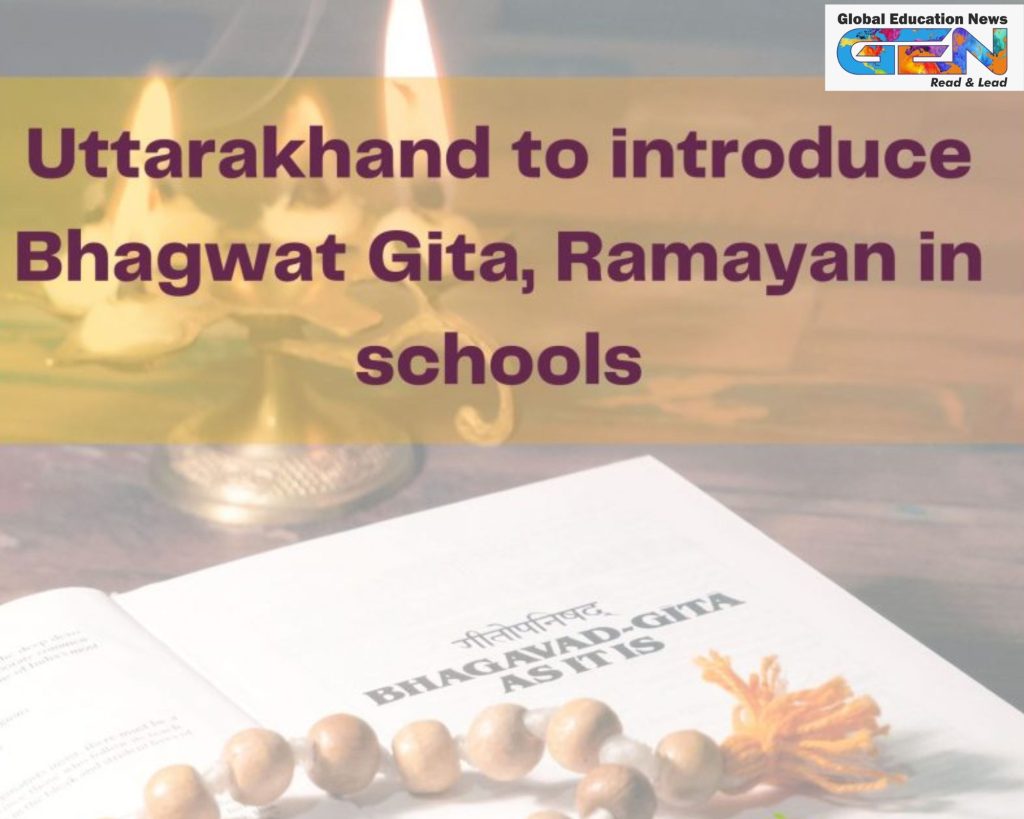
On July 16, 2025, Uttarakhand’s Education Minister Dhan Singh Rawat announced a transformative step: integrating the Bhagavad Gita and Ramayana into the state’s school curriculum. This bold initiative, already sparking excitement, aims to nurture young minds with India’s rich cultural heritage while fostering ethical and intellectual growth.
- Uttarakhand directs NCERT to weave Bhagavad Gita and Ramayana into school syllabus.
- Over 17,000 government schools embrace daily recitation of Gita verses.
- Move aligns with NEP 2020’s focus on Indian knowledge systems.
Why the Gita and Ramayana? A Treasure Trove of Life Lessons
Key Points:
- Bhagavad Gita offers insights into duty, ethics, and resilience.
- Ramayana teaches loyalty, courage, and moral integrity.
- Focus on universal values to shape well-rounded individuals.
The Bhagavad Gita isn’t just a spiritual text—it’s a guide to navigating life’s toughest choices, as Lord Krishna advises Arjun on the battlefield. The Ramayana, with Lord Rama’s epic journey, inspires values of duty and righteousness. Uttarakhand’s leaders believe these texts hold universal lessons that transcend religion, equipping students with tools for leadership, decision-making, and emotional strength. “These are not just scriptures; they’re life manuals,” says Dr. Mukul Kumar Sati, Director of Secondary Education.
Morning Chants and Moral Growth
Key Points:
- Daily Bhagavad Gita recitations began on July 15, 2025.
- Weekly verses explored for their practical, real-world applications.
- Teachers tasked with fostering critical thinking through ancient texts.
Picture this: thousands of students across Uttarakhand’s schools begin their day with the rhythmic chant of Gita shlokas during morning assemblies. Each week, a new verse is unpacked, its meaning woven into discussions about ethics, discipline, and even scientific curiosity. This isn’t rote learning—it’s a dynamic process to mold students’ character and worldview, making ancient wisdom relevant to their lives.
A Cultural Revival Rooted in NEP 2020
Key Points:
- Initiative aligns with NEP 2020’s push for Indian ethos in education.
- Up to 30% of syllabus can reflect state’s cultural heritage.
- Uttarakhand sets a precedent for other states to follow.
Uttarakhand’s move is a vibrant response to the National Education Policy 2020, which calls for blending India’s ancient knowledge with modern education. Chief Minister Pushkar Singh Dhami calls the Bhagavad Gita a “guiding light” for young minds, while Education Minister Rawat sees it as a way to restore cultural pride. Following states like Gujarat and Karnataka, Uttarakhand is leading a cultural revival, potentially inspiring a nationwide shift.
The Debate: Tradition Meets Secularism
Key Points:
- Critics question inclusion of Hindu texts in secular education.
- Supporters argue for universal values transcending religion.
- Calls for inclusive curriculum with diverse Indian traditions.
Not everyone is chanting in unison. The Uttarakhand SC-ST Teachers’ Association has raised concerns, fearing that Hindu-centric texts could sideleline students from diverse backgrounds. Former CM Harish Rawat suggests a broader approach, including texts from other Indian traditions to reflect the nation’s diversity. Yet, supporters like CM Dhami argue that the universal truths in these texts—duty, courage, compassion—are for everyone, not just one community.
What’s Next? A New Era of Learning
Key Points:
- NCERT to develop new textbooks for the next academic session.
- Teachers to integrate practical lessons from Gita and Ramayana.
- Initiative could reshape India’s educational landscape.
As Uttarakhand rolls out Bhagavad Gita recitations, the next step is formalizing these teachings in textbooks by the next academic year. Teachers are already training to guide students through the texts’ practical applications, from ethical dilemmas to leadership skills. This could be a game-changer, not just for Uttarakhand but for India, as other states watch closely.
A Legacy of Wisdom for the Future
Uttarakhand’s bold experiment is more than a curriculum change—it’s a cultural awakening. By embedding the Bhagavad Gita and Ramayana into education, the state is crafting a generation that’s academically sharp, morally grounded, and deeply connected to India’s heritage. As this journey unfolds, it challenges us to rethink how education can balance tradition and progress, inspiring students to become not just scholars but torchbearers of timeless values.