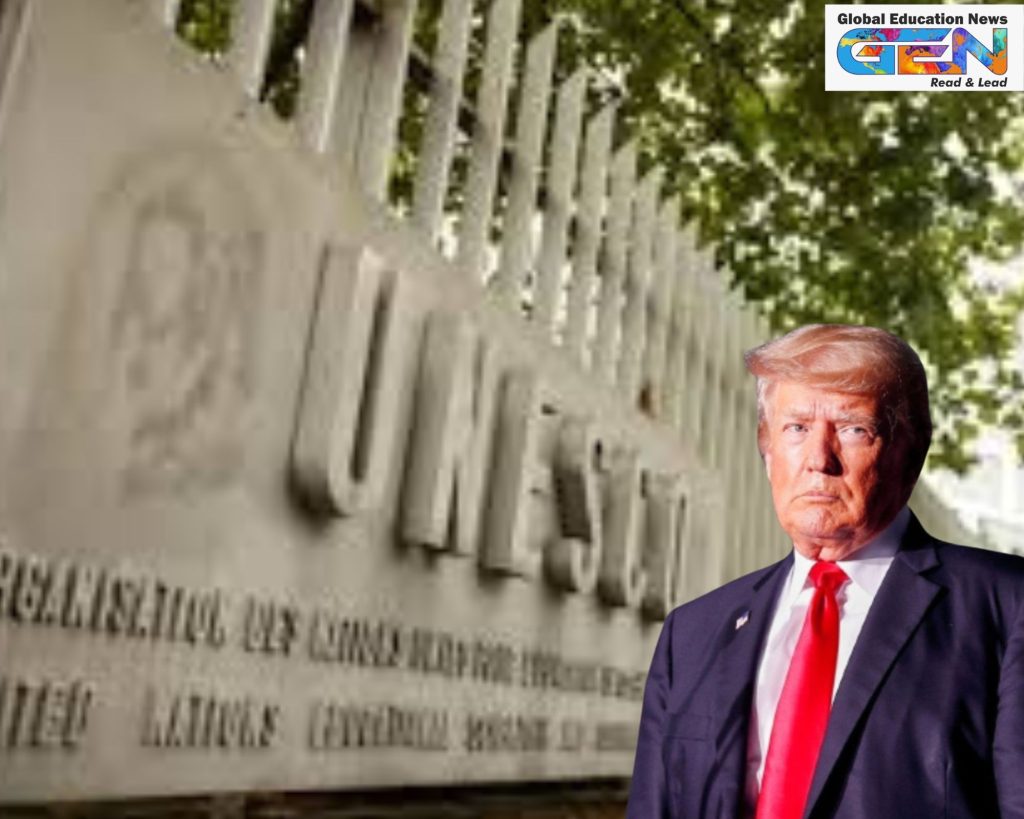
On July 22, 2025, President Donald Trump announced the United States’ withdrawal from the United Nations Educational, Scientific and Cultural Organization (UNESCO), effective December 31, 2026. This marks the U.S.’s third exit from the Paris-based agency, following withdrawals in 1983 and 2017, with a brief return in 2023 under President Biden. The decision, driven by Trump’s “America First” policy, cites UNESCO’s alleged “woke, divisive cultural and social causes” and “anti-Israel bias” as reasons for the move. Critics warn this could undermine U.S. influence in global education, cultural preservation, and scientific collaboration. Let’s unpack the implications of this bold decision!
- Why It Matters: The U.S. exit could weaken global education initiatives and cultural programs.
- Key Criticisms: Seen as isolationist, potentially ceding influence to nations like China.
- Source: Stay updated at educationtoday.co or unesco.org.
Why Is Trump Pulling Out?
The Trump administration’s decision stems from a February 2025 executive order mandating a 90-day review of UNESCO’s alignment with U.S. interests, focusing on alleged “anti-Semitism” and “anti-Israel sentiment.” The White House, through deputy spokesperson Anna Kelly, accused UNESCO of supporting “divisive cultural causes” out of step with American values. The State Department further criticized UNESCO’s 2011 admission of Palestine as a member state, calling it “contrary to U.S. policy” and a driver of “anti-Israel rhetoric.” This aligns with Trump’s broader skepticism of multilateral institutions, including exits from the World Health Organization and Paris Climate Agreement.
- Core Reasons:
- Perceived “globalist, ideological agenda” clashing with “America First.”
- UNESCO’s Palestine membership and alleged bias against Israel.
- Rejection of UNESCO’s focus on sustainable development goals.
- Historical Context: U.S. withdrew in 1983 (Reagan), rejoined in 2003 (Bush), cut funding in 2011 (Obama), and exited in 2017 (Trump), before rejoining in 2023 (Biden).
UNESCO’s Role in Global Education and Culture
Founded in 1945, UNESCO promotes peace through education, science, culture, and communication. It’s best known for designating World Heritage Sites (e.g., the Grand Canyon) and driving global education initiatives like Education for Sustainable Development and Global Citizenship Education. The agency supports:
- Education: Curriculum frameworks, teacher training, and literacy programs in conflict zones.
- Culture: Preserving heritage sites and fostering intercultural dialogue.
- Science: Collaborative research on climate change, AI, and water management.
The U.S., a founding member, contributed about 8% of UNESCO’s budget (roughly $80 million annually) before the exit. Its absence could limit funding for programs like Holocaust education and journalist safety, though UNESCO’s Director-General Audrey Azoulay insists the agency has diversified funding to mitigate the impact.
By the Numbers: UNESCO supports 194 member states, oversees 1,200+ World Heritage Sites, and impacts millions of learners through its education programs.
Impacts of the U.S. Withdrawal
The decision to leave UNESCO by December 2026 has sparked varied reactions:
- Global Education: The U.S. will lose influence over curriculum standards, digital access, and equity initiatives, potentially ceding ground to China, now UNESCO’s largest funder. Programs like Futures of Education may proceed without U.S. input.
- Cultural Preservation: U.S. communities seeking World Heritage or Creative City status may face challenges without direct UNESCO collaboration.
- Scientific Collaboration: Joint projects with U.S. agencies (e.g., USGS, NASA) on water management or tsunamis could weaken.
- Geopolitical Shifts: Critics like U.S. Senator Jeanne Shaheen call the move a “win for China,” while Israel’s Foreign Minister Gideon Sa’ar praised it as “moral leadership” against UNESCO’s alleged anti-Israel bias.
Fun Fact: UNESCO’s work includes protecting sites like Palmyra in Syria, but its Palestine membership in 2011 led to a $542 million U.S. arrears debt.
Criticisms and Defenses
Critics argue the withdrawal is shortsighted:
- Reduced Influence: The U.S. risks losing its voice in shaping global education and heritage policies, especially as China’s role grows.
- Harm to Vulnerable Regions: Programs for education in Africa and conflict zones may suffer without U.S. support.
- Isolationism: French President Emmanuel Macron vowed “unwavering support” for UNESCO, while China’s Foreign Ministry called the U.S. move “irresponsible.”
Defenders, including the Trump administration and Israel, argue:
- Alignment with Values: The exit rejects UNESCO’s “woke” agenda and alleged anti-Israel bias, resonating with “America First” voters.
- Financial Savings: Eliminates U.S. contributions (8% of UNESCO’s budget) and past arrears payments.
X Debate: @Jenn_McW hailed the exit as a stand against “Marxist ideology” in education, while @UNESCO’s Azoulay rejected bias claims, emphasizing consensus-driven work.
Challenges and What’s Next
The withdrawal poses challenges:
- Funding Gaps: UNESCO’s 8% budget loss could strain smaller programs, though diversified funding helps.
- U.S. Isolation: Limited influence over global education standards and heritage designations.
- Geopolitical Tensions: Risks escalating U.S.-China rivalry in multilateral forums.
Future Outlook:
- UNESCO plans to release statements addressing the exit’s impact by late 2025.
- The U.S. may still engage indirectly through partnerships, as it did during its 1984–2003 hiatus.
- Potential rejoining under a future administration remains possible, given historical patterns.
Tips for Stakeholders
- Educators and Students: Explore UNESCO’s open-access resources at unesco.org for global education insights.
- U.S. Communities: Seek alternative funding for heritage or creative city bids via state or private channels.
- Policymakers: Monitor UNESCO’s response and China’s growing role to assess long-term impacts.
- Stay Informed: Follow updates on educationtoday.co or unesco.org for the latest developments.
A Step Back or a Strategic Move?
President Trump’s decision to withdraw from UNESCO by December 2026 reflects his “America First” stance but risks diminishing U.S. leadership in global education, culture, and science. While supporters see it as rejecting a “globalist agenda,” critics warn of lost influence and weakened cooperation on critical issues like literacy and heritage preservation. As UNESCO braces for the exit with diversified funding, the world watches whether this move isolates the U.S. or reshapes global priorities. Stay tuned at educationtoday.co or unesco.org, and join the debate on America’s role in the global classroom