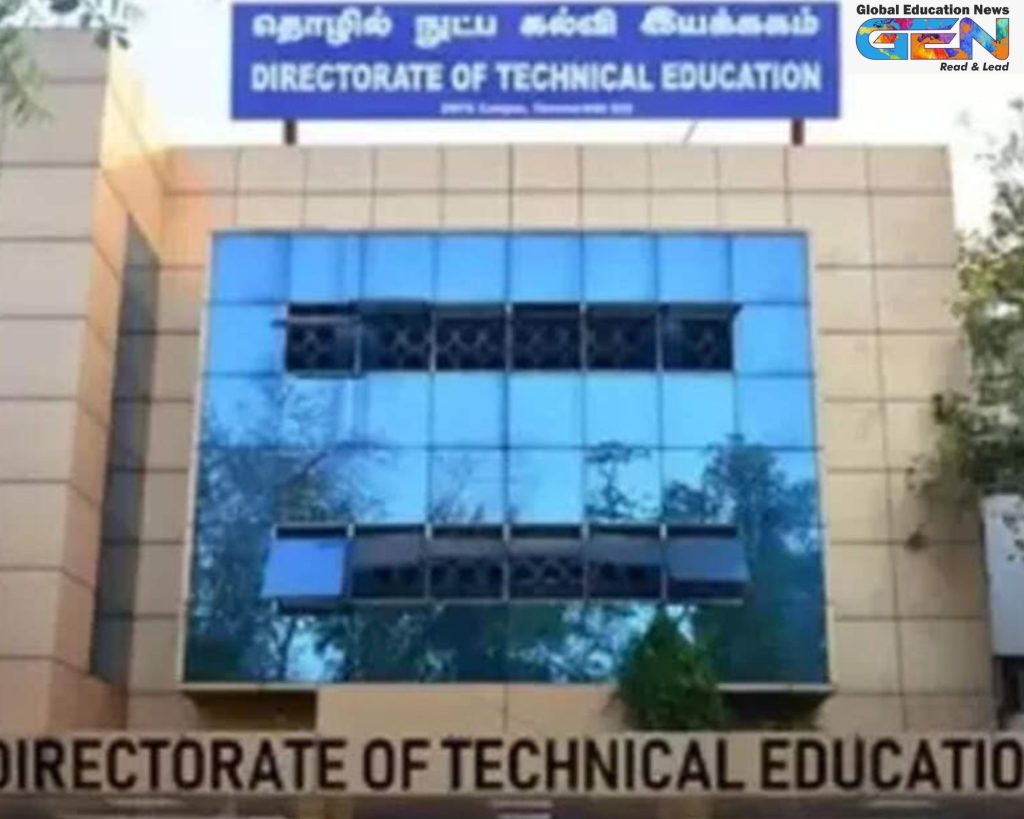
Ever wondered why fresh school grads in Tamil Nadu stare at job ads with a skills mismatch? The state’s buzzing with a fix: The ‘School-ITI’ model, blending Industrial Training Institutes right into government high and higher secondary school campuses. Announced in a high-level huddle on December 4, 2025, this grassroots push aims to crank up employability by injecting hands-on industrial training into everyday classrooms—think welding workshops next to math labs.
For the 1.5 million students in Tamil Nadu’s government schools, where vocational enrollment lags at just 20%, this could be the spark. Piloting with 10 campuses and eyeing 100 statewide, it repurposes unused spaces for trades like electrical wiring, mechanical assembly, and service tech, all post-Class 10 or 12. No more post-school detours to standalone ITIs—skills hit home turf, slashing dropout rates and fueling the state’s manufacturing boom. We’ve unpacked it with snappy keypoints: From selection smarts to student wins, here’s your roadmap to this education-employment revolution.
The Vision: Closing Tamil Nadu’s Skills-Jobs Chasm with On-Campus ITIs
Tamil Nadu, India’s manufacturing powerhouse with 40% youth unemployment in unskilled roles, is flipping the script. By embedding ITIs in schools, the model weaves vocational fire into academic clay, targeting early exposure to cut the 30% education-to-job gap. It’s NEP 2020 on steroids—practical, local, and laser-focused on districts like Coimbatore and Chennai’s industrial belts.
Key Points:
- Gap Buster: 70% of Class 12 grads lack industry certs; School-ITI certs could boost hireability by 40%, per vocational studies.
- Statewide Scope: Starts with government high/higher secondary schools; aligns with 2021-22 curriculum revamp emphasizing employability.
- Department Duo: School Education and Employment & Training join forces—CEOs to scout sites in a week.
- Big Ambition: Pilot 10 schools now, scale to 100 campuses by 2027 for 50,000+ trainees annually.
This isn’t theory—it’s Tamil Nadu’s bet on turning classrooms into career launchpads, where a diploma doubles as a job key.
Pilot Picks: How Schools Make the Cut for School-ITI Glory
Not every campus qualifies; selection’s a sharp eye on space, need, and neighborhood hustle. Districts shortlist 4-5 contenders each, prioritizing spots near factories for real-world tie-ins like apprenticeships. It’s about smart reuse—idle labs become lathe rooms—without disrupting regular classes.
Key Points:
- Land Lowdown: Minimum half-acre plot; bonus for unused buildings/labs convertible to workshops.
- Location Logic: Schools in vocational deserts or industrial shadows get first dibs—think Ambattur’s auto hubs.
- Feasibility Check: Infrastructure audits underway; no-go if facilities fall short or overlap existing ITIs.
- Timeline Tease: Lists due next week; approvals by January 2026, with training kicking off mid-year.
Spot-on criteria mean targeted impact: Rural Garo Hills might lag, but urban nodes explode with opportunity, evening out the skills map.
Curriculum Crunch: Hands-On Trades Tailored for Tomorrow’s Workers
Forget dusty textbooks—School-ITI’s lineup is a toolkit of trades across sectors, blending 6-12 month courses with school schedules. Post-Class 10 for basics, Class 12 for advanced; it’s modular, so a mechanic hopeful aces engines without ditching history.
Key Points:
- Trade Trio: Manufacturing (fitting, turning), electrical (wiring, repairs), mechanical (auto, plumbing)—plus service gigs like hospitality tech.
- Flex Fit: Afternoon slots or weekends; certs from National Council for Vocational Training for nationwide cred.
- Industry Ink: Tie-ups with MSMEs for guest sessions; 20% curriculum from real factory blueprints.
- Inclusivity Boost: Free for girls/SC/ST; scholarships for 30% enrollees to hit 50% female participation.
Dynamic and doable, this setup turns “what next after 12th?” into “welcome to the workshop”—a seamless slide from school bell to boss’s handshake.
Wins for All: Students, Schools, and Tamil Nadu’s Economy Level Up
For kids from modest homes, it’s empowerment on a platter: Skills that pay ₹15,000-25,000 starting salaries, versus ₹8,000 without. Schools gain prestige and partnerships; industries snag ready recruits. The state’s manufacturing edge? Sharpened, with 10% GDP from skilled labor inflows.
Key Points:
- Student Supercharge: Early exposure cuts migration for training—stay local, earn quicker; 25% better retention in higher ed too.
- School Shine: Upgraded infra attracts talent; potential for 15% enrollment spike in vocational streams.
- Industry Input: Firms like TVS and Hyundai pledge placements; addresses 50,000 annual skill shortages in auto/electronics.
- Ecosystem Echo: Builds on 153 existing industrial schools; could inspire Kerala or Karnataka copycats.
Ripple effects? A workforce that’s not just literate, but lethal—poised for Tamil Nadu’s EV and semiconductor surge.
Hurdles and Horizons: Challenges on the Road to Rollout
Preliminary vibes are positive, but land crunches in crowded districts and teacher upskilling loom large. Funding? State coffers plus CSR pots. Success hinges on buy-in—will parents swap “doctor dreams” for diesel engines?
Key Points:
- Infra Snags: Urban space wars; rural connectivity gaps for online modules.
- Talent Train-Up: 500 new trainers needed; bridge via short certs for existing staff.
- Stakeholder Sync: PTA workshops to sell the vision; monitor via annual employability audits.
- Expansion Eyes: Post-pilot, 100 ITIs by 2028—phased with ₹500 crore infusion.
No silver bullet, but with tweaks, this model’s a blueprint for India’s 250 million youth chasing dignified digs.