Published on October 27 , 2025
Delhi, India
The Tamil Nadu government has withdrawn the Tamil Nadu Private Universities (Amendment) Bill, 2025, just days after its introduction in the State Assembly on October 15, 2025. The move, directed by Chief Minister MK Stalin and announced by Higher Education Minister Dr Govi Chezhiaan, comes amid intense criticism from academicians, teacher unions, opposition parties, and civil society groups. The bill sought to ease the establishment of private universities by slashing land requirements and allowing upgrades for private colleges, but detractors argued it risked eroding reservation quotas, inflating fees, and undermining employee protections—core tenets of the state’s social justice framework. This episode highlights the delicate balance between expanding higher education access and preserving equity in a state boasting one of India’s highest gross enrollment ratios at 49%.
Key Points
- Bill Timeline: Introduced October 15, 2025; faced immediate debate and opposition; withdrawn around October 25-26, 2025, before full passage.
- Core Objectives: Simplify private university setup to match other states; reduce land needs to 25 acres (urban), 35 acres (municipal), 50 acres (rural); enable private college upgrades.
- Government Assurance: Minister Chezhiaan emphasized no intent to compromise on reservations, fee controls, or staff rights under the “Dravidian Model.”
The Bill’s Provisions: Aimed at Growth, But Flawed in Execution?
Proponents viewed the amendments as a pragmatic step to boost Tamil Nadu’s higher education infrastructure, addressing land scarcity in densely populated areas. By aligning with national trends, the bill could have spurred new institutions, potentially adding thousands of seats in engineering, arts, and sciences. However, its vague safeguards on equity sparked fears of unchecked privatization.
Key Points
- Land Relaxation: Cut from existing 50+ acres to tiered norms based on location, easing urban setups but raising concerns over fragmented campuses.
- Upgrade Mechanism: Allowed eligible private colleges to become full universities, streamlining approvals but without clear clauses on transitioning aided institutions.
- Broader Context: Tamil Nadu has 50+ private universities already; bill mirrored expansions in Karnataka and Andhra Pradesh, but ignored local social justice priorities.
Storm of Criticisms: Why the Bill Ignited a Firestorm
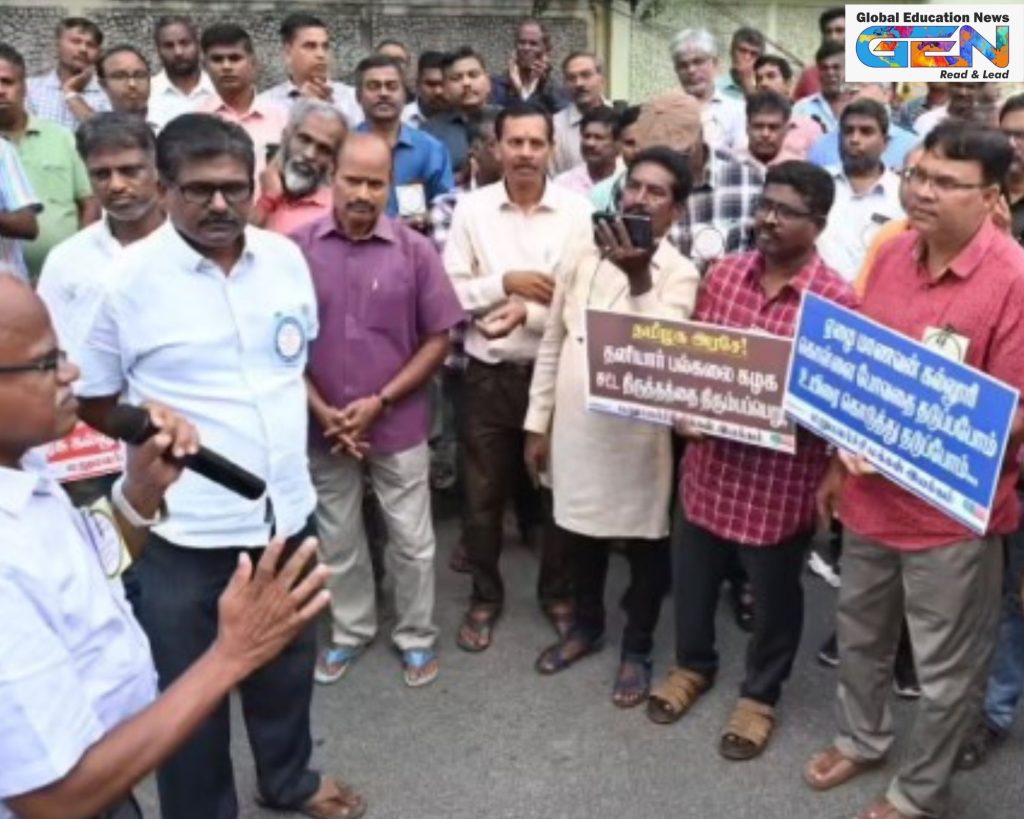
The backlash was swift and multifaceted, uniting unlikely allies from DMK backbenchers to AIADMK opposition, teacher federations like the All India United Teachers Federation (AIUTUC), and former vice-chancellors. Critics decried the bill as a “Trojan horse” for privatization, potentially dismantling decades of progressive policies.
Key Points
- Reservation Threats: Fears that private universities could bypass 69% quota for SC/ST/OBC, limiting access for marginalized students—echoing national debates on equity in private education.
- Fee Deregulation Risks: Potential for “steep hikes” post-upgrade, pricing out low-income families; current state caps (e.g., ₹50,000-2 lakh/year) might erode.
- Staff Rights Erosion: Aided college faculty could lose fixed government salaries and pensions upon conversion, shifting to profit-driven models with precarious contracts.
- Social Justice Backslide: Labeled a deviation from Dravidian ethos; former Anna University VC urged full withdrawal, warning of “reduced access for weaker sections.”
Government’s Pivot: Withdrawal and Review Roadmap
Responding to the uproar, CM Stalin instructed a comprehensive review, signaling responsiveness to public sentiment. Minister Chezhiaan addressed the Assembly, affirming the government’s unyielding stance on protections while acknowledging procedural oversights in the draft.
Key Points
- Withdrawal Trigger: Protests, MLA interventions, and union memoranda; Stalin’s directive prioritized “stakeholder consensus” over hasty passage.
- Review Process: Bill sent back for redrafting with explicit safeguards; consultations with experts and unions promised before reintroduction.
- Minister’s Reassurance: “The Dravidian Model government would never compromise on social justice… even while expanding opportunities,” Chezhiaan stated, quelling immediate fears.
Implications for Tamil Nadu’s Higher Education Landscape
This withdrawal reinforces Tamil Nadu’s reputation as a bulwark for inclusive education, but it delays potential infrastructure gains. With 1.2 crore students in higher education, the state must navigate privatization pressures amid rising demand—perhaps through hybrid models blending private investment with public oversight.
Key Points
- Positive Outcomes: Averts immediate equity erosion; boosts trust in government’s responsiveness; spotlights need for transparent policy drafting.
- Lingering Challenges: Land and funding hurdles persist for new institutions; risk of brain drain if expansions lag.
- National Echoes: Mirrors debates in other states on private education’s role; could influence UGC guidelines on university norms.
- Future Watch: Revised bill expected in 2026 session; focus on tech-integrated, affordable private unis to sustain 49% GER.