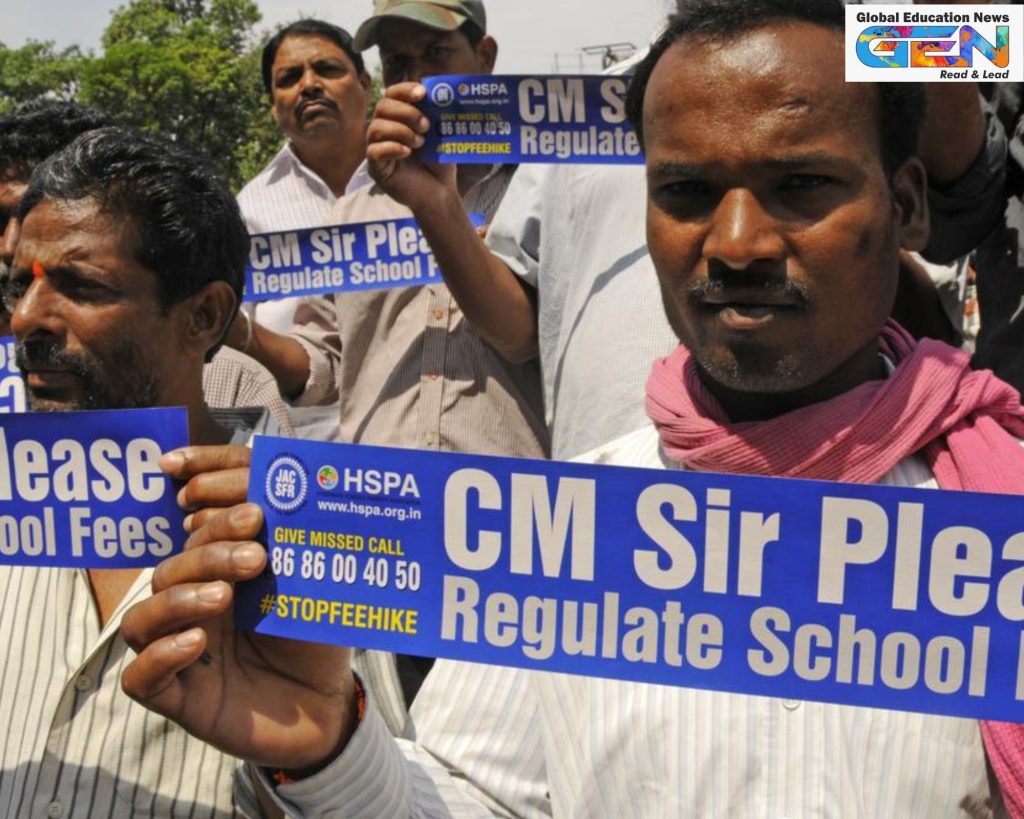
As the 2026-27 academic admissions unfold in Telangana, families face yet another wave of steep private school fee escalations—up to 30% for new enrollees—without the promised regulatory backstop. The Telangana Private Schools and Junior Colleges Fee Regulatory and Monitoring Commission Draft Bill, 2025, remains uncleared by the cabinet as of November 24, 2025, despite its submission over nine months ago. Crafted by the Telangana Education Commission (TEC) after extensive stakeholder consultations, the bill aims to curb “exorbitant” charges that have ballooned primary school fees to ₹3 lakh annually in elite Hyderabad institutions. This inertia, amid a 60-70% hike surge in June 2025, underscores a policy paralysis that exacerbates inequality, with low- and middle-income households bearing the brunt—potentially pushing 10-15% more children toward public schools per AISHE enrollment trends. Analysis highlights the bill’s potential to align with NEP 2020’s equity goals, but delays risk eroding public trust in the Revanth Reddy administration’s education priorities.
Historical Context: From Consultations to Cabinet Stalemate
The push for fee regulation traces back to pre-2023 parental agitations and court directives, evolving into a structured TEC-led effort post the Congress government’s 2023 ascent. A high-powered committee under former IAS officer M. Tirupati Rao laid early groundwork, but momentum built with TEC’s formation in 2024.
Key Points:
- Timeline Milestones: Initial draft released March 2025 after workshops with parents, teachers, and school managements; revised final draft submitted January 24, 2025, to the Education Secretary, and February 22, 2025, to the Chief Minister.
- Stakeholder Engagement: Over 20 deliberations since late 2024, incorporating inputs from civil society and the Independent School Managements Association (ISMA).
- Precedents: Echoes 2023 parental pleas to avoid delays in court-mandated reports, yet similar hesitancy persists.
- Analysis Insight: Unlike Kerala’s swift 2024 fee cap enforcement (limiting hikes to 8%), Telangana’s multi-month review—spanning legal vetting—has allowed unchecked increases, correlating with a 20% rise in fee-related complaints to TEC in 2025.
Reasons for Delay: Legal Caution and Balancing Act
The government’s reticence stems from a desire to fortify the bill against judicial challenges, compounded by negotiations with powerful school lobbies proposing moderated hikes.
Key Points:
- Legal Scrutiny: Cabinet sub-committee, formed post-submission, sought expert opinions to ensure constitutional robustness, fearing High Court stays like those in 2023 Andhra Pradesh cases.
- Stakeholder Pushback: School bodies advocate 10-15% annual hikes tied to inflation, versus TEC’s stricter caps; ISMA’s KV Praveen Raju urges “balanced” implementation of Tirupati Rao recommendations.
- Political Timing: Assembly session constraints and broader education reforms (e.g., mid-day meal enhancements) have sidelined it, despite TEC’s awareness of admission deadlines.
- Analysis Insight: This caution, while prudent, mirrors national trends—only 40% of states have effective fee laws per UGC 2025 audits—potentially costing families ₹5,000-10,000 extra per child in 2026, per HSPA estimates, and delaying NEP’s affordability targets.
Core Provisions: A Framework for Categorized Oversight
The draft envisions a dedicated commission to enforce transparency and equity, categorizing institutions by infrastructure and performance for tailored caps.
Key Points (Provision Breakdown):
| Provision | Details | Enforcement Mechanism |
|---|---|---|
| Fee Categorization | Schools divided into tiers (A/B/C) based on facilities; caps linked to actual costs (e.g., ₹1-3 lakh for elite primaries). | Biennial audits; hikes max 10% every two years, indexed to CPI. |
| Regulatory Body | Telangana Private Schools Fee Regulatory and Monitoring Commission, chaired by retired judge/senior official. | Powers to investigate complaints, impose fines up to ₹10 lakh, or revoke recognition for violations. |
| Transparency Rules | Mandatory disclosure of fee utilization; no capitation or hidden charges; 25% EWS/DG quota enforcement. | Annual reports to TEC; parent grievance portals with 30-day resolutions. |
| Penalties & Appeals | Fines for overcharging; appeals to a tribunal. | Integration with RTE Act for low-income safeguards. |
- Analysis Insight: Modeled on Tamil Nadu’s 2024 commission (reducing average hikes by 15%), these could save Telangana parents ₹20,000-50,000 annually, but tiering risks disputes over classifications, potentially affecting 2,000+ private schools.
Stakeholder Perspectives: Voices of Frustration and Advocacy
Tensions simmer between embattled parents and defensive managements, with TEC mediating for urgency.
Key Points:
- Parents’ Outcry: Hyderabad School Parents Association (HSPA) warns of “another year of suffering,” with deadlines forcing decisions by November/December; president Sainath demands January rollout.
- TEC Advocacy: Member PL Vishweswar Rao: “The only way to address exorbitant fees is through regulation. We will push for January implementation for parental relief.”
- School Side: ISMA’s Raju blames shared inaction but calls for “regulations without stifling growth,” proposing 15% hikes for defaulter guidelines.
- Analysis Insight: Surveys show 70% parental support for caps, yet 40% of schools fear revenue dips—balancing via phased rollout could mitigate litigation, drawing from Maharashtra’s 2023 hybrid model that cut disputes by 25%.
Implications: Widening Gaps in Access and Equity
Unchecked hikes threaten educational inclusivity, disproportionately hitting urban migrants and rural-urban families in Hyderabad’s booming private sector (enrolling 60% of students).
Key Points:
- Financial Strain: Fees now ₹1-3 lakh for LKG-Class 5, up 60% since 2023; delays exacerbate 15% dropout risks for low-income groups.
- Equity Erosion: Undermines RTE’s 25% reservation efficacy; pushes burden to public schools already at 80% capacity.
- Broader Education Impact: Diverts focus from quality (e.g., teacher shortages) to affordability battles, stalling NEP’s 6% GDP spend goal.
- Analysis Insight: Without intervention, 2026 could see 5-7% enrollment shifts to underfunded publics, per TEC projections, mirroring Andhra’s 2024 crisis where unregulated fees fueled 10% protests.
The Path Forward: Urgency for January Clearance
TEC’s January 2026 target offers a narrow window, with calls for interim guidelines to cap hikes at 10%.
Key Points:
- Immediate Steps: Cabinet approval by mid-December; pilot audits in 100 Hyderabad schools.
- Long-Term: Integrate with national frameworks like UGC’s fee norms; public consultations for refinements.
- Calls to Action: Parents urged to log complaints via TEC portal; advocacy for Assembly tabling in winter session.
- Analysis Insight: Swift passage could model for southern states, boosting GER by 5% through affordability—yet, as in Delhi’s 2025 hikes (capped post-protests), political will is key to averting escalation.