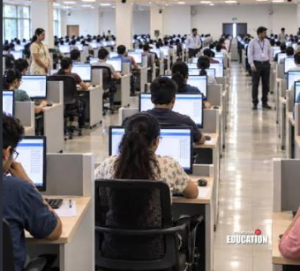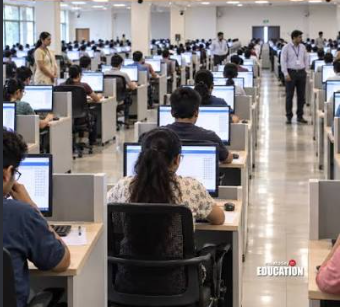
The National Testing Agency (NTA) is preparing to move the National Eligibility-cum-Entrance Test for undergraduate medical admissions from its traditional pen-and-paper format to a Computer-Based Test (CBT). NTA Director General Abhishek Singh has said that the transition is expected “very soon”, while a high-powered panel led by technology expert Nandan Nilekani is working on the systems and infrastructure required for the change.
The proposed shift could become one of the biggest changes to NEET-UG since the examination became a common national medical entrance test. It is not merely a change from OMR sheets to computer screens. For an examination taken at a massive national scale, moving online would require a new approach to test centres, cybersecurity, candidate authentication, question delivery, technical reliability and malpractice detection.
The reform also comes at a time when examination integrity has become a central concern. The NTA is exploring artificial intelligence and data analysis to identify suspicious patterns and strengthen safeguards around high-stakes examinations.
NEET UG CBT: Why the NTA Wants to Move the Exam Online
NEET-UG is currently the major NTA examination that continues to use the conventional pen-and-paper model, while several other large examinations administered by the agency have already moved to computer-based testing.
JEE, UGC-NET, CUET and NIFT are among the examinations that have adopted CBT formats. NTA’s stated direction is now to gradually make computer-based testing the standard for its major examinations.
The logic behind the transition goes beyond convenience.
A digital examination can allow authorities to manage question delivery, candidate authentication, examination logs and data more systematically. It can also reduce some of the vulnerabilities associated with the physical movement, storage and handling of large quantities of question papers.
For NEET, however, the scale makes the transition unusually complex.
The exam has to accommodate students across India, including candidates from regions where access to sophisticated computer-testing infrastructure may be more limited. A successful transition would therefore depend on whether the NTA can create a sufficiently large and reliable network of centres rather than simply introducing CBT at existing facilities.
The central objective
The larger goal is to create an examination system that is:
- More secure
- More transparent
- Technologically reliable
- Resistant to impersonation and malpractice
- Capable of handling large candidate volumes
- Easier to monitor through digital examination records
The NTA has also indicated that its immediate priority is to strengthen the examination system within India before pursuing a broader international role.
Nandan Nilekani Panel: What Is Being Worked Out?
The proposed NEET transformation is being examined by a high-powered task force headed by Nandan Nilekani, the Infosys co-founder and technology leader who has previously been associated with large-scale digital public infrastructure initiatives.
The panel’s role is particularly important because converting NEET into CBT is not simply a software-development exercise.
The system has to work simultaneously across thousands of candidates and examination centres, while protecting the confidentiality and integrity of the test.
The panel is examining the infrastructure and security requirements needed for such a large-scale transition.
That includes questions such as:
Can enough reliable test centres be created?
Unlike a conventional OMR examination, CBT requires computers, stable power, appropriate networking and technical support at examination venues.
A national medical entrance examination cannot afford large variations in the quality of infrastructure between centres.
How will technical failures be handled?
A computer malfunction, connectivity problem or power interruption should not unfairly disadvantage a candidate.
The eventual system will therefore need strong contingency arrangements, technical monitoring and procedures for handling disruptions.
How will question security work?
Digital delivery can reduce certain physical vulnerabilities, but it creates new cybersecurity requirements.
The system will need protection against unauthorised access, data breaches, manipulation and other digital threats.
This is why the infrastructure and security architecture will be as important as the examination software itself.
Can CBT Prevent NEET Paper Leaks?
This is likely to be the biggest question among students and parents.
The answer is that CBT can change the nature of examination security, but it cannot by itself guarantee that malpractice will disappear.
In a paper-based system, examination security involves printing, packaging, transportation, storage and distribution of physical question papers.
With CBT, many of those risks can be reduced because questions can be delivered digitally under controlled conditions.
But cybersecurity becomes much more important.
The NTA is therefore exploring AI-based systems to analyse examination logs, data and behavioural patterns and identify potential irregularities. The objective is to detect suspicious activity at an early stage rather than relying exclusively on investigations after an examination has ended.
The distinction is important:
Paper-based examination → greater emphasis on physical security
Computer-based examination → physical security plus cybersecurity and system monitoring
The move should therefore be viewed as a redesign of the examination-security architecture rather than a simple technological upgrade.
AI Could Become the Next Layer of NEET Security
Artificial intelligence is expected to play a growing role in the NTA’s examination reforms.
According to the latest announcement, the agency is examining ways in which AI can analyse examination data and identify unusual patterns associated with possible malpractice or system-level problems.
This could eventually allow examination authorities to flag anomalies involving candidate behaviour, login activity, centre-level patterns or other unusual data.
But AI should be treated as a supporting layer, not an unquestionable decision-maker.
Any system used to flag candidates or examination centres would need clear safeguards against false positives. Students should also have access to appropriate grievance and review mechanisms if an automated system identifies something unusual.
For a high-stakes examination such as NEET, technological sophistication must therefore be accompanied by transparency, accountability and due process.
What Will Change for NEET Aspirants?
For students, the most visible change will be the examination interface.
Instead of marking answers on an OMR sheet, candidates would answer questions on a computer.
That means preparation will eventually have to account for more than subject knowledge.
Students will need screen-based practice
Candidates accustomed to reading long questions on paper may need time to become comfortable with a digital interface.
This does not mean students need advanced computer skills. But familiarity with navigating between questions, reviewing answers and using the examination interface can reduce unnecessary stress.
Time management could feel different
NEET is already a time-intensive examination. Reading questions on screen and moving between questions digitally can feel different from working through a paper booklet.
Students preparing for a future CBT version will therefore benefit from practising full-length computer-based mock examinations once the official pattern is announced.
The interface should not become a new disadvantage
A key challenge for policymakers will be ensuring that the computer interface does not create an unintended disadvantage for students who have had limited exposure to digital testing.
Adequate familiarisation and practice opportunities will therefore be important during the transition.
The Bigger Challenge: India’s Digital Examination Infrastructure
The most difficult part of NEET CBT may not be the examination software. It may be the physical infrastructure needed to conduct the test reliably across the country.
India’s geographic and socioeconomic diversity means that a national examination system has to work under very different conditions.
A robust CBT network would require:
- Adequate computer capacity
- Reliable electricity
- Secure networks
- Backup systems
- Trained technical personnel
- Strong centre-level security
- Candidate authentication mechanisms
- Real-time monitoring
- Disaster-recovery arrangements
The NTA has already used CBT for several major examinations. But NEET’s scale means that the transition will need extensive capacity planning.
The agency itself has indicated that infrastructure and safeguards must be strengthened before the examination can be shifted online at scale.
NEET Is Becoming Part of a Larger NTA Reform
The CBT announcement should not be viewed in isolation.
The NTA is simultaneously examining broader reforms to its examination ecosystem, including stronger security systems, technology-based monitoring and eventually an expansion of its examination capabilities beyond India.
The agency is also studying examination practices in other BRICS countries, including China’s Gaokao, as part of its wider effort to modernise assessment systems.
This indicates a broader strategic shift: the NTA wants to move from being primarily an examination-conducting agency towards becoming a more technologically sophisticated national assessment institution.
The proposed NEET CBT transition could therefore serve as a major test of that ambition.
Why the NEET Shift Matters Beyond Medical Entrance Exams
NEET is among India’s most consequential competitive examinations because its score determines access to undergraduate medical education across the country.
That makes the integrity of the examination particularly important.
The move to CBT could eventually offer several advantages:
Greater standardisation: A centrally managed digital platform could reduce certain variations associated with physical paper handling.
Faster data processing: Digital responses can be processed electronically, potentially simplifying parts of the evaluation process.
Improved monitoring: Digital systems generate examination logs that can support security and anomaly detection.
Reduced physical question-paper movement: Digital delivery can reduce some risks associated with printing and transporting examination materials.
But these advantages will only materialise if the technology is implemented reliably.
A poorly prepared transition could instead introduce new concerns involving technical failures, cybersecurity, unequal access to computer-based practice and centre-level infrastructure.
NEET CBT 2027? What Students Should Know Now
The NTA has said the transition is expected “very soon”, but the latest announcement does not by itself establish a final examination year, detailed CBT pattern or complete operational schedule.
Students should therefore avoid relying on unofficial claims about the exact format until the NTA releases formal instructions.
The safest approach for current aspirants is to continue preparing according to the officially notified NEET syllabus and examination pattern applicable to their examination year.
If and when CBT is formally introduced, the NTA will need to provide detailed information covering the interface, centre arrangements, technical procedures, candidate instructions and other operational aspects.