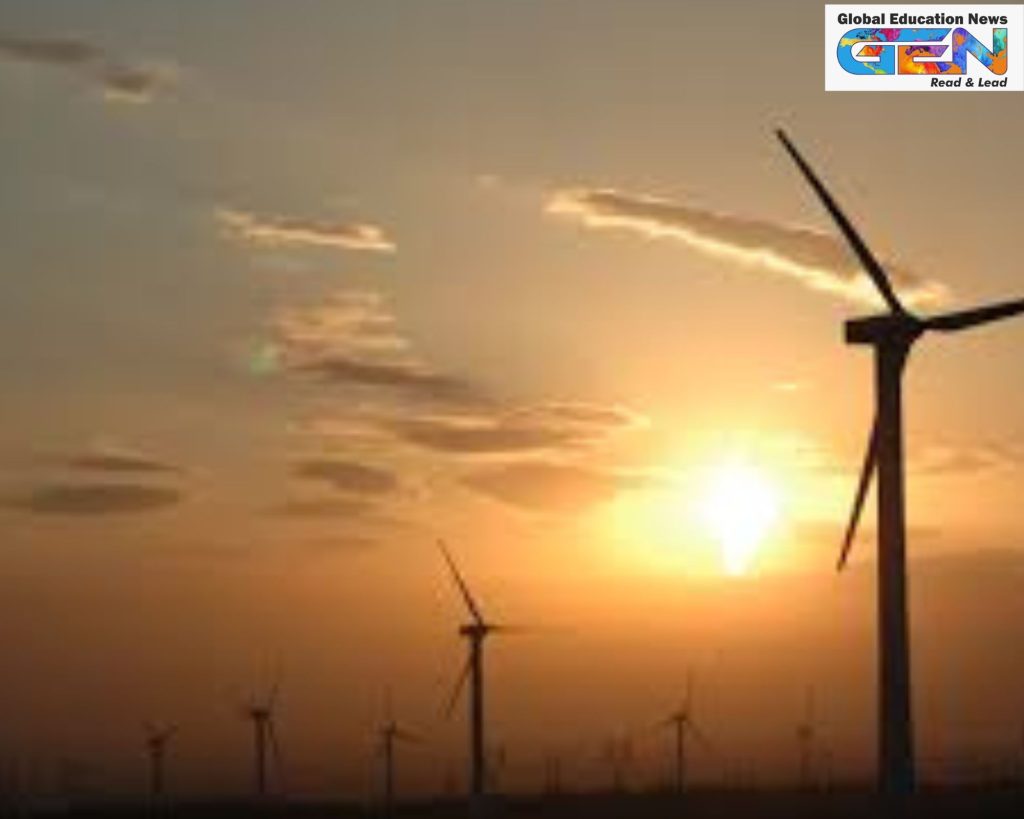
Karnataka has solidified its position as India’s wind energy powerhouse, adding 1,331.48 MW of wind power capacity in 2024-25, the highest among all states. Honored at the Global Wind Day 2025 event in Bengaluru on June 15, 2025, this milestone reflects Karnataka’s commitment to clean energy, as stated by Energy Minister K.J. George. With a total installed capacity of 7,351 MW, the state outshines global peers like South Africa and Portugal, aligning with India’s 500 GW renewable energy target by 2030. For UPSC aspirants, this is a critical case study in renewable energy and federal-state dynamics.
- Top State: Added 1,331.48 MW in 2024-25, outpacing Tamil Nadu and Gujarat.
- Total Capacity: Reached 7,351 MW, a key driver in India’s renewable goals.
- Global Wind Day 2025: Celebrated in Bengaluru with theme “Pawan-Urja: Powering the Future of India.”
Karnataka’s Renewable Energy Milestones
- Wind Capacity: 7,351 MW, fourth-highest in India after Gujarat (13,625 MW) and Tamil Nadu (11,765 MW).
- Annual Surge: 1,331.48 MW added, surpassing Tamil Nadu (1,136.37 MW) and Gujarat (954.76 MW).
- National Contribution: Supports India’s 100 GW wind target, including 30 GW offshore.
Karnataka’s 7,351 MW wind capacity, boosted by 1,331.48 MW in 2024-25, places it among India’s top renewable energy states, trailing only Gujarat and Tamil Nadu. The state’s momentum, driven by projects in wind-rich taluks like Kushtagi (Koppal) and Challakere (Chitradurga), aligns with India’s 51.5 GW national wind capacity, ranking fourth globally. This achievement, celebrated by @DKShivakumar on X, is a testament to Karnataka’s infrastructure and policy support, vital for UPSC GS-III (Environment and Economy) preparation.
Massive Investments Fueling Growth
- ₹4 Lakh Crore Deals: Secured at Invest Karnataka-2025 Global Investors Meet.
- 17 GW Pipeline: Over 5 GW under Renewable Energy Cluster Programme.
- Infrastructure Boost: 20+ substations, 400 KV corridors, and Renewable Energy Reserve Zone.
At the Invest Karnataka-2025 Global Investors Meet, Karnataka signed ₹4 lakh crore in renewable energy investment agreements, nearly 40% of its total investments. The state plans 17 GW of wind projects, with 5 GW under the Renewable Energy Cluster Programme, supported by 20+ substations and 400 KV corridors. Companies like JSW Neo Energy (₹56,000 crore) and Tata Power (₹50,000 crore) are driving this growth, making Karnataka a hub for green investments, a key UPSC topic in sustainable development.
India’s Global Wind Energy Standing
- Fourth Globally: 51.5 GW installed capacity as of March 2025.
- Exports: 3.5–4 GW of wind turbines/modules in 2024-25.
- 2030 Goal: 100 GW wind power, with 30 GW from offshore sources.
India’s 51.5 GW wind capacity, generating 80.27 TWh in 2024-25, makes it the world’s fourth-largest wind power producer. With exports of 3.5–4 GW of turbines, as noted by Union Minister Pralhad Joshi, India is a global player. The 100 GW wind target by 2030, including 30 GW offshore, relies on states like Karnataka, Gujarat, and Tamil Nadu, which together hold 65% of India’s wind capacity. This is crucial for UPSC aspirants studying India’s renewable energy policies.
Future Directions for Karnataka and India
- Grid Stability: Integrating wind, solar, and pumped storage for 24×7 power.
- Cost Competitiveness: Wind tariffs at ₹3.17/kWh, aiming for affordability.
- Local Collaboration: Engaging communities to ease land acquisition.
Karnataka’s future hinges on integrating wind, solar, and pumped storage for grid stability, as emphasized by Gaurav Gupta, Additional Chief Secretary. The state’s Renewable Energy Reserve Zone and community collaboration, highlighted at Global Wind Day 2025, address land acquisition challenges. Nationally, India’s focus on domestic manufacturing and competitive tariffs (₹3.17/kWh in 2023) supports the 500 GW renewable goal, a key UPSC focus for energy security and climate change.
Why This Matters for UPSC Aspirants
- GS-III Relevance: Covers environment, economy, and sustainable development.
- Federal Dynamics: Showcases state-led renewable energy initiatives.
- Policy Insights: Highlights Karnataka’s role in national 2030 targets.
Karnataka’s wind energy leadership, with 7,351 MW and ₹4 lakh crore investments, is a prime example for UPSC essays on renewable energy and federalism. Its 17 GW wind project pipeline and Renewable Energy Cluster Programme align with India’s Paris Agreement commitments. Aspirants should note the state’s infrastructure upgrades and community engagement strategies, critical for GS-II (Governance) and GS-III (Environment) papers.
How to Support and Stay Informed
- Follow Updates: Check kredl.karnataka.gov.in for project details.
- Join the Buzz: Engage with @mnreindia or @XpressBengaluru on X for renewable energy news.
- UPSC Prep: Study Karnataka’s model for sustainable development questions.
Support Karnataka’s green vision by sharing its Global Wind Day 2025 success, celebrated by @EconomicTimes on X. Bookmark kredl.karnataka.gov.in for updates on the 17 GW wind projects and explore mnre.gov.in for national policies. For UPSC aspirants, Karnataka’s wind energy story is a must-know for acing environment and economy sections. Celebrate India’s renewable revolution and start prepping now