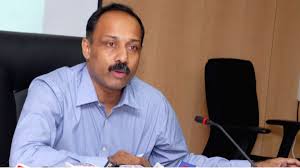
The Centre has appointed T.K. Anil Kumar, a 1995-batch IAS officer of the Karnataka cadre, as the new Secretary of the Department of School Education and Literacy. He previously served as Additional Secretary in the Ministry of Rural Development.
The appointment comes at a critical juncture. Five years after the launch of the National Education Policy 2020, the focus has shifted from policy design to classroom execution. India’s school system serves nearly 24.7 crore students across 14.7 lakh schools — the largest in the world. The scale is no longer the primary challenge. Delivering consistent quality and ensuring reforms reach every classroom is.
Unfinished NEP 2020 Implementation
NEP 2020 introduced a 5+3+3+4 school structure, competency-based learning, experiential education and reduced reliance on rote methods. NCERT has begun rolling out new textbooks based on the National Curriculum Framework for School Education 2023. However, schools and teachers are still adapting.
The new secretary will need to ensure more uniform implementation across states that differ widely in resources, teacher availability and infrastructure.
Three-Language Policy and Board Exam Reforms
The CBSE’s three-language requirement for Classes 6 to 9 has faced resistance, particularly from Tamil Nadu, and raised practical concerns over the availability of trained language teachers. Clearer guidance and support for schools will be essential.
Board examination reforms are also at a sensitive stage. Competency-based questions, digital evaluation and the introduction of a second Class 10 board examination are major changes. The first year of digital evaluation of nearly 98.7 lakh answer books saw technical issues such as blurred scans and missing pages, leading to large-scale rescanning. Schools also reported delays and uncertainty around the second board exam timelines, which affected higher education admission processes.
Persistent Learning Gaps and Dropouts
Despite higher enrolment, learning outcomes remain uneven. Only about 5.4 per cent of schools offer education from Classes 1 to 12, forcing many students to change institutions frequently. Gross Enrolment Ratio drops from around 90 per cent at the primary level to 58.4 per cent at higher secondary. Secondary dropout rates remain significantly higher than at the primary stage.
Teacher Shortages and Training Needs
India still has more than one lakh single-teacher schools serving over 33 lakh students. The shift to competency-based learning, new curricula and the introduction of AI and digital tools requires continuous teacher training. Ensuring teachers are adequately prepared will determine how effectively reforms translate into better classroom practice.
Digital Access and Infrastructure Gaps
While digital education is expanding, access is uneven. A substantial proportion of schools still lack computers, internet connectivity or facilities for children with special needs. Around 7 per cent of schools do not have functional electricity. Bridging these gaps, especially in rural and government schools, remains a priority if technology is to support rather than widen educational inequality.
The Task Ahead
The new secretary inherits a system that has made progress in enrolment and policy direction but continues to struggle with execution, equity and learning quality. The coming years will test whether NEP 2020 moves from policy documents into everyday classroom reality for the vast majority of Indian students.
T.K. Anil Kumar’s tenure will be judged by the ability to convert structural reforms into measurable improvements in learning outcomes, teacher capacity and school infrastructure across the country.