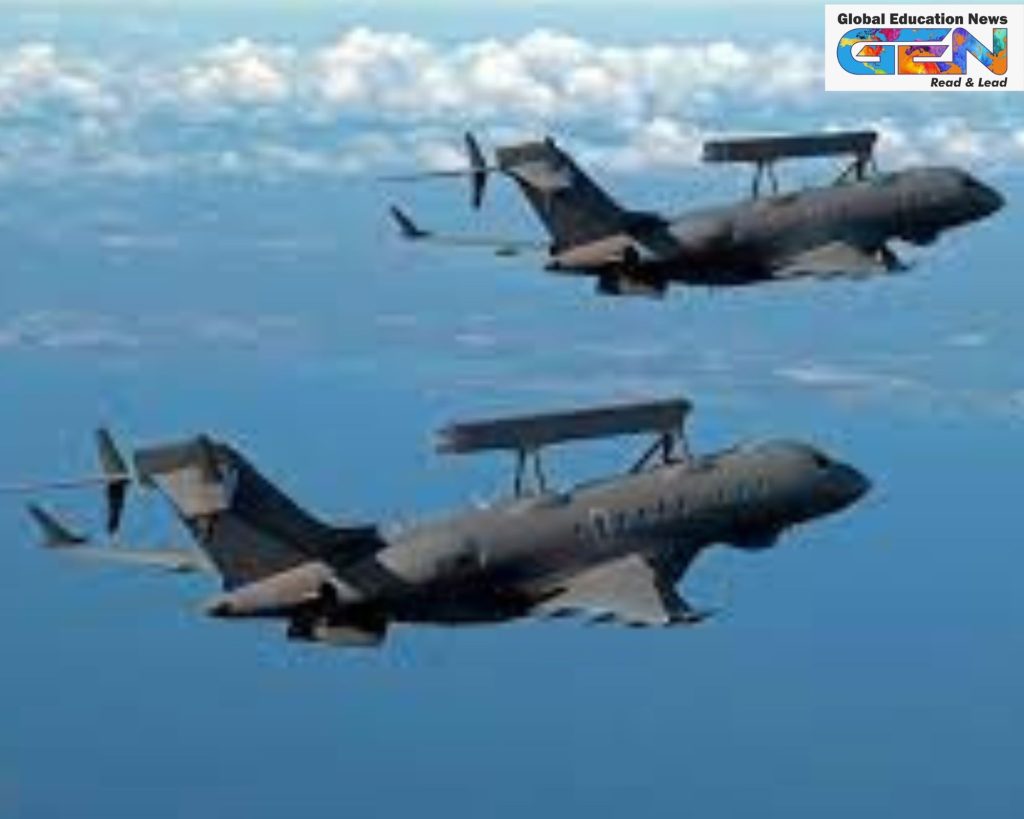
The Indian Air Force (IAF) is gearing up for a seismic shift with the I-STAR (Intelligence, Surveillance, Target Acquisition, and Reconnaissance) aircraft, a ₹10,000 crore game-changer slated for approval by the Defence Ministry in June 2025. Amid escalating regional tensions, including Operation Sindoor against Pakistan, these high-tech spy planes will enable the IAF to execute pinpoint strikes on critical enemy targets—like radar stations and command centers—without risking hostile airspace. With only a few nations, such as the United States, United Kingdom, and Israel, boasting similar capabilities, I-STAR positions India as a rising star in modern warfare.
- ₹10,000 crore I-STAR project set for Defence Ministry approval in June 2025.
- Empowers IAF with precision strikes from safe, stand-off distances.
- Joins US, UK, and Israel in elite ISR technology club.
Inside the I-STAR: Cutting-Edge Tech Unveiled
Key Points:
- Three aircraft from Boeing or Bombardier, powered by DRDO’s indigenous systems.
- Multi-spectral sensors for day-night, all-weather surveillance.
- Rapid integration thanks to DRDO’s battle-tested technology.
The I-STAR project is a masterclass in blending global and local expertise. The IAF will procure three advanced aircraft from top manufacturers like Boeing or Bombardier, outfitted with indigenous sensors and electronic systems crafted by DRDO’s Centre for Airborne Systems (CABS). These systems, rigorously tested, promise swift integration, ensuring the planes are mission-ready ASAP. With multi-spectral surveillance, I-STAR can detect and track targets like missile launchers or communication hubs in complex terrains, day or night, rain or shine.
Strategic Powerhouse: Why I-STAR Matters
Key Points:
- Real-time battlefield data for surgical strikes without entering enemy airspace.
- High-altitude operations reduce risks to IAF assets.
- Bolsters deterrence amid border tensions with Pakistan and China.
I-STAR isn’t just a plane—it’s a strategic game-changer. Combining airborne and ground-based systems, it delivers a real-time battlefield overview, enabling the IAF to identify and neutralize high-value targets deep in enemy territory from stand-off ranges. Operating at high altitudes, these aircraft minimize exposure to threats like surface-to-air missiles. This capability is vital amid ongoing operations like Operation Sindoor and simmering tensions with Pakistan and China. By enabling precision strikes with minimal collateral damage, I-STAR strengthens India’s deterrence strategy, ensuring rapid, effective responses to threats.
Driving India’s Self-Reliance in Defense
Key Points:
- DRDO’s homegrown sensors align with Atmanirbhar Bharat.
- Builds on indigenous successes like Tejas and AMCA projects.
- Private sector partnerships boost production efficiency.
The I-STAR project is a proud nod to Atmanirbhar Bharat. While the aircraft platforms may come from global giants, the core surveillance and targeting systems are 100% Indian, developed by DRDO. This builds on the success of programs like the Tejas fighter jet and the Advanced Medium Combat Aircraft (AMCA). A Defence Ministry report from March 2025 highlights the role of private players like Tata Advanced Systems in speeding up production, complementing DRDO and HAL. X posts are abuzz, with users praising I-STAR as a “symbol of India’s defense innovation.”
Challenges on the Horizon
Key Points:
- Integrating DRDO systems with foreign platforms may hit technical snags.
- ₹10,000 crore for three aircraft sparks cost-effectiveness debates.
- Timely approval and induction critical amid regional conflicts.
No project is without hurdles. Merging DRDO’s indigenous systems with foreign platforms could face technical challenges, despite prior testing. The ₹10,000 crore cost for just three aircraft has raised eyebrows on X, with some questioning if the IAF, currently at 31 squadrons against a sanctioned 42, needs more units for the price. Delays in the June 2025 approval or induction by 2030 could strain the IAF’s readiness, especially with active operations. Staying on schedule will be key to maximizing I-STAR’s impact.
The Global Stage: India’s Ascent in Military Might
Key Points:
- Matches elite ISR systems like US JSTARS and UK Sentinel.
- Supports IAF’s modernization to counter regional rivals.
- Ties into NEP 2020’s push for tech-driven innovation.
I-STAR catapults India into the global elite, alongside systems like the US JSTARS, UK Sentinel, and Israeli G550. It’s a cornerstone of the IAF’s modernization drive, addressing gaps in ISR, fighter jets, and AEW&C platforms, as noted in a 2025 Defence Ministry committee report. With China adding 435 aircraft and Pakistan 31 from 2014-2024, I-STAR, alongside Tejas and Rafale, ensures India’s air superiority. This also aligns with NEP 2020, fostering a tech-savvy talent pool to fuel defense innovation.