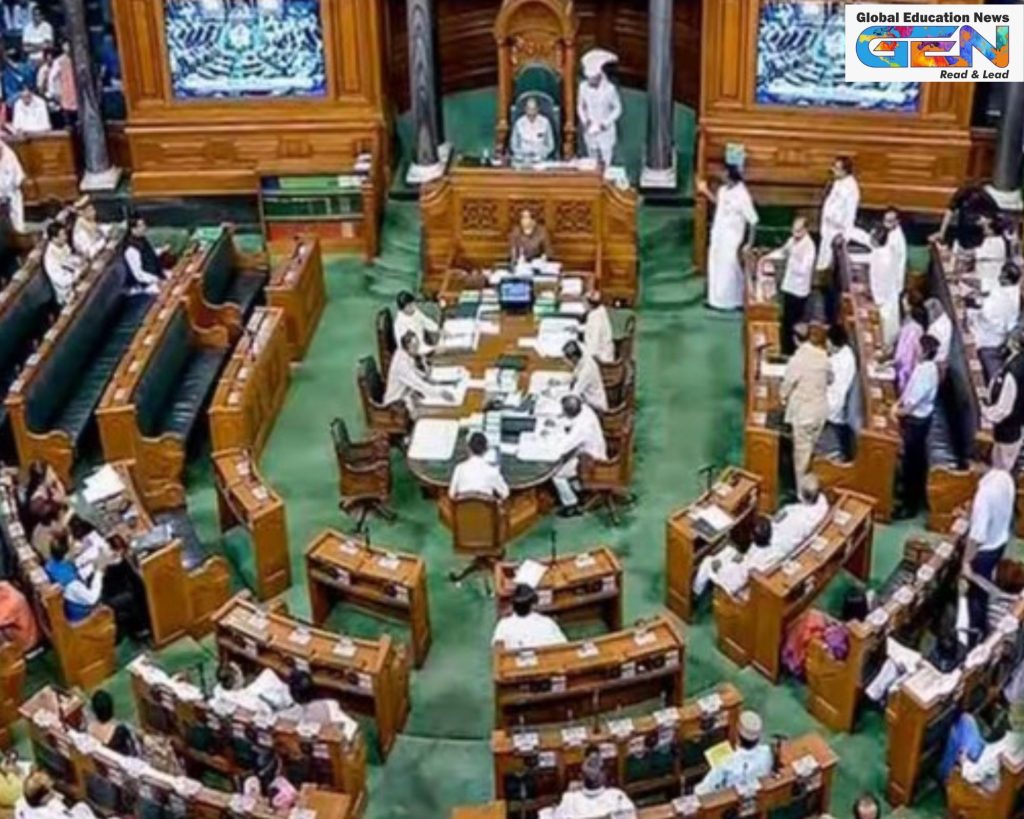
As Parliament convenes for its Winter Session on December 1, 2025, the spotlight falls on the Higher Education Commission of India (HECI) Bill, 2025—a landmark legislation poised to consolidate India’s sprawling higher education regulatory framework. Drawing from the National Education Policy (NEP) 2020’s vision, this bill proposes a single umbrella regulator to replace the University Grants Commission (UGC), All India Council for Technical Education (AICTE), and National Council for Teacher Education (NCTE).
This reform addresses long-standing inefficiencies in a sector serving over 43 million students across 1,000+ universities and 50,000 colleges. By merging these bodies, the HECI aims to foster autonomy, innovation, and global competitiveness. However, as with any structural overhaul, it invites scrutiny on centralization risks and implementation hurdles. This analysis dissects the bill’s architecture, implications, and roadmap ahead.
Core Objectives and NEP 2020 Alignment
The HECI Bill emerges as the NEP 2020’s most ambitious regulatory pillar, unveiled five years after the policy’s adoption. NEP envisioned a unified regulator to eliminate overlaps and promote holistic development. Key alignments include:
- Streamlined Governance: HECI will oversee all non-medical and non-legal higher education, subsuming UGC’s general oversight, AICTE’s technical focus, and NCTE’s teacher training mandates.
- Multidisciplinary Emphasis: Echoing NEP’s push for flexible curricula, the bill prioritizes interdisciplinary programs to bridge skill gaps in emerging fields like AI and sustainability.
- Equity and Access: Targets increasing Gross Enrolment Ratio (GER) from 28% to 50% by 2035 through inclusive policies for underrepresented regions.
This integration promises to cut approval delays by up to 50%, enabling faster program launches and reducing institutional compliance burdens.
Structural Blueprint: How HECI Will Operate
At its heart, HECI is designed as a lean, four-vertical entity to balance regulation with empowerment. Unlike the siloed predecessors, it emphasizes light-touch oversight and performance-based incentives. Breakdown of its framework:
- Regulatory Vertical: Enforces compliance without micromanagement, granting “graded autonomy” to high-performing institutions for fee-setting and curriculum design.
- Accreditation Vertical: Establishes a transparent, third-party system to rank institutions on teaching, research, and inclusivity metrics, replacing ad-hoc UGC audits.
- Funding Vertical: Allocates grants based on outcomes, potentially unlocking ₹1 lakh crore in investments for research hubs and infrastructure.
- Standards-Setting Vertical: Develops national benchmarks for quality, integrating AICTE’s technical expertise to align curricula with industry needs.
This modular structure draws from global models like the UK’s Office for Students, adapting them to India’s federal context. Early drafts suggest a 15-member governing board with diverse stakeholders, including state representatives, to mitigate centralization fears.
Potential Benefits: Catalyzing Innovation and Employability
Proponents hail HECI as a catalyst for India’s ascent in global rankings, potentially elevating it to the top 10 by 2030. Analytical projections highlight transformative gains:
- Enhanced Institutional Autonomy: Institutions like IITs and IIMs could accelerate partnerships with global universities, boosting international student inflows by 20-30%.
- Skill-Centric Reforms: Merging AICTE ensures vocational integration, addressing the 47% employability gap among graduates by emphasizing hands-on training in high-demand sectors.
- Research and Innovation Boost: Unified funding could double R&D spending, fostering startups and patents—critical for India’s $5 trillion economy goal.
- Teacher Empowerment: NCTE’s absorption streamlines certification, aiming to train 1 million educators annually with modern pedagogies like blended learning.
Pilot NEP initiatives, such as multidisciplinary universities in Andhra Pradesh, have already shown 15-20% enrollment spikes, underscoring HECI’s scalability.
Challenges and Criticisms: Navigating the Roadblocks
No reform is without friction. A February 2025 Parliamentary Standing Committee report flagged risks of “excessive centralization,” echoing concerns from academics and state governments. Critical analysis reveals:
- Federal Tensions: Limited state input could alienate regional bodies, exacerbating urban-rural divides where 70% of colleges struggle with basic accreditation.
- Transition Disruptions: Merging legacies risks short-term chaos, including staff redundancies and delayed approvals during the 2-3 year integration phase.
- Enforcement Gaps: Without robust digital infrastructure, the new penal powers (fines up to ₹50 crore for violations) might unevenly target smaller institutions.
- Equity Oversights: Critics argue for stronger safeguards for marginalized groups, as NEP’s inclusivity goals remain underfunded at just 6% of GDP allocation.
Stakeholder consultations, ongoing since 2024, must address these to ensure HECI evolves as an enabler, not an enforcer.
Implementation Roadmap and Global Benchmarks
The bill’s passage could trigger a phased rollout: Year 1 for structural merger, Year 2 for accreditation pilots, and Year 3 for full autonomy grants. Monitoring via an independent oversight panel will track metrics like GER growth and innovation indices.
Comparatively, Australia’s Tertiary Education Quality and Standards Agency offers lessons in balanced regulation, while Singapore’s unified model demonstrates employability gains. For India, success hinges on ₹10,000 crore seed funding and tech-enabled portals for seamless compliance.
Conclusion: Toward a Resilient Academic Ecosystem
The HECI Bill 2025 stands at the cusp of redefining higher education reform in India, promising a unified, dynamic system aligned with NEP 2020’s aspirations. While benefits in autonomy and innovation are compelling, addressing centralization and equity concerns will determine its legacy. As debates unfold in Parliament, this could mark the dawn of an era where Indian institutions rival global peers—empowering the next generation of leaders.