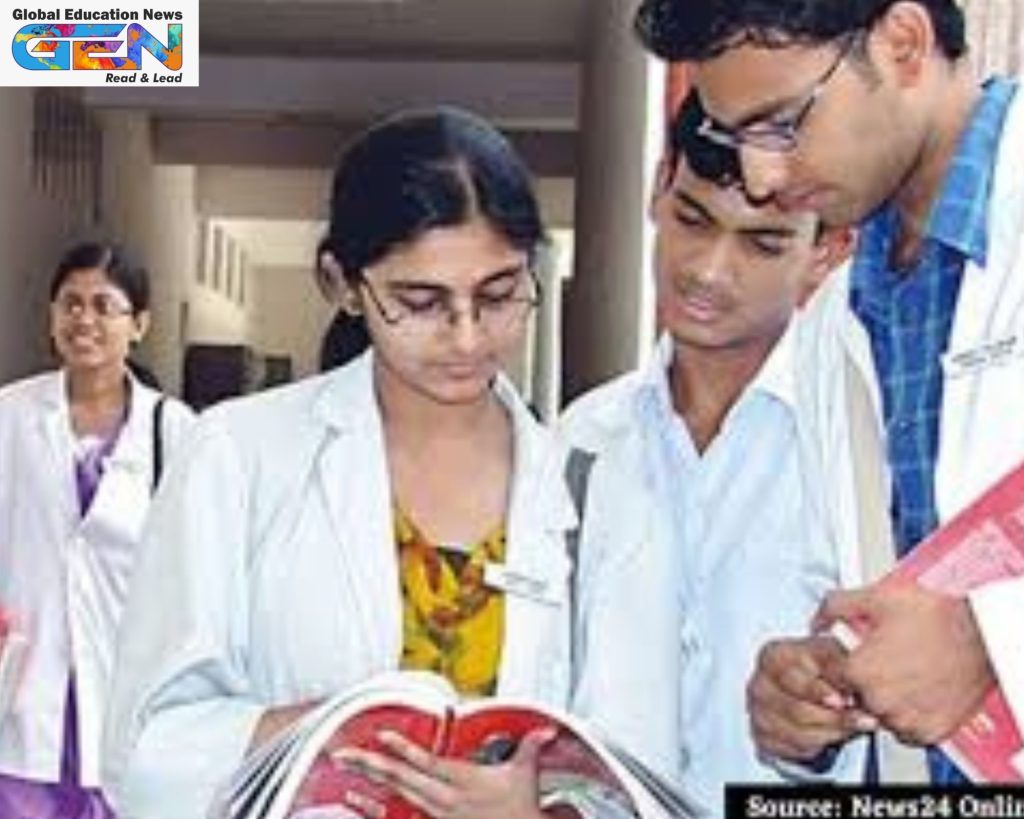
India has witnessed a remarkable expansion in its medical education infrastructure over the past decade. The number of medical colleges has doubled, significantly boosting the country’s capacity to train healthcare professionals. This growth has led to a substantial increase in both undergraduate and postgraduate medical seats, ensuring a steady supply of skilled doctors to meet the needs of India’s growing population. With over 13.86 lakh registered allopathic doctors and 7.51 lakh AYUSH practitioners, the nation is making significant strides in improving its healthcare workforce.
- Medical colleges increased from 387 in 2014 to 780 by 2025.
- Undergraduate seats rose from 51,348 to 1,15,900.
- Postgraduate seats grew from 31,185 to 74,306.
- Over 13.86 lakh allopathic doctors and 7.51 lakh AYUSH practitioners registered.
Achieving a Strong Doctor-Population Ratio
Key Points:
- Current doctor-population ratio is 1:811, surpassing WHO’s 1:1000 recommendation.
- Ratio calculated assuming 80% of registered practitioners are actively practicing.
- Enhanced training capacity supports better healthcare delivery.
India’s doctor-population ratio stands at an impressive 1:811, better than the World Health Organization’s recommended standard of 1:1000. This achievement is based on the assumption that 80% of registered allopathic and AYUSH practitioners are actively serving. The increased number of medical colleges and seats has played a pivotal role in achieving this milestone, ensuring that more doctors are available to address the healthcare needs of India’s vast population.
Innovative Programs Bridging Rural Healthcare Gaps
Key Points:
- Family Adoption Programme (FAP) integrates rural healthcare into MBBS curriculum.
- MBBS students adopt families to promote vaccination, nutrition, and health awareness.
- District Residency Programme (DRP) mandates three-month training in district hospitals.
- DRP strengthens healthcare in underserved areas while enhancing student training.
To address disparities in healthcare access, India has introduced innovative programs like the Family Adoption Programme (FAP) and the District Residency Programme (DRP). The FAP, part of the MBBS curriculum, involves medical students adopting families in rural villages to provide regular health check-ups, promote healthy practices, and raise awareness about government health initiatives. The DRP requires postgraduate students to serve three-month postings in district hospitals, improving healthcare delivery in rural and underserved areas while offering hands-on training.
Ayushman Arogya Mandirs: Revolutionizing Primary Healthcare
Key Points:
- 1,78,154 Ayushman Arogya Mandirs established by July 2025.
- Annual footfall increased from 13.49 crore in 2019-20 to 128.08 crore in 2024-25.
- Over 117 crore individuals screened for hypertension, diabetes, and cancers.
- Services include 12 comprehensive healthcare packages and teleconsultation.
The establishment of 1,78,154 Ayushman Arogya Mandirs (AAMs) by July 2025 has transformed primary healthcare in India. By upgrading Sub-Health Centres and Primary Health Centres, AAMs provide comprehensive services, including maternal and child care, chronic disease management, and teleconsultation with specialists. The annual footfall at these centres has surged to 128.08 crore, with over 117 crore individuals screened for critical conditions like hypertension, diabetes, and cancers, making healthcare more accessible and affordable.
Government Support for a Robust Healthcare System
Key Points:
- Central government supports states with financial aid and capacity building.
- Centrally sponsored schemes provide medicines, diagnostics, and teleconsultation.
- Public health remains a state subject, with states managing medical professional engagement.
While public health is a state responsibility, the central government plays a crucial role in supporting states and Union Territories through financial assistance, capacity building, and the provision of essential resources. Centrally sponsored schemes ensure the availability of medicines, diagnostics, and teleconsultation services, enhancing primary healthcare delivery. These efforts are bridging gaps in healthcare access, particularly in rural and remote areas.
A Healthier Future for India
Key Points:
- Expanded medical education ensures a steady supply of healthcare professionals.
- Innovative programs and AAMs improve rural healthcare access.
- India sets a global benchmark for healthcare transformation through education.
India’s investment in medical education and healthcare infrastructure is paving the way for a healthier, more equitable future. The doubling of medical colleges, innovative programs like FAP and DRP, and the widespread reach of Ayushman Arogya Mandirs are transforming healthcare delivery. With a strong doctor-population ratio and a focus on rural healthcare, India is setting a global standard for improving healthcare access through education and innovation.