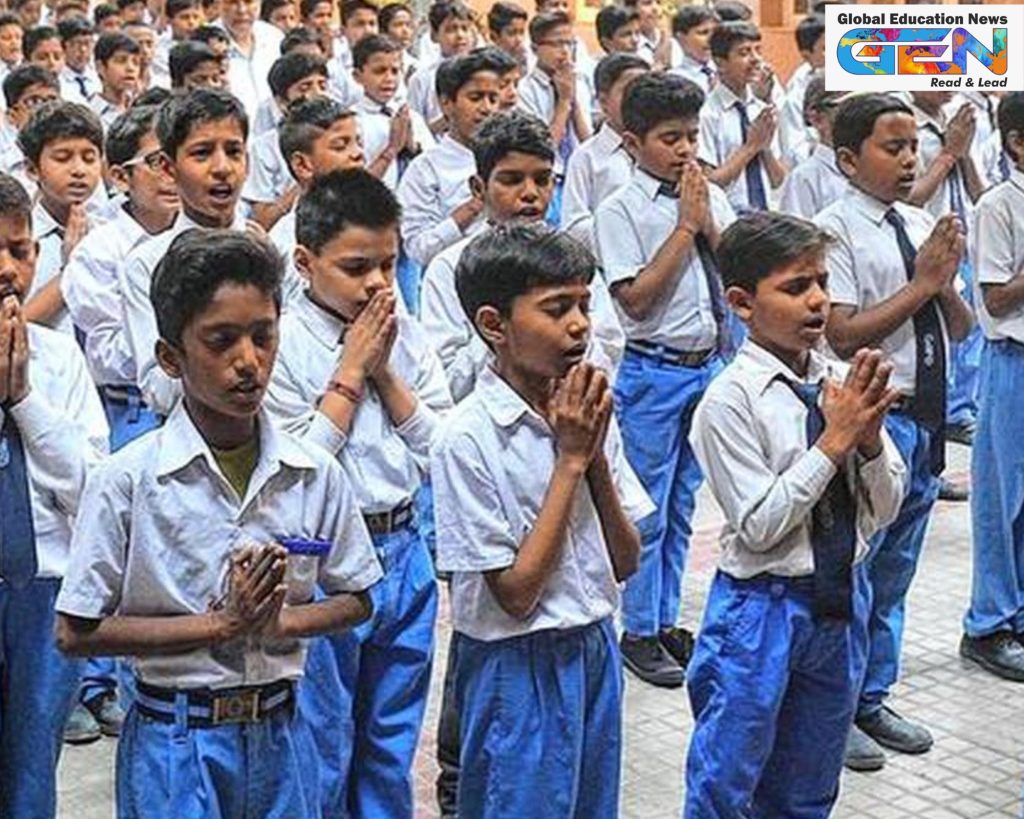
Haryana is embracing its cultural roots with a bold new directive: starting in the 2025 academic term, all schools affiliated with the Haryana School Education Board (HSEB) will include Bhagavad Gita verse recitation in their daily morning prayers. Announced on July 21, 2025, this move aims to instill values like discipline, responsibility, and focus in students, blending ancient wisdom with modern education. Following Uttarakhand’s lead, Haryana’s initiative has sparked both applause and debate, positioning it as a landmark step in value-based learning. Here’s everything you need to know about this policy, its goals, and what it means for students and educators!
Key Points:
- Mandatory Gita shloka recitation in morning assemblies for all HSEB-affiliated schools
- Aimed at promoting moral and spiritual growth, not religious instruction
- Implementation begins in the 2025 academic term
Why Gita Verses? The Vision Behind the Move
The Haryana School Education Board, led by Chairman Pawan Kumar, believes the Shrimad Bhagavad Gita offers timeless lessons in ethics, spirituality, and personal growth. By integrating its verses into daily prayers, the state seeks to nurture a generation that embodies discipline and contributes to society. “The motive is to help children learn from the spirituality and knowledge the Gita holds, applying it in their daily lives to benefit society,” Kumar stated, emphasizing its role as a “manual of life” for character-building and societal responsibility.
Key Points:
- Gita verses to foster discipline, focus, and moral values
- Focus on philosophical and educational lessons, not religious promotion
- Aligns with Haryana’s push for cultural and value-based education
Who’s Affected? Scope and Implementation
This directive applies to all government and private schools under the HSEB, impacting thousands of students across Haryana. School principals have been instructed to select specific Gita shlokas for daily recitation during morning assemblies, ensuring they highlight philosophical and ethical teachings. The policy follows a similar initiative in Uttarakhand, where Gita shlokas are already part of school prayers, accompanied by discussions on their meaning.
Key Points:
- Covers both government and private HSEB-affiliated schools
- Principals to choose shlokas emphasizing universal values
- Implementation set for the 2025 academic term
Mixed Reactions: Support and Skepticism
The decision has sparked lively discussions. Supporters, including educators and cultural advocates, praise it for embedding moral teachings in young minds. Swami Gyananand, a Gita scholar, virtually blessed the initiative, highlighting its spiritual and cultural relevance. However, critics question the inclusion of religious texts in public education, raising concerns about secularism and inclusivity. HSEB officials clarify that the verses will be presented for their educational and philosophical value, not as religious doctrine, to address these concerns.
Key Points:
- Supporters see it as a boost to moral and cultural education
- Critics worry about the role of religious texts in secular schools
- Emphasis on non-religious, value-based interpretation of shlokas
Haryana’s Broader Vision: Cultural Education in Focus
This isn’t Haryana’s first foray into integrating the Gita into education. Since 2015, the state has introduced Gita teachings in school curricula, starting with Classes 5–7 and expanding to Classes 6–12 by 2023. The Gayatri Mantra was added to morning prayers in 2018 after positive results from Gita inclusion. These efforts align with the National Education Policy (NEP) 2020, which encourages blending India’s cultural heritage with modern learning, a trend also seen in Gujarat and Uttarakhand.
Key Points:
- Gita shlokas in curriculum since 2015, expanded in 2023
- Gayatri Mantra recitation mandatory since 2018
- Part of NEP 2020’s push for cultural and value-based education
National Trend: Gita in Schools Across India
Haryana’s move follows a growing trend. Uttarakhand mandated Gita shloka recitation in 2025, with weekly discussions to explain their scientific and philosophical relevance. Gujarat introduced the Gita in Classes 6–12 syllabi in 2022, incorporating activities like quizzes and dramas. Karnataka is exploring similar plans, and Union Minister Pralhad Joshi proposed Gita inclusion nationwide in 2022, citing its moral and ethical teachings. These initiatives reflect a broader push to integrate traditional wisdom into education.
Key Points:
- Uttarakhand: Daily Gita shlokas with weekly discussions
- Gujarat: Gita in syllabi with creative activities
- National proposal for Gita in schools gaining traction
Balancing Tradition and Secularism
While the Gita’s teachings are lauded for their universal values, the move has sparked debate about secular education. Critics, including the Haryana Congress in 2018, argued that focusing on Hindu texts could alienate students of other faiths, urging inclusion of other religious scriptures. Haryana officials counter that the focus is on moral and philosophical lessons, aligning with NEP 2020’s vision of cultural pride without religious bias. Schools are encouraged to present shlokas in a secular context to ensure inclusivity.
Key Points:
- Debate over religious texts in public schools
- Officials emphasize secular, philosophical focus
- Aligns with NEP 2020’s cultural education goals
What’s Next for Students and Schools?
As Haryana gears up for the 2025 academic term, schools are preparing to implement Gita verse recitation. Principals will select shlokas, and teachers will guide students on their meanings, fostering discussions to encourage practical application. This initiative builds on Haryana’s history of cultural education, aiming to create a “cultured generation” that contributes to India’s vision of becoming a Vishwaguru (world leader), as stated by HSEB Chairman Pawan Kumar.
Key Points:
- Schools to start recitation in 2025 academic term
- Teachers to explain shlokas’ ethical and philosophical significance
- Aims to build a disciplined, value-driven generation