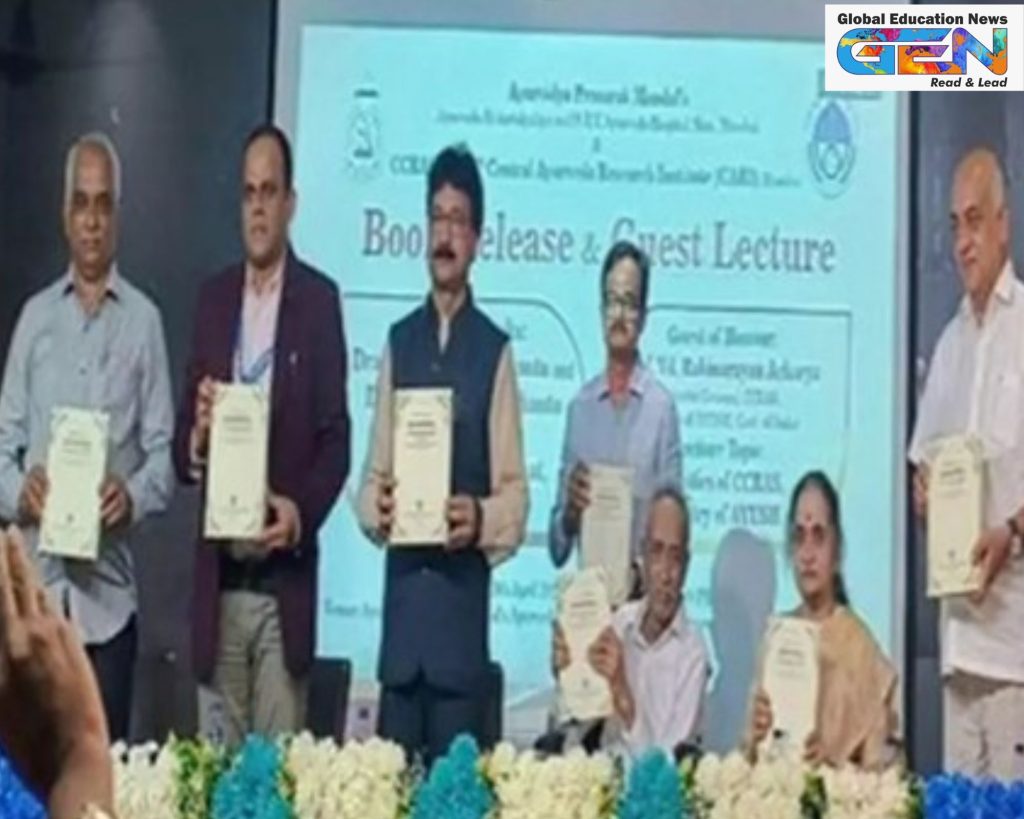
On May 7, 2025, the Central Council for Research in Ayurvedic Sciences (CCRAS), under the Ministry of Ayush, unveiled two rare and significant Ayurvedic manuscripts—Dravyaratnākara Nighaṇṭu and Dravyanamākara Nighaṇṭu—at an event organized by the RRAP Central Ayurveda Research Institute in Mumbai. Critically edited and translated by renowned manuscriptologist Dr. Sadanand D. Kamat, these texts strengthen India’s rich traditional medical heritage and inspire scholarly exploration. Available through ccras.nic.in, the manuscripts are poised to benefit Ayurveda students, researchers, and practitioners. This article provides a clear, engaging overview of the manuscripts, their significance, and their impact on Ayurvedic literature, formatted with key points for easy reading.
Overview of the Revived Manuscripts
The Dravyaratnākara Nighaṇṭu and Dravyanamākara Nighaṇṭu are rare Ayurvedic lexicons that catalog medicinal plants and drugs, offering insights into ancient pharmacological knowledge. Revived by CCRAS, these texts address complex areas of Ayurvedic nomenclature, making them invaluable for modern research and practice.
Key Points:
- Event Date: Unveiled on May 7, 2025, at Ayurveda Mahavidyalaya, Sion, Mumbai.
- Manuscripts: Dravyaratnākara Nighaṇṭu (authored by Mudgala Paṇḍita, 1480 AD) and Dravyanamākara Nighaṇṭu (attributed to Bhisma Vaidya).
- Editor: Dr. Sadanand D. Kamat, expert in Saraswati Nighaṇṭu, Bhavaprakasha Nighaṇṭu, and Dhanvantari Nighaṇṭu.
- Purpose: Preserve and promote India’s classical medical literature.
- Organizers: CCRAS and RRAP Central Ayurveda Research Institute, under Ministry of Ayush.
Dravyaratnākara Nighaṇṭu: A Historical Gem
Authored by Mudgala Paṇḍita in 1480 AD, the Dravyaratnākara Nighaṇṭu is a comprehensive Ayurvedic lexicon detailing medicinal substances, their properties, and uses. Its revival highlights CCRAS’s commitment to preserving historical texts for contemporary use.
Key Points:
- Authorship: Mudgala Paṇḍita, a 15th-century Ayurvedic scholar.
- Content: Focuses on medicinal plants, drugs, and their therapeutic applications.
- Significance: Enhances understanding of ancient Ayurvedic pharmacology.
- Critical Edition: Edited by Dr. Sadanand D. Kamat for clarity and accessibility.
- Applications: Supports research, education, and clinical practice in Ayurveda.
Dravyanamākara Nighaṇṭu: Decoding Homonyms
Attributed to Bhisma Vaidya, the Dravyanamākara Nighaṇṭu serves as a standalone appendix to the Dhanvantari Nighaṇṭu, specializing in the study of homonyms of drug and plant names—a complex and vital aspect of Ayurvedic nomenclature.
Key Points:
- Authorship: Bhisma Vaidya, linked to Dhanvantari Nighaṇṭu.
- Focus: Clarifies homonyms in plant and drug names to avoid misidentification.
- Unique Value: Addresses linguistic challenges in Ayurvedic texts.
- Translation: Critically edited and translated by Dr. Sadanand D. Kamat.
- Relevance: Essential for accurate Ayurvedic formulations and research.
Significance of the Revival
The revival of these manuscripts by CCRAS strengthens India’s literary and medical heritage, making rare Ayurvedic knowledge accessible to a global audience. The event, attended by Prof. Vd. Rabinarayan Acharya, Director General of CCRAS, underscored the council’s efforts to preserve Ayurveda’s manuscript heritage.
Key Points:
- Cultural Preservation: Safeguards ancient texts for future generations.
- Scholarly Impact: Inspires research into Ayurvedic pharmacology and linguistics.
- Educational Resource: Benefits students and academics in Ayurveda colleges.
- Clinical Relevance: Enhances accuracy in Ayurvedic treatments and drug preparation.
- Global Reach: Positions India as a leader in traditional medicine scholarship.
How to Access the Manuscripts
The Dravyaratnākara Nighaṇṭu and Dravyanamākara Nighaṇṭu are available through CCRAS platforms, ensuring wide accessibility for researchers, practitioners, and enthusiasts.
Key Points:
- Website: Download or view details at ccras.nic.in or related Ayush portals.
- Physical Copies: Available at CCRAS institutes and select Ayurveda libraries.
- Digital Access: PDFs or e-books may be offered for academic use.
- Contact: Reach out to CCRAS at ccras@nic.in for inquiries.
- Future Publications: Additional translations or commentaries may be released.
Role of Dr. Sadanand D. Kamat
Dr. Sadanand D. Kamat, a veteran Ayurveda expert and manuscriptologist from Mumbai, played a pivotal role in reviving these texts. His meticulous editing and translation ensure the manuscripts are both authentic and user-friendly.
Key Points:
- Expertise: Known for work on Saraswati Nighaṇṭu, Bhavaprakasha Nighaṇṭu, and Dhanvantari Nighaṇṭu.
- Contribution: Critically edited texts for modern readability while preserving original meaning.
- Recognition: Lauded by Prof. Vd. Rabinarayan Acharya for scholarly excellence.
- Impact: Bridges ancient wisdom with contemporary Ayurvedic practice.
- Ongoing Work: Likely to contribute to future CCRAS manuscript projects.
Impact on Ayurveda and Beyond
These manuscripts are expected to serve as invaluable resources for Ayurveda practitioners, researchers, and academicians, fostering deeper engagement with India’s classical medical literature. They also align with the Ministry of Ayush’s mission to globalize Ayurveda as a credible system of medicine.
Key Points:
- Research Boost: Encourages studies on medicinal plants and drug nomenclature.
- Educational Tool: Enhances curricula in Ayurveda colleges worldwide.
- Clinical Accuracy: Reduces errors in plant identification for Ayurvedic formulations.
- Cultural Pride: Reinforces India’s leadership in traditional medicine.
- Future Potential: May inspire digitization of other rare Ayurvedic texts.